How to Turn Human Sweat into Energy
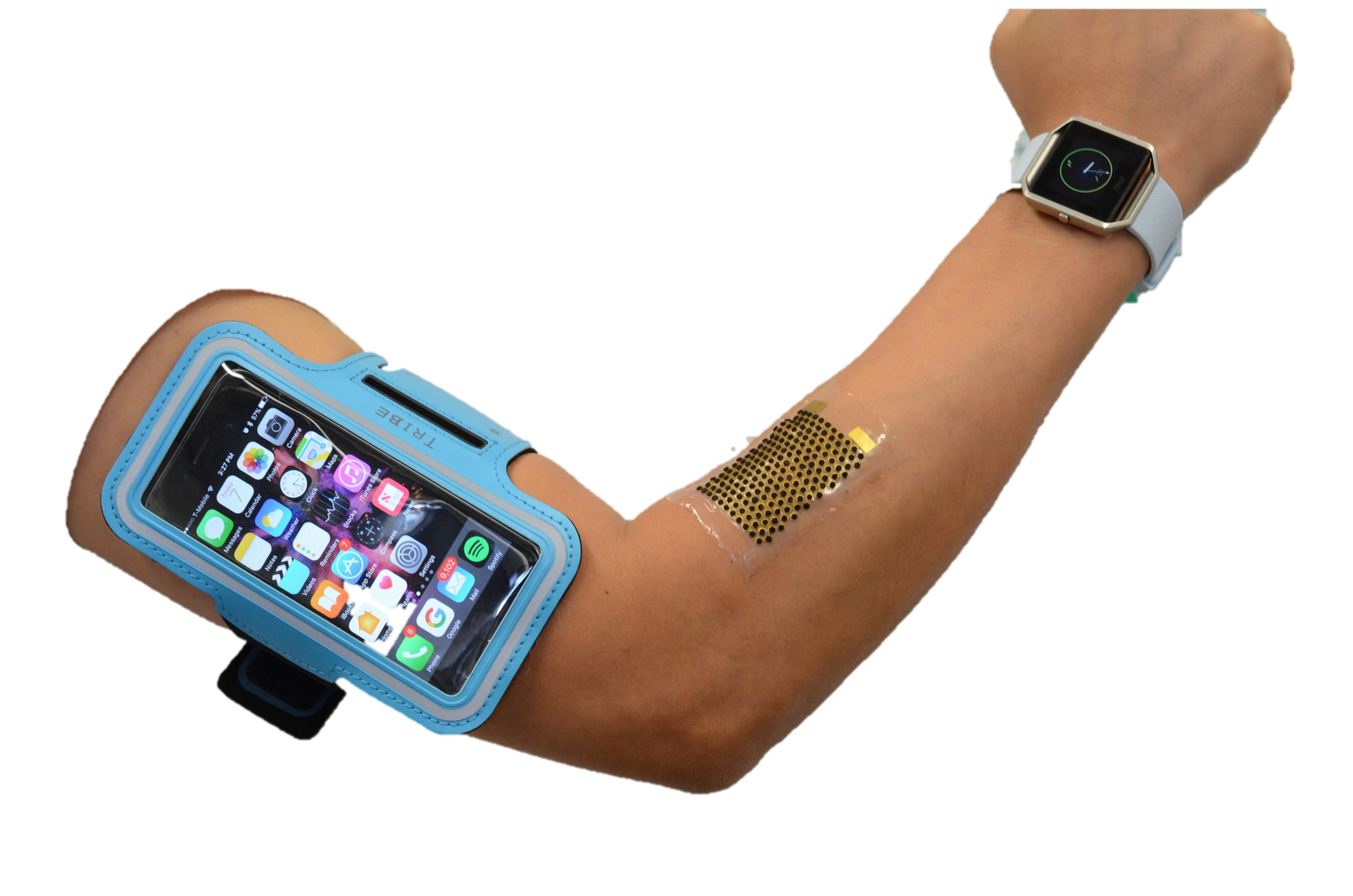
I’ve never seen a more intuitive (and slightly gross) way to harvest energy. Many wearable electronics correspond with activities that produce sweat, so, figured the University of California San Diego, why not turn that bodily fluid into power?
Engineers at UC San Diego have developed stretchable biofuel cells that use an enzyme to oxidize the lactic acid found in human sweat and produce energy. While sweat is 99% water, it also contains trace amounts of compounds including sodium (which gives sweat its salty taste) and lactic acid, among others.
During moderate exercise, we can sweat away up to 2 litres of water/hour, and daily losses can range from 100 to 8,000 mL/day. Obviously, these figures vary greatly based on cardiovascular fitness, climate, body type, genes, and several more, but either way, we’re talking about a wholly untapped source of energy.
According to UC San Diego, the team built a stretchable electronic foundation by using “lithography and by using screen-printing to make 3D carbon nanotube-based cathode and anode arrays.” In order to create a biofuel cell that adapted to the body’s movements, they needed a material that was flexible and stretchable, and the team achieved this with a “bridge and island” structure.
“The cell is made up of rows of dots that are each connected by spring-shaped structures. Half of the dots make up the cell’s anode; the other half are the cathode. The spring-like structures can stretch and bend, making the cell flexible without deforming the anode and cathode.”
We’re not talking about a huge amount of energy – it’s enough to power LEDs and Bluetooth radios for several minutes – so it’s mainly useful for hikers, soldiers, and others who might be off the grid for extended periods. The tech shows a lot of promise, though, and the team is working on a way to more efficiently and gradual release the harvested power.
Read more here: http://jacobsschool.ucsd.edu/news/news_releases/release.sfe?id=2288