Las Vegas Convention Center to Host Autonomous People Movers
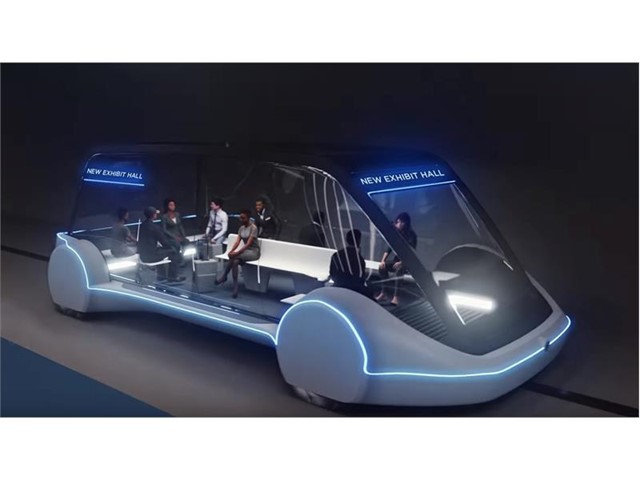
Sin City. Disneyland for adults. The “entertainment capital of the world.” Las Vegas has something for everyone, but what they don’t have is a reliable public transit system. The Las Vegas Convention and Visitors Authority (LVCVA) wants to change that with a proposed underground autonomous people mover.
Like most cities, Vegas has a fleet of buses and taxis, but the Strip is so congested that public transit is often slower than walking – no joke, I once walked back to my hotel faster than a friend riding a double-decker bus.
The Las Vegas Monorail is a good alternative, traversing the whole strip in 15 minutes, but it’s not enough.
According to the LVCVA, the Las Vegas Convention Center “hosts more than 1 million convention attendees annually” while The Regional Transportation Commission of Southern Nevada “carries approximately 12 million passengers per year within the Las Vegas Boulevard Resort Corridor,” so help is definitely needed.
The LVCVA recently selected The Boring Company (Elon Musk’s third venture) to build a two-mile loop for an autonomous electric vehicle (AEV) running beneath the expanding Las Vegas Convention Center.
When renovations are complete in 2021, the Convention Center will be two miles, end-to-end, and some automated assistance might be nice. And besides ferrying convention-goers between halls, the AEV will supposedly also connect Downtown, the Las Vegas Convention Center, the Las Vegas Boulevard Resort Corridor, McCarran International Airport, and more.
The Boring Company estimates project costs of $35 to $55 million, while it generates $2.1 billion in economic activity during construction, and upon completion, will have an annual incremental economic impact of $810 million.
Read more about this project here: https://press.lvcva.com/News-Releases/lvcva-and-elon-musk-s-the-boring-company-collaborating-for-future-of-transportation-in-las-vegas/s/ef4db4ea-f604-4028-be6d-feb1017376df#