My Three-Year Experiment with an Electric Lawnmower
Three years ago, I took the plunge with an electric lawnmower. The results were ... mixed.
It sounds like a great deal – cut the grass, and save gas money (and the planet). It’s the same implicit pact of electric cars (minus the grass cutting).
And like electric cars, the electric mower I chose was pricier than its petrol counterparts. But that’s fine – we invest in energy efficient technology. I outfitted our home with LED A-19 bulbs to save money in the long-term.
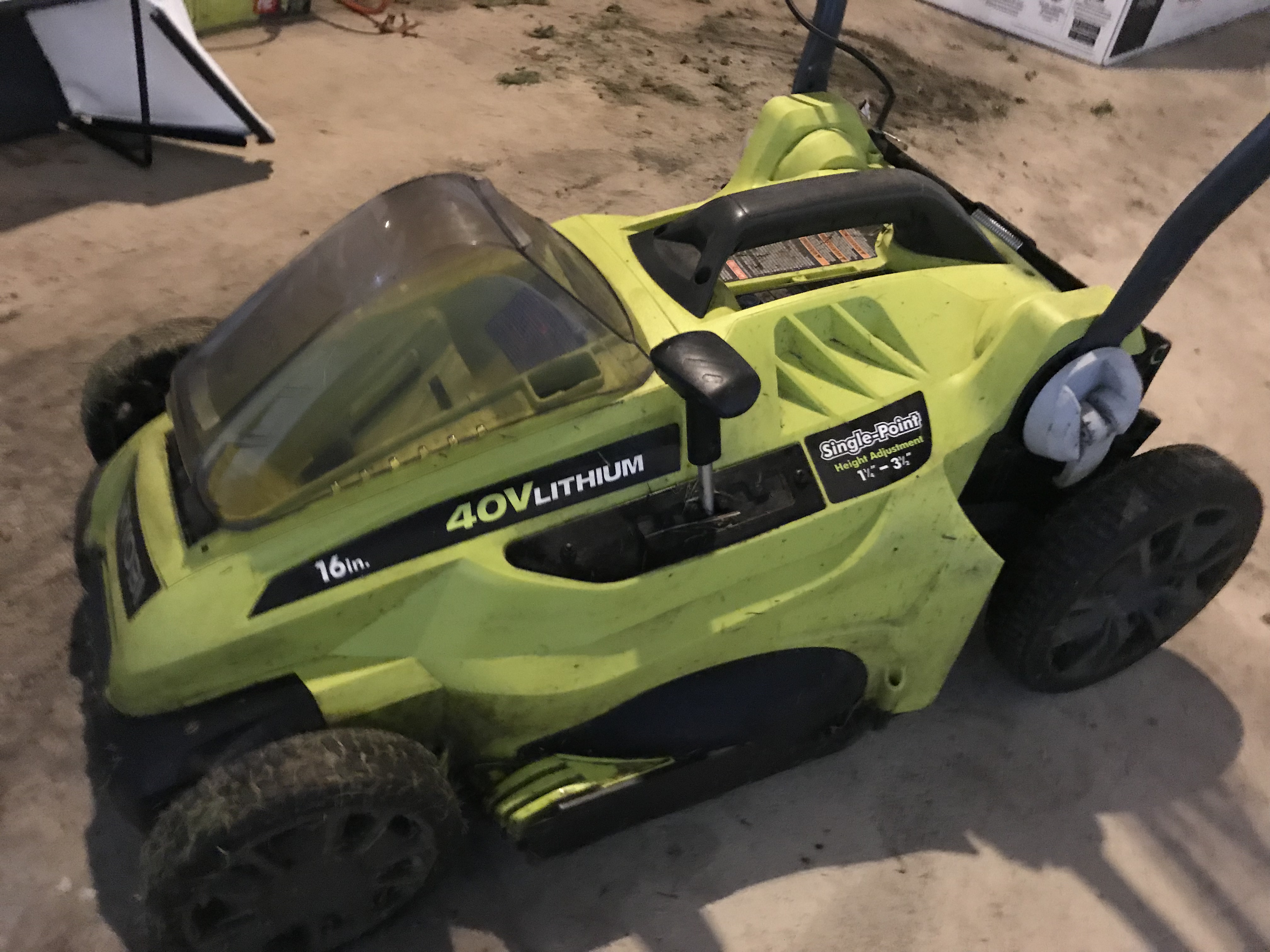
We’re not in the business of promoting lawnmowers, so the pic I’ve provided is for illustration purposes only. The mower is a 40V push model with a 16-inch cutting deck and 4.0 amp hour capacity. It includes 1.25-3.5” cutting height options, and the company claims it’s “ideal for small yards and detailed landscaping.”
That last bit is fine – we have a modest-sized home with only about .13 acres of land. We wanted it that way. Less property = less upkeep.
But even with such a tiny canvass, I quickly realized that one battery wasn’t enough. The battery supposedly lasts 40 minutes on a full charge, but in practice, it only gave me 30 good minutes (less with thicker grass).
And with thicker grass – i.e., any growth more than a week’s worth – it stalled constantly. I eventually needed two batteries just to do half the lawn, and for anything more than a light trim, I had to keep it at the highest cutting heights.
No one expects gas-like power from an electric anything, but the contrast here is stunning. This year, I ponied up for a standard 163 cc gas mower with 6.75 ft. lb. of gross torque (for $30 less than the electric mower) and have no problems whatsoever.
Granted, the stats, alone, for the gas mower partially explain the performance gap, and they do make more powerful battery variants. But considering the price discrepancy for two mowers with wildly different capabilities, I’d hate to see the damage on an electric mower with actual “gas-like power”. If that’s even possible.
For now, I’ll be sticking with petrol, and while it might pay to go green on your daily commute (or lighting needs), I’m fine with legacy tech for everything else.