Tesla puts the Kibosh on newest Self-Driving Beta ... for now
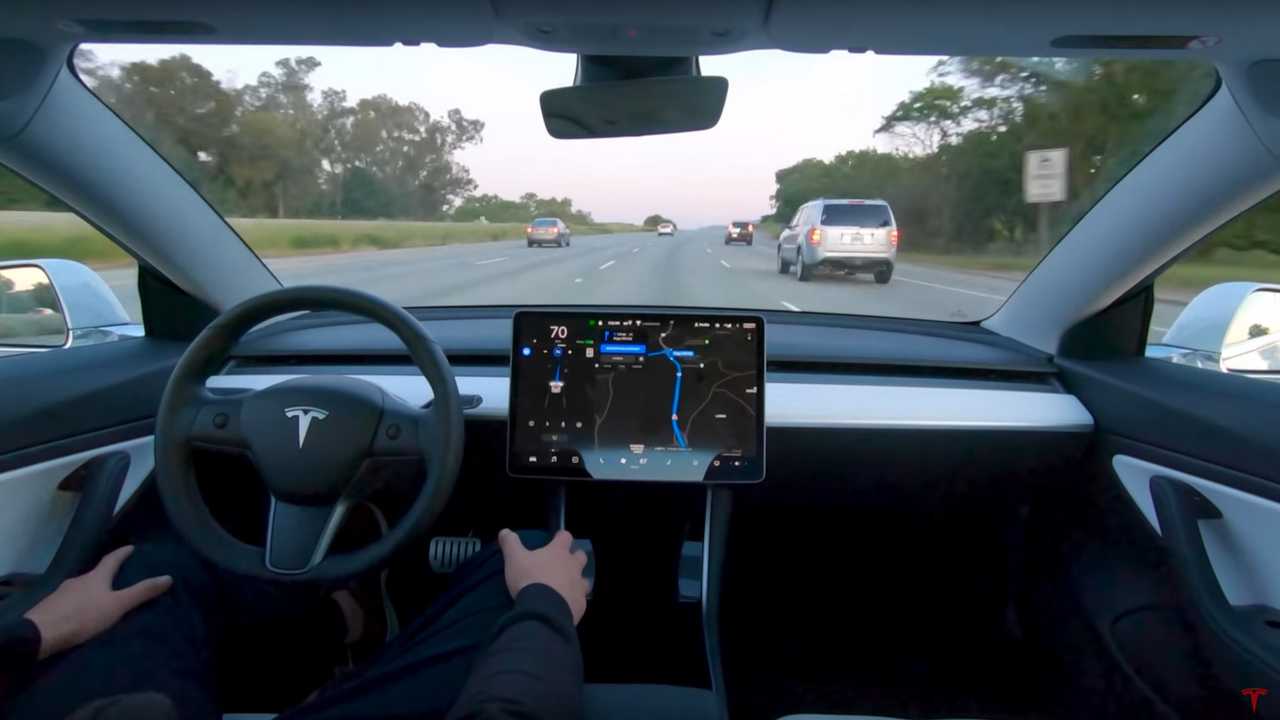
Tesla has halted the rollout of its Full Self-Driving beta version 10.2 – though no reason was given, and it’s not actually full self-driving.
Back in 2016, Tesla said that all its new vehicles came equipped with embedded “full self-driving” hardware, with the software on its way.
But the planned rollout of the Full Self-Driving beta version 10.2 to a select group of 1,000 drivers with “perfect” safety scores makes it clear that the title is a bit of a misnomer.
Despite what it says, the Full Self-Driving software isn’t…full self-driving. It’s more like a fancy driver assistance system, and even Tesla makes participants acknowledge that "FSD Beta does not make my car autonomous."
And lawmakers are none too pleased with the mislabeled – and potentially dangerous – technology.
"Tesla is putting untrained drivers on public roads as testers for their misleadingly-named, unproven system—a seeming recipe for disaster," said U.S. Senator Richard Blumenthal (D-CT.).
Then again, we’ve seen repeatedly that no matter how clear the language is with driver-assistance technology, someone will inevitably treat it like a fully autonomous vehicle and cause an accident (sometimes with fatal consequences).
Despite Elon Musk’s belief that drivers/passengers will be able to fall asleep in the future, as a fleet of robo-taxis and autonomous vehicles ferry everyone around, every “self-driving” system on the roads, including FSD, requires constant supervision.
Some of them blare a warning if your hands are off the wheel for an extended period of time, but none are meant to be fully autonomous. And even within its limited functionality, FSD isn’t perfect – FSD beta version 9 apparently could “do the wrong thing at the worst time.”
I’ve argued in the past that even fully-autonomous vehicles may struggle with the irrational decisions of human drivers – if every car is autonomous, they could all communicate with each other, reducing the likelihood of errors to near zero. But the tech isn’t there yet, and even with it is, its biggest challenge will be navigating a gauntlet of regulators and public skepticism.
Every day, nearly 100 Americans die in conventional auto accidents – it’s so normalized, that no one bats an eyelash. But even one death attributed to self-driving or driver-assistance systems is a huge scandal.
As to why FSD beta 10.2 was delayed, Musk could only say “A few last minute concerns about this build,” and Tesla planned to release it shortly.