Texas Governor Wants to use Bitcoin as a "Demand-Side Battery"
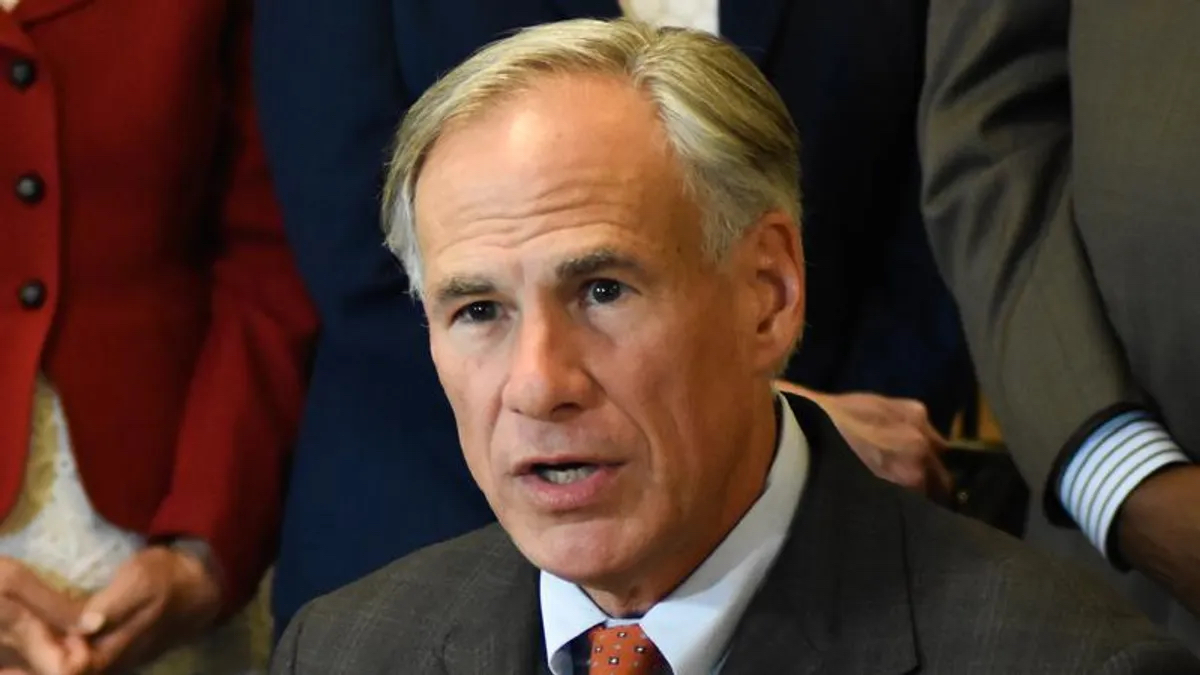
Now here’s an idea that sounds too crazy to be true (and it probably isn’t) – using Bitcoin to help prop up the Lone Star State’s aging energy grid.
Back in May 2021, Texas governor Greg Abbott signed into law the Virtual Currency Law, aimed at legitimizing Bitcoin and making Texas a “crypto-friendly state” like Wyoming.
The goal was to attract crypto miners and affiliated businesses like Wyoming did with Ripple, a real-time gross settlement system, currency exchange and remittance network.
Now what’s this have to do with the Texas energy grid (which utterly collapsed during a winter storm last year that claimed 246 lives and left millions without power during the coldest part of the year)?
Gov. Abbott wants to make Texas the “centerpiece” of the Bitcoin movement, and as such, Bitcoin miners would plug into renewable energy sources (that would otherwise go to waste) during periods of low demand for the grid, and when demand went up, the miners would discontinue their operations to let the energy be used elsewhere.
The very notion of Bitcoin – a notorious polluter which is responsible for nearly 1% of the world’s total carbon footprint – being a net positive for the grid and the environment is wacky enough and rests on some shaky assumptions, but what’s worse is the Governor’s shaky understanding of cryptocurrency and the blockchain.
In a recent statement, Abbott claimed that “Bitcoin (and blockchain) is the cutting edge of innovation in the world”, and by encouraging Bitcoin miners to set up shop in Texas, “we are providing a platform for those involved in blockchain.”
You know the old joke about Dilbert-style pointy-haired bosses who love to pepper conversations with words like “innovation” and “paradigm?” That applies doubly so for anyone who uses the word “blockchain” this much in so short a period of time.
In Abbott’s dream scenario, Bitcoin mining would act like a “demand-side battery” that “creates a safety valve for the grid,” propping up said grid and girding against more blackouts.
Convinced yet?
Anyone who’s followed crypto for any length of time knows how volatile it is (even the most blue chip of all cryptos, Bitcoin). So Texas would be gambling on a relatively stable Bitcoin environment, especially since the output for each mathematical mining-related puzzle solved is always decreasing (by design).
And that’s to say nothing of the silliness of equating Bitcoin mining with a “battery,” no matter how it’s parsed.
Here’s hoping Governor Abbott’s plan defies logic and is a net-positive for the Texas power grid.