Advanced passenger aircraft drive component innovation
Many aircraft improvements will drive increased use of electrical technologies
Civil aircraft that are quieter and more economical promise to deliver benefits for everyone; benefits apparent to operators, travellers, and communities on the ground, as well as the environment. Technological advancement holds the key to progress, manifested in collaborative initiatives such as Europe’s Clean Sky joint undertaking. Improvements being considered include not only new materials and aerodynamics, but also changes that will drive increased use of electrical technologies in the aircraft of the future.
Fly-by-wire
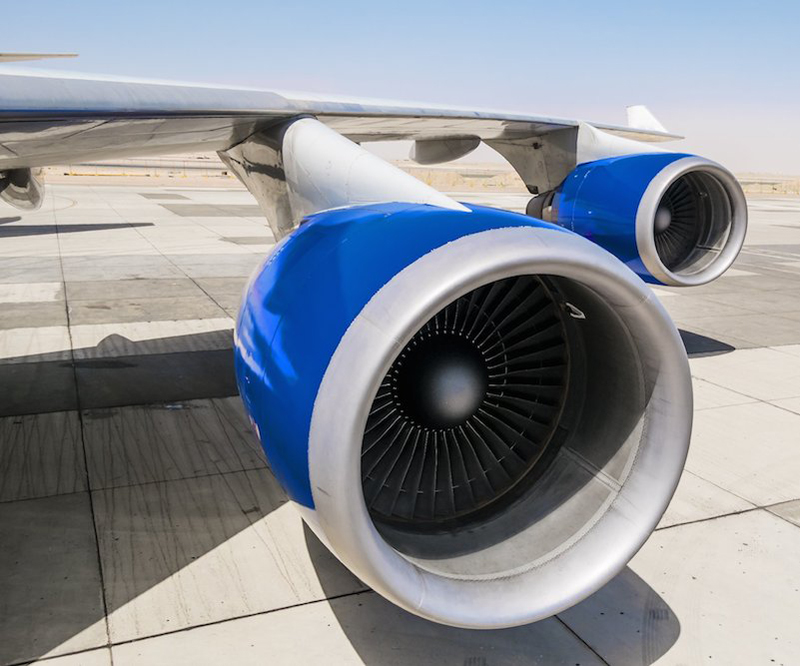
Some of today’s most modern aircraft are already implementing advances such as the “bleedless” architecture that replaces traditional engine-driven pneumatic systems like wing ice protection and cabin air conditioning with more lightweight and efficient electrically driven alternatives. In addition to improving fuel economy, this architecture also helps reduce noise and drag to weight ratio (see Figure 1).
Click image to enlarge
Figure 1: “Bleedless” architecture replaces traditional engine-driven pneumatic systems.
The trend towards electrification places extra demands on the design of the aircraft’s electrical architecture and systems. More electrical power is required, which demands a new approach to the entire electrical design. One example can be seen in the use of multiple remote power distribution units, which help minimize the overall weight of the electrical infrastructure.
New electrical subsystems must be designed to operate safely and reliably in the harsh aircraft environment. As well as wide ranging extremes of temperature – from as low as -60°C to over 200°C and rising to over 300°C in the future as equipment is located closer to the engines – other hazards include high levels of vibration and a risk from lightning strike.
Silicon Carbide to the rescue
Fast-acting Solid-State Power Controllers (SSPCs) improve protection against surges caused by ESD events such as lighting strike, by replacing slower-acting mechanical circuit breakers. SSPCs have response times in the order of nanoseconds, compared to the typical 100µs actuation time of a conventional circuit breaker, and are now feasible for aircraft applications thanks to new silicon carbide (SiC) technology.
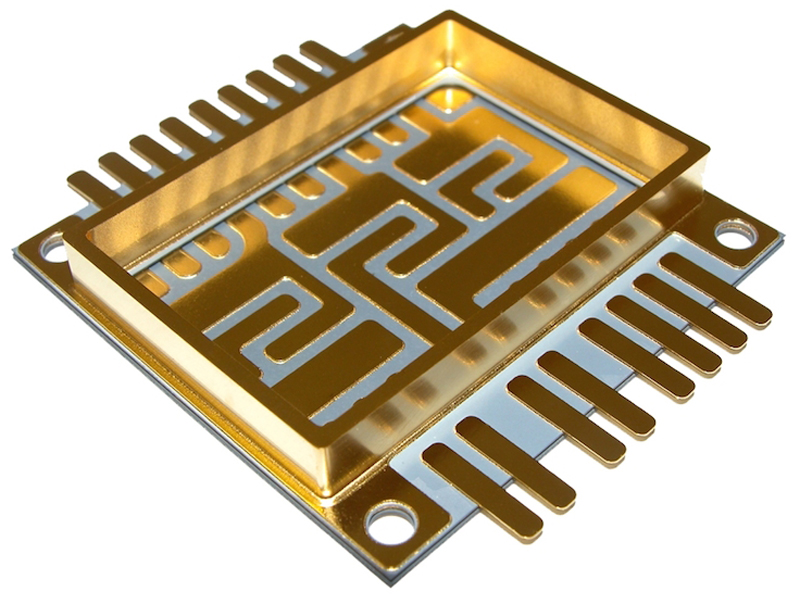
SiC devices in ratings high enough to divert short, high-energy transients away from sensitive electronic circuitry are significantly smaller than conventional silicon devices, and subsequently enable SSPCs to become smaller and lighter than mechanical circuit breakers. TT Electronics has a number of active SiC development programs focusing on high-reliability assembly and including packaging for ±270V SSPCs, and is also working with SiC device manufacturers using the latest fabrication technologies to drive improvements in thermal characteristics and thus increase system performance and reliability (see Figure 2).
Clcik image to enlarge
Figure 2: TT Electronics has a number of active SiC development programs focusing on high-reliability assembly and including packaging for ±270V SSPCs.
Where electronic modules are deployed in the harshest environments, such as within close proximity to the engine, extremely high peak temperatures can promote unwanted chemical interactions between materials used in the assembly or with gases in the immediate environment, in addition to melting conventional solder-based interconnects and exacerbating known issues such as differential thermal expansion. Solving these challenges can require extensive research in order to identify combinations of materials that will coexist benignly, and develop suitable assembly processes. TT Electronics, for example, has developed robust processes for silver sintering as a replacement for conventional solder-based die attach.
Reliability is key
In general, greater reliability is the over-riding target of today’s advanced design projects, as typical commercial aircraft become increasingly dependent on electrical systems to perform important functions. Even where systems are not directly exposed to extremely high temperatures, improving thermal characteristics helps to enhance reliability. TT Electronics and its partners are pushing forward in a number of other areas to deliver the improvements needed.
TT Electronics has developed a process to enhance power-module reliability by helping maintain co-planarity and robustness of the interface between the baseplate and substrate where ensuring correct alignment has always been a challenge. Innovation by our engineering teams now allows this technique to be used in aerospace applications, achieving high quality, high production yield and extending life. Increasing the energy efficiency of high-power modules, through advanced device and circuit design, also helps improve thermal performance and hence reliability, by minimizing internal power losses and dissipation.
With increasing electrification, the importance of in-house environmental testing, such as accelerated life tests and environmental stress tests, is growing. The data gathered provides vital process validation and information that can be used to direct future research and thereby help to reduce time to market.
The drive for more efficient and environmentally friendly aircraft is opening exciting new frontiers in the design of high-reliability electronic devices and systems for aerospace applications. Current progress suggests everyone can look forward to safer, quieter and more economical air travel.