AEC-Q200-compliant inductors with broadband impedance
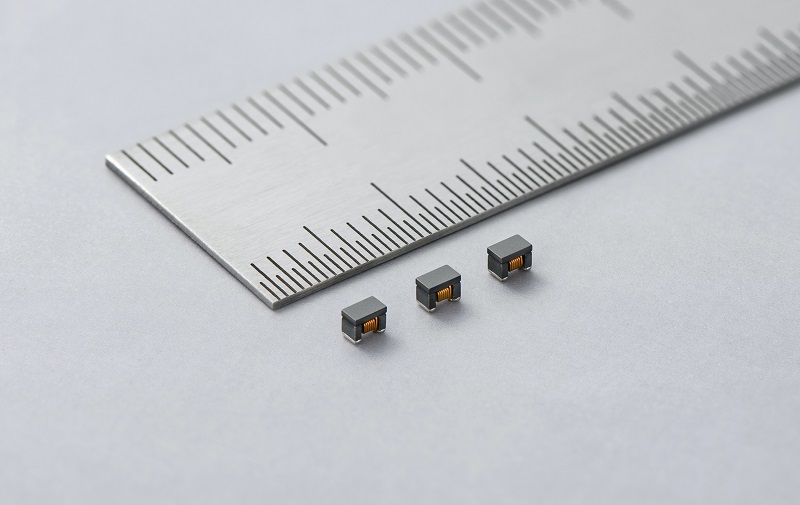
Murata continues to support ongoing engineering progression within the automotive sector with the introduction of the LQW21FT_0H series.
These are the world’s smallest inductors with broadband impedance for in-vehicle power-over-coax (PoC) circuit of SerDes-based interfacing. The LQW21FT_0H series is compliant to AEC-Q200 and delivers a combination of both broadband impedance and high-current performance. Thanks to state of the art technologies for both ceramic material and coil structure, Murata can supply these components in a space-saving size format that other manufacturers simply cannot match. They are housed in a compact 0805 inch case size, with 2mm x 1.2mm x 1.6mm dimensions.
Murata’s LQW21FT_0H series inductors are extremely well suited to PoC use cases. As well as their elevated broadband impedance levels, they exhibit superior saturation properties. Inductance values from 0.47 µH to 2 µH can be specified, with respective current ratings of 1 A and 0.45 A. The heightened operating temperatures that these inductors can support makes them attractive for automotive implementation (reaching up to 125°C).
“To accelerate the transition towards safe, autonomous driving, the number of built-in cameras featured in vehicle models continues to increase,” said Uwe Mirschberger, Product Manager EMI – Filters, Inductors, at Murata Europe. “The popularity of PoC for in-vehicle applications is, as a result, steadily rising and enables significant reductions in cabling weight by transmitting imaging data and electrical power over one coaxial cable. Keeping the power and data signals separate from one another is of course vital to PoC implementations, and LQW21FT_0H’s broad frequency characteristics help to reduce the number of inductors needed for this purpose. The LQW21FT_0H series has the ability to make a real difference to PoC deployments, enabling the number of inductors required to be reduced considerably. Consequently, engineers will be able to streamline their designs by saving space and reducing the total DC resistance too.”
www.murata.com