Electrothermal models cover MOSFET operating temperature range
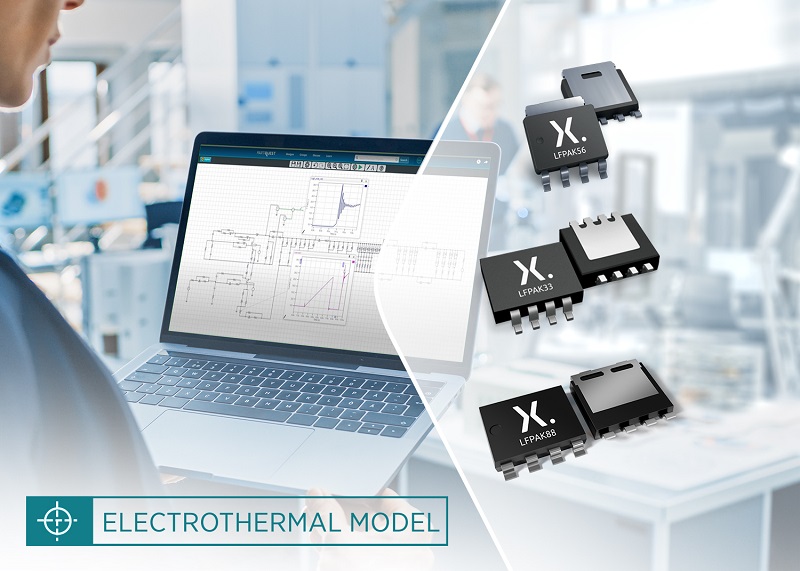
Nexperia announced the release of new, enhanced Electrothermal models for its MOSFET devices.
Semiconductor manufacturers commonly provide simulation models for their MOSFETs, but these usually only include a limited number of device parameters which have been modelled at typical operating temperatures. Nexperia’s new advanced models capture the thermal interdependency of the complete set of device parameters right across the full operating temperature range from -55 °C to 175 °C.
Overall accuracy is further enhanced by the inclusion of reverse diode recovery time and device electromagnetic compatibility (EMC) performance in these advanced models. These enable engineers to create accurate circuit and system level simulations and assess the electrical, thermal and EMC performance before committing to build a prototype. These models also help save time and resources because engineers, who were previously required to ensure that their designs could operate under (unlikely) worst-case conditions, can now simulate their designs across specific temperatures ranges.
Nexperia developed these models in close partnership with a Tier 1 OEM whose requirements could not be satisfied by any others currently available. “These new advanced electrothermal models are intended to give designers the ultimate degree of confidence in the results of their circuit simulations” according to Andy Berry, applications engineer with Nexperia. “Their unprecedented level of precision is evidenced by how accurately the models predict real device behaviour during double pulse testing. Initial feedback from our collaborative partner indicates that these models are the most exact they have ever seen.”
Following on from the unveiling of Nexperia’s popular interactive application notes, these advanced electrothermal models are the latest in a series of next generation support tools, designed by engineers for engineers, planned for release over the coming months. This new approach to supporting external activity is intended to make device design-in as seamless as possible for Nexperia’s customers.