How high-resistance grounding keeps data centres online
In December 2025, the UK's National Energy System Operator (NESO) announced the results of its major overhaul of the UK’s grid connection process, removing speculative schemes and introducing a readiness-based system. While this affects all electricity projects, it raises the bar for data centres, which must now demonstrate grid-friendly behaviour from day one. The article explains how neutral earthing resistors (NERs) support resilient, grid-compatible operation and why high-resistance grounding (HRG) is essential.
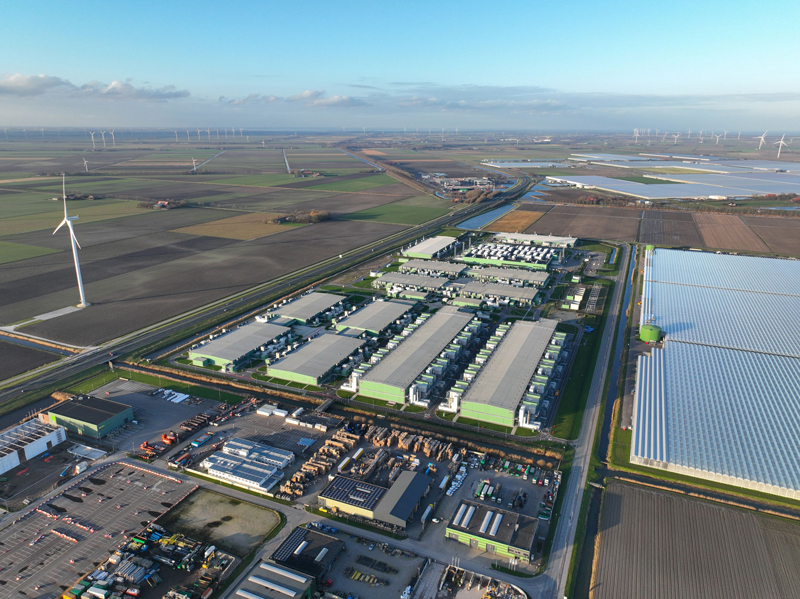
Data centres have been recognised as Critical National Infrastructure (CNI) since September 2024, placing them on “an equal footing with water, energy and emergency services systems.” This recognition is invaluable to scaling capacity, yet NESO’s reforms add a new layer of technical complexity. As of 2025, there are approximately more than 500 centre sites in the UK, collectively supporting 1.6 to 1.7 gigawatts of IT load, with government targets calling for at least 6 GW of AI-capable capacity by 2030 six gigawatts of IT load, with annual growth in data traffic estimated at 20 to 25 per cent. For these always-on facilities, any unplanned outage can be catastrophic, making grid readiness an operational imperative.
The Connections Reform Context
Under the Connections Reform, NESO now prioritises “first ready and needed,” replacing the former first-come, first-served approach. Many transmission-connected demand projects, including data centres, have been placed into firm capacity blocks, with connection dates extending to 2035, reflecting a more realistic delivery timeline than the prior ambition to connect the full pipeline by 2030. These blocks typically allocate ten to fifty megawatts per developer, with connection offers contingent on demonstrating full deliverability and operational readiness.
The readiness framework is evidence-based. To secure a firm connection offer, developers must prove not just theoretical feasibility, but actual design maturity, risk controls and credible delivery plans. This requires a robust power and protection strategy that demonstrates the facility can behave predictably during network disturbances without causing unnecessary disconnections. High-resistance grounding is a key enabler for ensuring that first faults do not surge into wider network issues and that data centres operate reliably under the new requirements.
What is High-Resistance Grounding?
High-resistance earthing, or high-resistance grounding, is central to grid-friendly design. Although industry benchmarking shows overall outages are declining, Uptime Institute data indicates that power remains the leading cause of impactful incidents when failures do occur, cited by 54 per cent of operators surveyed. HRG addresses this by controlling single line-to-earth faults, which are the most common type of medium-voltage disturbance in data centres.
In HRG systems, the transformer or generator neutral is connected to earth through a high-value resistor. In medium-voltage data centre networks, long cable runs and extensive switchgear assemblies create system capacitance, which generates a small charging current even when no fault exists. HRG design must ensure the resistor’s fault current exceeds this charging current, so the first earth fault reliably triggers an alarm without causing a trip. This controlled approach prevents transient overvoltages and ensures operators can locate and clear faults safely.
This limits the fault current to a controlled level, typically a few amps in low-voltage networks and between 50 and 300 amps in medium-voltage systems, so that a first earth fault becomes an alarm-only event rather than an immediate trip. Operations teams can then locate and clear the fault while maintaining continuous service.
By keeping the first fault at alarm-only level, HRG allows protection relays to operate selectively. This means only the affected feeder is highlighted, while the wider network continues uninterrupted. Such selective detection reduces unnecessary trips, protects uninterruptible power supply (UPS) and transformer systems and ensures that operators can respond without triggering cascading shutdowns.
High-resistance grounding also avoids the pitfalls of other schemes. Unlike solid earthing, it prevents very high single-line-to-earth currents and the associated arc flash energy and unlike ungrounded systems, it keeps the neutral referenced, suppressing transient overvoltages and making faults easier to locate.
Proper HRG design requires that the NER’s resistance is above the system’s capacitive charging current, yet low enough to minimise equipment stress and arc flash energy. In data centres, this ensures the first fault remains an alarm-only condition, sustaining critical IT services while avoiding nuisance trips during UPS or generator transitions.
HRG also stabilises operation during transitions between utility supply and standby generators. By keeping the neutral referenced and fault current controlled, nuisance trips during generator synchronisation or UPS transfers are avoided. This ensures continuous IT service even during islanded operation, a critical requirement for high-density, always-on data centres.
Click image to enlarge
The Critical Component
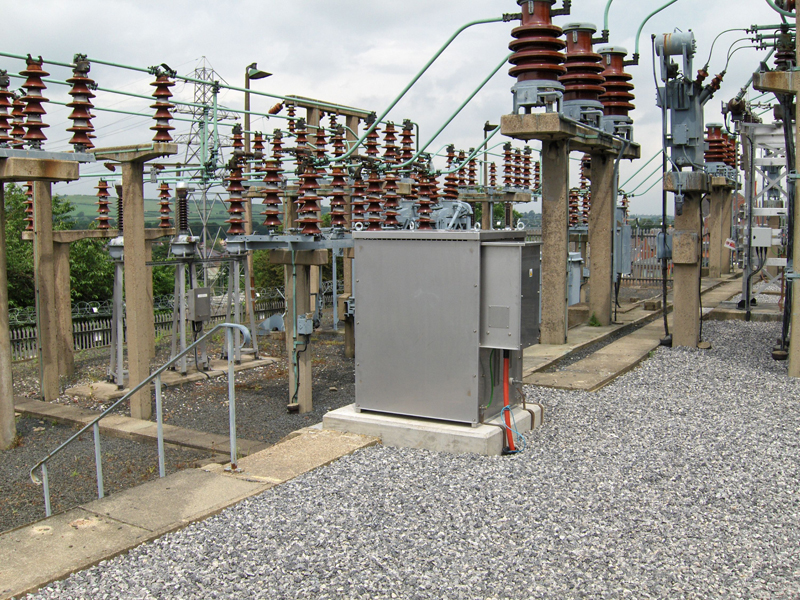
The NER is the enabling component of an HRG system because it connects the neutral point to earth through a precisely selected resistance. By connecting the neutral to earth through a precisely selected resistor, it sets the single-line-to-earth fault current and the associated thermal duty, allowing protection relays to detect faults without forcing an immediate trip. This behaviour keeps the system stable during disturbances and allows operators to locate and clear faults while maintaining service continuity.
Selecting the right resistor is essential to performance. Edge-wound coils are suited to high-current applications, often exceeding 500 amps in medium-voltage networks, while wire-wound or grid elements efficiently serve lower current ratings or continuous duty applications. NERs are rated for durations ranging from a few seconds to continuous operation, aligning with the site’s protection guidelines and operational objectives.
Thermal performance also matters. Short time-rated resistors must safely absorb the heating during a fault, while continuous duty designs rely on steady state dissipation through ventilation. In high-density plant rooms, careful attention to airflow and ambient temperature ensures that the resistor maintains stable performance and a long service life, even under repeated fault conditions.
Cressall Resistors designs NERs to match real-world constraints, including footprint, installation access, cooling, ventilation and compliance with international IEC and IEEE standards. High thermal performance and long service life are critical to ensure that facilities run continuously and recover predictably from fault events. Designs adhere to international standards such as IEC 60076-25 and IEEE C57.32, ensuring NERs perform reliably and safely within recognised high-voltage and grounding guidelines.
Click image to enlarge
Operational Benefits
The practical outcome for data centres is clear: HRG combined with a properly specified NER keeps the first earth fault as an alarm-only event, reducing downtime risk and supporting grid-friendly operation. This is particularly crucial under NESO’s new framework, which assesses grid readiness as part of the connection process.
High-resistance grounding also improves fault localisation, as the controlled fault current allows operators to use SCADA systems and protective relays to pinpoint faults quickly, reduces stress on transformers, switchgear and UPS systems and provides predictable recovery, improving average time to repair compared with solidly grounded systems.
A comparison of grounding schemes demonstrates HRG’s advantages. Solidly grounded systems generate very high fault currents, create high arc flash risk and cause immediate trips during a first fault, while ungrounded systems produce very low currents, carry moderate arc flash risk and make faults harder to locate due to transient overvoltages. HRG with an NER, by contrast, delivers controlled fault currents, reduces arc flash risk and equipment stress and allows the first fault to trigger an alarm only, ensuring predictable recovery.
As the UK’s data centre sector continues to grow, grid readiness has become a mandatory design criterion. High-resistance grounding, enabled by well-specified NERs, ensures that first-earth faults are managed alarm-only events, keeping services online and supporting NESO’s rigorous connection requirements.
By combining careful resistor selection, compliance with international standards, and operational monitoring, HRG allows data centres to operate predictably and resiliently, reducing downtime, protecting equipment and demonstrating grid-friendly behaviour from day one.