Enjoying your European Summer

Welcome to the August edition of Power Systems Design Europe. August is the summer holiday season in much of Europe, so if you are on vacation this month, I hope you enjoy your well-earned break and can return refreshed for the remainder of the year. It has been a challenging year so far for the industry, but it still remains at the heart of every major trend in the economy, whether that is renewable energy, data centres or electric vehicles.
The latter of these areas is the subject of this month’s Special Report on EV, Hybrids & Charging Infrastructure. The first two articles in the special report this month look at the growing importance of the 48V rail in transportation as the most efficient and convenient step-down voltage from the 400V and 800V batteries used by EVs, and its popularity makes it ideal for other uses. The first article in the Special Report was contributed by Rutronik, and it looks at one of those other uses. Light electric vehicles (LEVs) are growing more popular for short distance deliveries and courier roles, and they often use a 48V battery as their main power source. The reason for the increase in their use is that they are cheaper than normal EVs, use considerably less energy and fit in well with the current transport system. This makes them ideal for operators and individuals looking for sustainable alternatives to traditional vehicles. Rutronik, along with its partners, has developed two 48V reference designs for 48V LEVs. The article looks at the reference designs, and the types of applications in which they would excel.
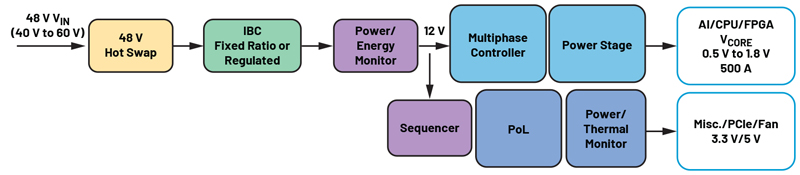
This month’s second Special Report article comes from Analog Devices. The 48V rail offers many advantages over the legacy 12V rail, but that doesn’t mean that it is for everyone. The article describes both the advantages and disadvantages of the 48V rail, allowing engineers to make optimal decisions get the best trade-offs for their designs. It also looks at ways that engineers can make the most effective use of the 48V rail.
The final Special Report feature this month was contributed by Avnet Silica. Bidirectional charging is expected to be one of the greatest benefits of EV infrastructure. It means that the vehicle can be used as a battery for the household. It can be charged when electricity is cheaper, or by solar panels, and electricity can be sold the the grid when the price of electricity rises or used when it decreases. The article describes the benefits of bidirectional charging, and how it is being implemented in real-world uses. It also describes how Avnet Silica is working with its suppliers to create solutions that make it easier for engineers to deploy bidirectional charging designs.
As well as the articles in the Special Report, this month’s magazine will also include general features of interest to power engineers, as well as the lastest news and views from the industry.
Best Regards
Ally Winning
European Editor, PSD
Ally@powersystemsdesign.com