GCT’s ultra-low profile vertical Micro USB touts performance
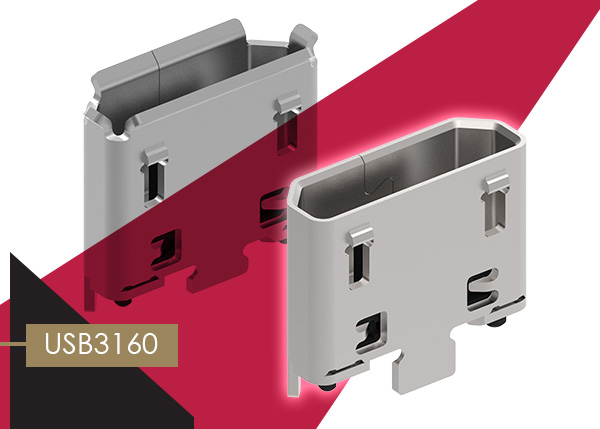
GCT has pushed the performance of its industry leading range of vertical micro USB connectors by launching the USB3160, a new low profile SMT Micro USB vertical receptacle. The new Vertical Micro USB connector has one of the lowest profiles available in the market at 5.20mm height above PCB, meeting the ever increasing demand for smaller and compact devices. This combined with enhanced high current rating for charging at 2.8A - a full 1A over standard products - making it perfect for fast charging application requirements.
The USB3160 is also more reliable than its rivals due to the positioning of the shell stakes. GCT engineers have identified that competing products have them very close to SMT pads and pose a greater risk of short circuiting - the USB3160 avoids this problem with its cleverly designed shell stakes allowing for more space.
Several variants of the new vertical Micro USB connector are available from launch, including three different shell stake lengths at 0.70 1.20 and 1.70mm offering customers even greater flexibility for product designs.
“This is testament to GCTs continued commitment in pushing the performance of new and existing technologies within its product lines. The USB3160 continues this tradition by providing our lowest profile, high-power vertical Micro USB to the market with clear advantages over the competition,” commented David Luu, GCT Marketing Manager.
Micro USB connectors