Generative Physics: Why AI's Next Breakthrough Will Be Engineered, Not Generated
Foundational AI models trained on the laws of physics are poised to collapse simulation timelines from days to minutes and reshape how products are designed across every hardware intensive industry
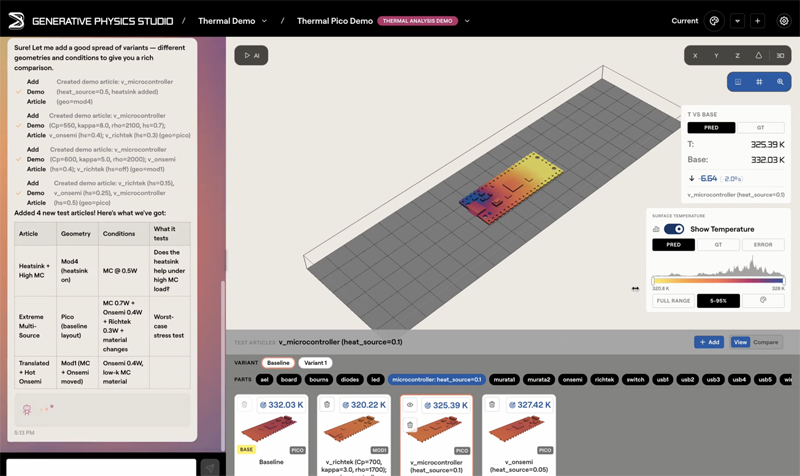
Figure 1: Raspberry Pi Pico Thermal Demo in GPStudio
The artificial intelligence revolution has, until now, been overwhelmingly digital. Large language models write code and compose text. Image generators produce photorealistic art on command. Recommendation engines decide what billions of people watch, read, and buy. These are remarkable achievements, but they share a common trait: they operate almost entirely in the digital realm. The physical world, the world of fluid dynamics, heat transfer, structural loads, and electromagnetic fields, has been largely left waiting.
That wait is ending. A new class of AI, built not on internet scale text corpora but on the fundamental equations governing the physical universe, is beginning to reach engineering teams. These foundational physics models represent a genuinely different paradigm for product development, and their implications for power systems design, semiconductor thermal management, and energy infrastructure are profound.
The Simulation Bottleneck
Engineers working on power electronics, battery thermal management, or data centre cooling know the simulation bottleneck intimately. Traditional computational fluid dynamics (CFD) and finite element analysis (FEA) workflows demand weeks of effort before a single result appears. Geometry must be cleaned. Meshes must be generated, often manually refined around critical features. Solver parameters must be configured by specialists. A single high fidelity transient simulation of, say, airflow through a power module heat sink can consume days of compute time on a high-performance cluster.
The result is that simulation becomes a verification step rather than a design tool. Engineers converge on a concept using rules of thumb and past experience, then run one or two simulations to confirm their intuition. The vast majority of the design space is never explored. Promising configurations are never discovered because there simply is not enough time or compute budget to try them.
This bottleneck has real commercial consequences. Development cycles stretch. Physical prototypes multiply. And in fast moving markets, such as AI server power delivery, EV drivetrain cooling, and GaN based converter packaging, the teams that iterate fastest win.
From Surrogate Models to Foundational Physics
The engineering software industry has recognized this problem for years, and the most common AI based response has been the surrogate model: a neural network trained on the outputs of a specific set of traditional simulations to interpolate within that narrow design space. Surrogate models can be fast, but they are brittle. Change the geometry class, the operating conditions, or the physics regime, and the model must be retrained from scratch on new simulation data that itself took weeks to produce.
Foundational physics models take a fundamentally different approach. Rather than learning from the outputs of existing solvers, these models are trained directly on the governing equations of physics, including the Navier-Stokes equations for fluid flow, Maxwell's equations for electromagnetics, and the heat equation for conduction and convection. The training objective is not to mimic a particular solver's output but to learn a generalized representation of how physical systems behave.
At BeyondMath, we have built what we believe is the world's first foundational AI model of physics using this approach. Because the model encodes generalizable physical knowledge rather than memorized simulation datasets, it can accept arbitrary geometry directly, with no solver ready mesh and no manual preprocessing, and produce full field transient results at engineering grade accuracy. In internal benchmarks, this workflow delivers validated results up to 1,000 times faster than traditional solvers (see Figure 1).
The practical difference is transformational. A thermal analysis that previously took a power electronics engineer three days of setup and solver time can now be completed in minutes. And because the marginal cost of each additional simulation is near zero, engineers can run hundreds or thousands of design variants in the time a traditional workflow would allow one.
Implications for Power Systems Design
Consider three scenarios directly relevant to readers of this publication.
First, thermal management of high-density power converters. As wide bandgap semiconductors like GaN and SiC enable higher switching frequencies and power densities, thermal design becomes the binding constraint. With a generative physics platform, an engineer can upload a converter geometry, sweep across dozens of heat sink fin configurations, coolant flow rates, and ambient conditions, and receive full thermal field results for every combination within hours rather than months. The design that best balances junction temperature, pressure drop, and manufacturing cost emerges from the data, not from guesswork.
Second, data center power delivery and cooling. The explosive growth of AI training infrastructure has created unprecedented power density challenges. A single AI server rack can now draw upwards of 100 kW, and next generation liquid cooled architectures are evolving faster than traditional simulation pipelines can follow. Foundational physics models enable rapid exploration of cold plate geometries, manifold configurations, and hybrid air liquid cooling strategies at a pace that matches the hardware roadmap.
Third, electromagnetic compatibility and antenna design in increasingly dense electronic environments. As power conversion stages move closer to sensitive RF and digital circuits, electromagnetic interference analysis becomes critical. Physics based AI that generalizes across electromagnetic regimes can evaluate shielding, filtering, and layout alternatives without the domain specific setup overhead of traditional EM solvers.
What Changes When Simulation Becomes Instant
The deeper shift is not just speed. It is the way engineering teams work. When simulation is slow and expensive, it sits at the end of the design process as a gate. When it becomes fast and accessible, it migrates to the beginning, becoming a generative tool that helps engineers discover designs rather than merely validate them.
This is the concept behind generative physics: using AI not to replace the engineer's judgment but to massively expand the space of options they can evaluate. Instead of asking "Does this design work?" the engineer asks "What is the best design I haven't considered yet?" That shift in mindset, from convergent verification to divergent exploration, is where the next generation of product breakthroughs will come from.
Click image to enlarge
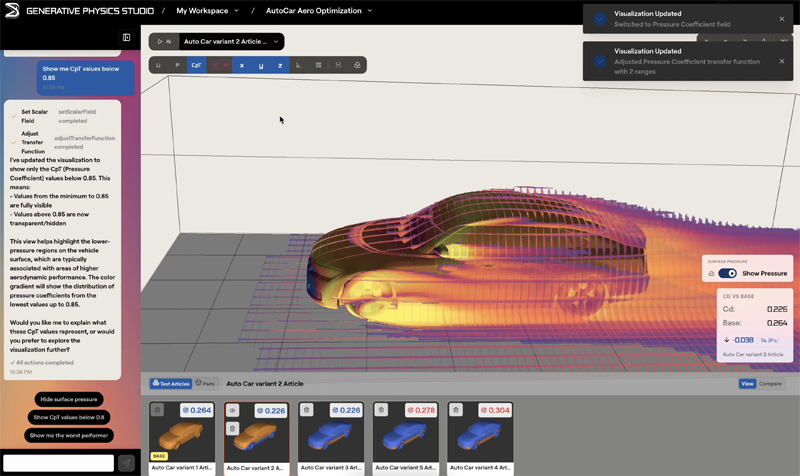
Figure 2: Automotive Road Car Simulation in GPStudio
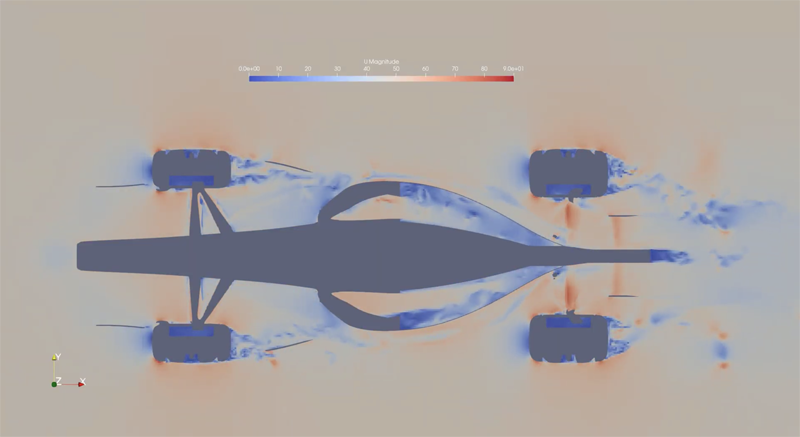
At BeyondMath, we have seen this play out across industries. Our platform, GPStudio, has been used to run thermal simulations on geometries ranging from a Raspberry Pi Pico board to full automotive road cars (see Figure 2) and Formula 1 aerodynamic packages (see Figure 3). In every case, the pattern is the same: teams that adopt generative physics workflows compress development timelines, reduce physical prototyping costs, and, most importantly, arrive at better performing designs because they explored more of the solution space.
Click image to enlarge
Figure 3: Formula 1 Aerodynamics in GPStudio
The Road Ahead
The power systems community is entering a period of extraordinary demand. Electrification, AI infrastructure buildout, and renewable energy integration are all placing unprecedented requirements on power conversion, thermal management, and system level design. Meeting those requirements with yesterday's simulation tools means accepting yesterday's pace of innovation.
Foundational AI models trained on first principles physics offer a way forward. They are not a replacement for engineering expertise. They are a force multiplier for it. The engineers who embrace this shift will design products that are more efficient, more reliable, and brought to market faster. And in a landscape where the pace of hardware innovation shows no sign of slowing down, that advantage will compound.
The AI revolution is finally coming for the physical world. Power systems engineers should be among the first to benefit.