How Compliance and Safety Standards are Reshaping High-Power Battery Connectors

The rise of lithium-ion batteries, high-power equipment, and outdoor charging is driving new compliance and safety considerations in industrial connector design.
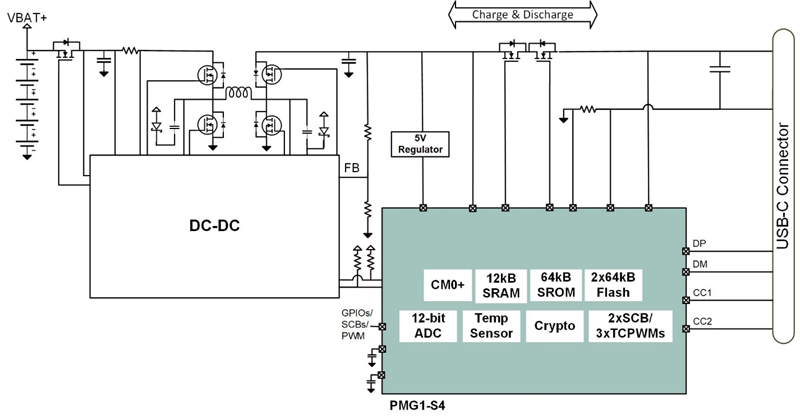
Figure 1: An example using the Industrial Battery Connector from Anderson Power demonstrates that, at constant ambient temperature, connector temperature increases as applied current increases
As airports, manufacturing facilities, and construction sites adopt electric equipment, modern safety and compliance standards are impacting the latest battery connector designs. Three emerging trends are influencing connectors:
· Lithium-Ion Battery Adoption: Lithium-ion is replacing lead-acid as the battery of choice. However, fast charging tends to generate more heat, making connector thermal durability increasingly critical.
· High-Power Equipment: Some off-highway applications are shifting to higher-voltage architectures to improve equipment performance. This requires connectors with enhanced safety features to reduce the risk of exposure to hazardous voltage.
· Expansion of Outdoor Charging: Equipment is increasingly charged outdoors, necessitating sealed connectors that meet rigorous weatherproofing standards.
Engineers should account for these considerations when designing the latest electric equipment. Selecting a connector that meets or exceeds the latest standards leads to safer, compliance-first industrial power designs.
Lithium-Ion Fast Charging and Thermal Management
The transition to lithium-ion batteries is the first major force reshaping connector requirements. Compared to lead-acid systems, lithium-ion technology offers enhanced battery monitoring, higher efficiency, and faster charging. This permits equipment like forklifts to return to service more quickly.
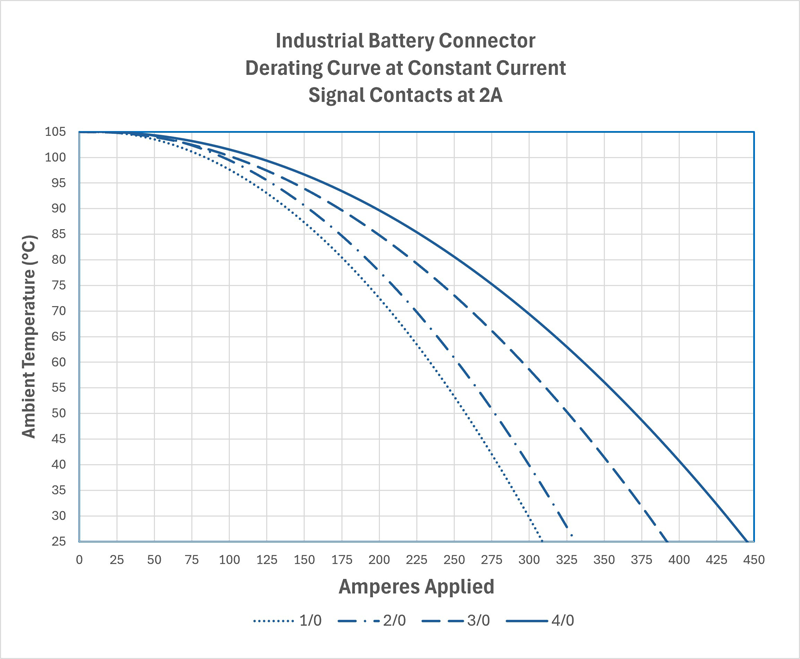
However, fast charging involves higher currents that introduce new thermal challenges. Joule’s Law indicates that heat originating from ohmic loss is proportional to the square of the current (P = I²R). Figure 1 demonstrates how increased current generates additional resistive heat at a connector’s contacts. Figure 2 demonstrates how higher ambient temperatures in the charging environment can also increase thermal susceptibility.
Click image to enlarge
Figure 2: An example with the Industrial Battery Connector demonstrates that allowable current must be derated (reduced) as ambient temperature increases or when smaller conductors are used
Overheating connector contacts can degrade charging performance, leading to poor conductivity and voltage drops. The connector housing could even warp or melt over time. Some operators significantly limit lithium-ion charging rates to manage thermal risk, but this approach does not take full advantage of fast charging.
Designing Connectors for Thermal Durability
To support faster charging without compromising safety, the latest connectors integrate Negative Temperature Coefficient (NTC) sensors into their assembly. NTC sensors enable real-time temperature monitoring at critical contact points, allowing systems to dynamically reduce current when safe thresholds are exceeded. A Temperature Sensing Application Guide can help engineers understand best practices to follow on NTC implementation and how to maximize lithium-ion charging speed.
The material of connector housings also plays an important role in thermal durability. Instead of traditional polycarbonate, engineering-grade plastics such as polycarbonate/polybutylene terephthalate (PC/PBT) blends improve the connector’s thermal and acid resistance.
How EN1175:2025 Impacts System-Level Thermal Compliance
Design considerations for thermal management are increasingly required by compliance frameworks. EN1175:2025 is the European Union standard for electrical systems in battery-powered industrial trucks. It covers a wide range of safety standards, including thermal concerns like ambient operation ranges.
The standard’s recent update reflects a broader emphasis on total system safety. While the previous standard (EN1175:2020) approached the connector as a standalone component, the 2025 update views the connector as one component within an integrated system. EN1175:2025 became mandatory within the EU on May 31, 2026. Connectors that meet or exceed the rigorous testing requirements of EN1175:2025 are better prepared for the thermal demands of modern lithium-ion systems.
How Higher System Voltage is Impacting Connector Designs
Another factor impacting the latest connector designs involves higher-power electric equipment. Traditional off-highway equipment systems operated below 50V to minimize electrical hazards and simplify repairs. For example, OSHA standards state that electrical parts operating at less than 50V to ground typically do not need to be deenergized before maintenance.
However, modern off-highway equipment systems are moving toward higher voltages to enable greater power delivery with lower current. Less current reduces cable sizes, resistive losses, and connector heating, while increased power supports more demanding equipment loads and higher torque demands.
Higher voltages introduce new safety considerations for equipment operators and technicians. When it comes to battery connectors, new geometries and design features are emerging that can help mitigate the risk of exposure:
· Increased spacing for voltage insulation (additional creepage/clearance)
· Touch-safe features like recessed contacts and shrouds
· Latching handles that help ensure a strong mechanical connection that locks into place
Together, these safety and security capabilities can reduce the risk of accidental disconnections under load and exposure to high voltage. Engineers designing high-power off-highway equipment should seek connectors designed with touch safety and connection security in mind.
The Rise of Outdoor Charging and the Importance of Connector IP Ratings
The third impact on connector designs involves the rise of outdoor charging. As industries like airport aprons and construction sites adopt more electric vehicles, they often prefer to charge outdoors in the same environment their equipment operates.
However, outdoor connectors require additional protection. Rain infiltrating the connector housing can cause short circuits. Dust accumulation on power contacts can remove plating and expose the copper to air, leading to poor conductivity and overheating.
To determine a connector’s readiness for outdoor charging, engineers should review its two-digit Ingress Protection (IP) rating. The first digit indicates an enclosure’s resistance to solids (0-6) and the second measures resistance to liquids (0-9).
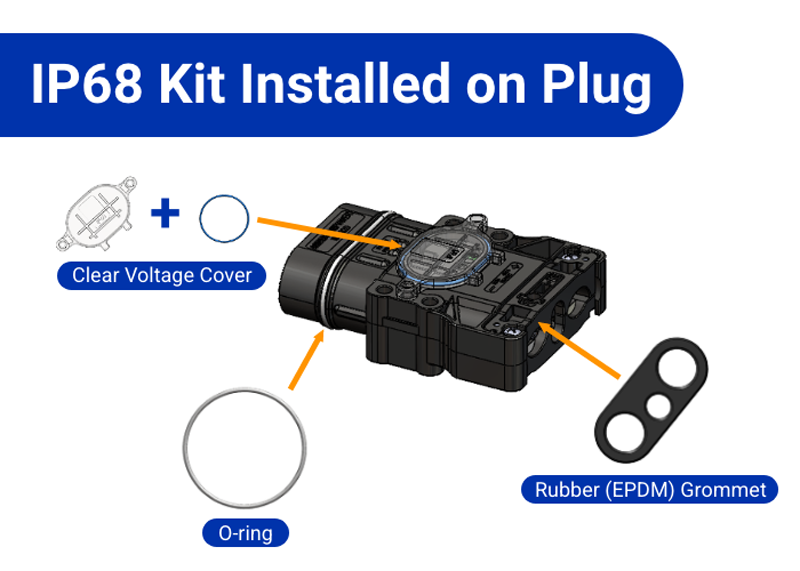
For both performance and safety reasons, engineers designing outdoor equipment should adopt rugged power connectors with high IP ratings. For example, an IP68 rating indicates a connector is fully dust tight and can withstand water submersion under conditions specified by the manufacturer. Figure 3 provides an example of an IP68 sealing kit for a battery connector.
Click image to enlarge
Figure 3: An example of an IP68 kit where an O-ring seals the connector’s plug side, a clear voltage cover and another O-ring seal the voltage key area, and a rubber grommet seals the connector’s cable side
Why Compliance Strategy Should Start in the Concept Phase
As these three trends demonstrate, modern designs must begin with compliance strategy at equipment concept, not validation. Engineers should identify their target markets and applications early to ensure their selected battery connector meets the electrical, mechanical, and flammability standards of those regions.
Accurately interpreting requirements is critical. Misinterpreted standards can lead to failed certification testing, which often requires redesigns, extends development timelines, and reduces overall product development efficiency. Engineering teams should work closely with their vendor partners to develop a clear and accurate understanding of their specific requirements.
In addition to EN1175:2025 and IP ratings, other common standards include:
· United States: Underwriters Laboratory (UL) standards indicate that the connector did not fail in a dangerous manner after intensive third-party testing. UL 1977 encompasses component connectors.
· Canada: The Canadian Standards Association (CSA) establishes safety and performance standards for a wide range of industries in Canada.
· Europe: DIN standards are published in Germany and are often harmonized into broader European standards (EN) or international standards (ISO). DIN VDE 0623-589 outlines requirements for dimensional compatibility, performance criteria, and safety compliance in electric industrial trucks.
It is often convenient to select a battery connector that meets multiple global standards. This approach enables OEMs to easily expand sales to new markets in the future.
Case Study: Applying Standards and Safety Considerations to Connector Design
A recent project at connector manufacturer Anderson Power provides a practical example of how evolving standards can guide engineering decisions. During the project, the company’s engineers were tasked with improving connector performance while maintaining full compatibility with the established DIN VDE 0623-589 standard and footprint. The DIN interface is deeply embedded across OEMs, equipment, and infrastructure, meaning the new connector had to:
· Fit within existing mating geometries and envelopes
· Maintain interchangeability with legacy connectors
· Meet strict regulatory and safety expectations
At the same time, the team needed to advance overall performance and meet next-generation requirements for higher power levels, improved sealing, and enhanced thermal durability. The challenge involved introducing meaningful innovation while remaining compatible with DIN.
After a lengthy development and testing process, the engineers achieved a connector design that complied with a wide range of standards such as DIN VDE 0623-589, UL 1977, and CSA 22.2 No. 182.3-16. The final design also introduced new features to enhance safety within broader equipment trends:
· Thermal Safety: The connector integrated contact temperature sensing and met EN1175:2025 requirements with a PC/PBT housing.
· High-Power Safety: The connector supported multiple voltage keying configurations, including high-voltage options like 72, 80, and 96V. A latching handle option also enhanced connection security and safety.
· Outdoor Charging Safety: The connector included an IP68 sealing accessory for outdoor applications. The engineers used UL50E testing methodologies to validate compliance with the IP68 standard.
The example illustrates how standards can serve as a roadmap for innovative and safe industrial designs.
Standards and the Latest Equipment Designs
As engineers design the next generation of electric equipment, battery connectors must support lithium-ion batteries, higher voltages, and outdoor charging. Designs that offer features like temperature sensing and meet standards like EN1175:2025 and IP68 provide a compliance and safety advantage. As requirements continue to evolve, new standards can help serve as a framework for designing safer, more reliable, and future-ready industrial power systems.