Author:
Ally Winning, European Editor, PSD
Date
01/15/2026
 PDF
PDF

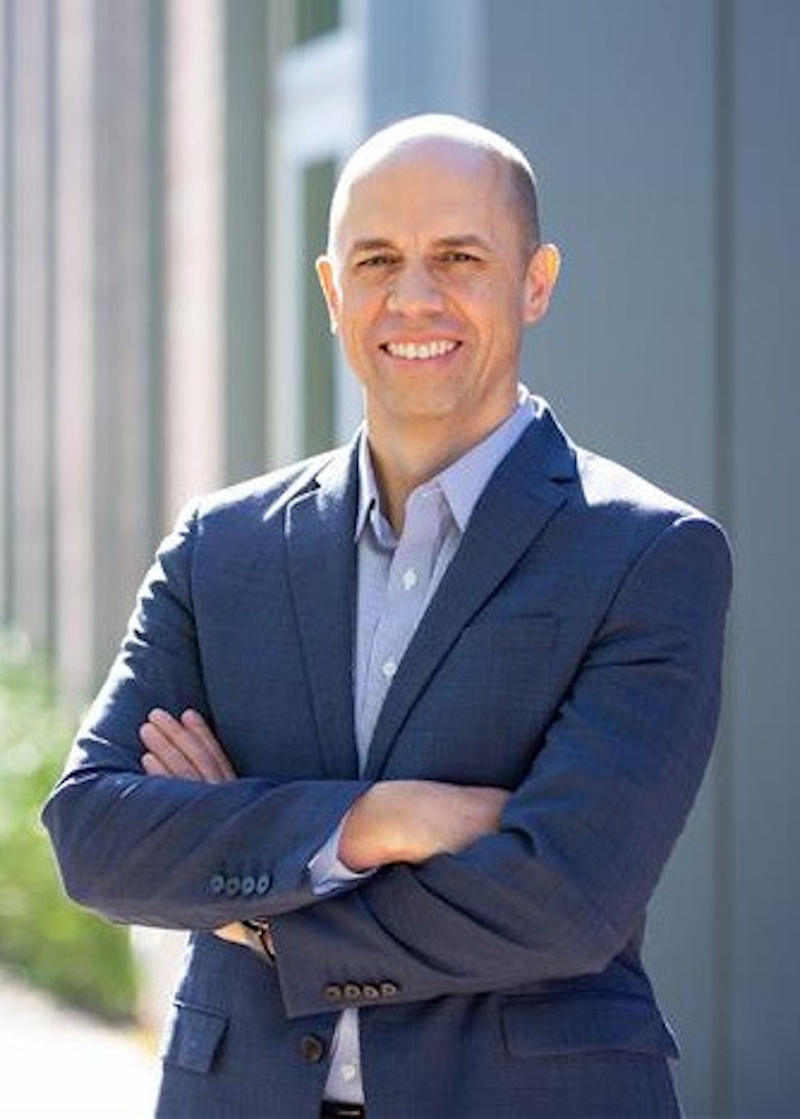
Carol Leh, Vice President R&D, Center of Excellence, Keysight Technologies
PSD - What do you see as the main trends in industry that affect the power market?
CL - The key trends that are shaping the world today are AI, energy transition, smart mobility, and aerospace and defense modernization. These industries are built on power electronics and use increasingly complex, high-power devices. In applications, such as GPU clusters for AI, grid inverters, electronic drivetrains and radar systems, power semiconductors are moving to silicon carbide and gallium nitride, which provide unprecedented power density and performance, while increasing the complexity of systems. In the past, we looked at discrete components, but now we see really tightly integrated software and control systems. The electrical, thermal and mechanical physical domains are coming together and have to be considered together. High-power applications, from hundreds of kilowatts to megawatts are definitely growing much faster than traditional, lower power applications, and power solutions themselves are becoming increasingly complex, and evolving into high-density, bi-directional, software defined systems.
Security and sustainability are also growing in importance. Power systems are digitally controlled and network connected today, and security is no longer optional. For sustainability, a lot of power is generated and consumed by testing, and companies see eliminating that waste as important in terms of controlling their overall carbon footprint. So, high power systems must be secure by design and sustainable by operation, and customers need to have confidence that this is the case.
Finally, today there are far more mission critical applications around the world. For example, in an AI data center, power failure will stop all training at a very large cost. Grid infrastructure instability can affect multiple regions. In transportation, a faulty drivetrain can be life threatening. Environments like this demand continuous and reliable operations under all conditions. So that mission criticality raises the stakes, and the high cost of failures is redefining requirements for power validation, shifting the focus from simple functional test to system level validation that needs to be highly automated and cover all cases before the system is deployed.
So to summarize, technology is converging right now around systems that are becoming more powerful, more complex, connected and mission critical.
PSD - What steps are Keysight taking to meet those demands?
CL - To keep pace with the market, our high-power products leverage advanced conversion to deliver more power. At the same time, that new equipment needs to take account of the space constraints that our customers have for their testing environments today. For the complex testing requirements of mission critical designs, our customers gain operational advantage through a combination of that high power density equipment, and our Power Suite software. Power Suite allows engineers to configure, control and sequence power and measurements across multiple instruments and provides repeatable systems testing. The result is fast automation and tightly integrated programmable power measurement, and software control to quickly run test cycles with as little manual intervention as possible.
Sustainability is helped by integrating regenerative technology into the equipment to recover and reuse energy instead of dissipating it as heat. For security, removable memory protects sensitive customer data and provides a secure environment. We also work within the Secure Software Development Framework to provide compliant designs.
PSD - Have you any recently released products that highlight these benefits?
CL – Yes, a great example is our recent release of high-power ATE system power supplies, with three new product families: the RP5900 Series Regenerative DC Power Supplies, the EL4900 Series Regenerative DC Electronic Loads, and the DP5700 Series System DC Power Supplies. Our new high-power ATE supplies range from 1.5 kW to 12 kW and include uni-directional power supplies, bi-directional power supplies, and regenerative electronic loads. By combining superior density with advanced Power Suite software, the portfolio enables engineers to validate complex, multi-kilowatt devices efficiently with greater precision and repeatability, using less space and energy across the industry, from the lab to full production.
PSD - With the increase in complexity for testing, do you find customers turn to you more for assistance implementing solutions?
CL – Yes, that definitely is the case. Keysight's Center of Excellence designs and develops essential building blocks that include power supplies, DMMs, oscilloscopes, function generators, etc. and we have solution teams to assist customers to develop full test system solutions for various industry segments, such as automotive, aerospace, defense, and energy. Our solution teams have the capability to design test systems for the entire functional areas, such as in a battery lab by integrating power test products with other Keysight instruments, or even the customer’s own bespoke equipment, to complete complex tasks such as battery cycling test.