Insights into supersonic phasons may improve accuracy of simulations
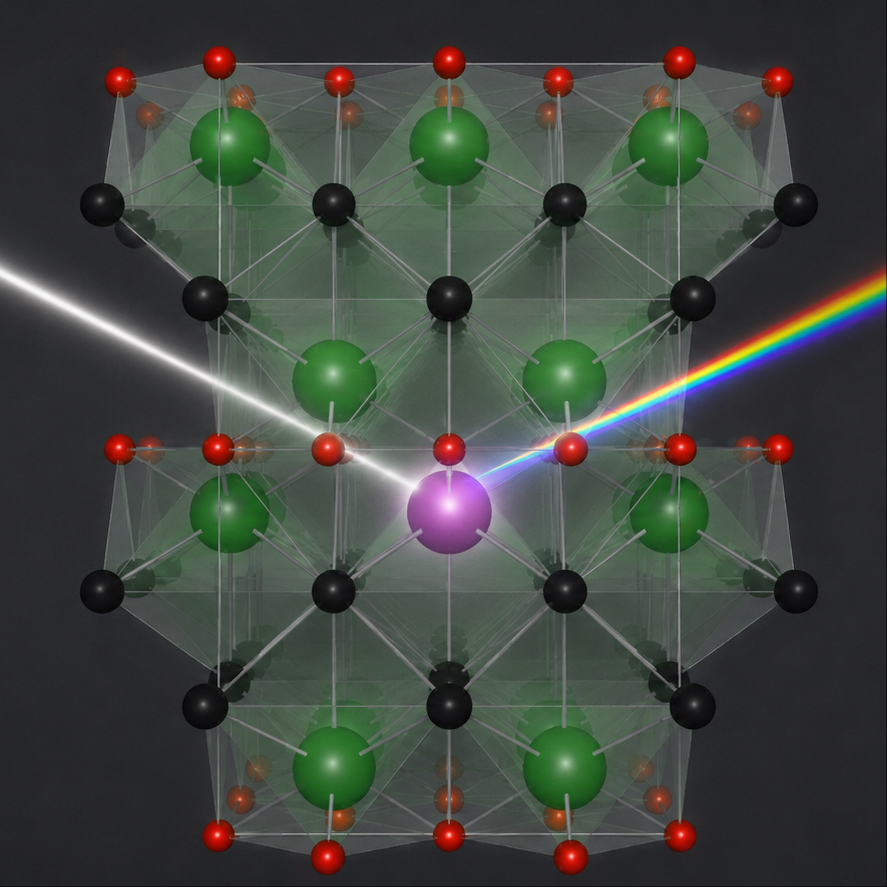
Warming a crystal of the mineral fresnoite, Oak Ridge National Laboratory scientists discovered that excitations called phasons carried heat three times farther and faster than phonons, the excitations that usually carry heat through a material.
“Neutrons were ideal for exploring these sources of heat transport because they interact with both phasons and phonons,” said Michael Manley, who led the study with Raphael Hermann.
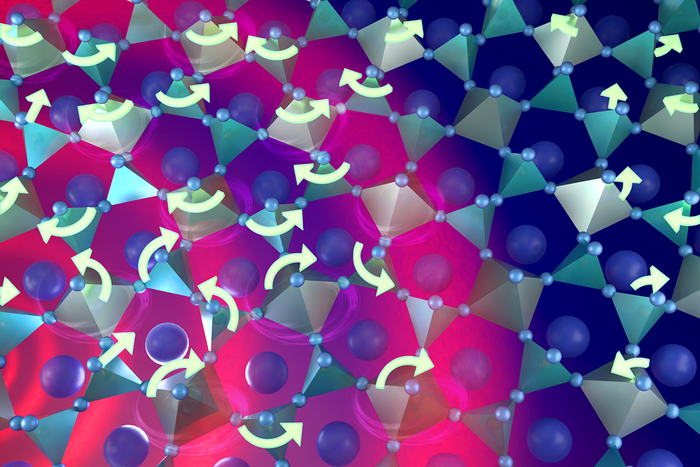
In most crystals, atomic vibrations propagate excited waves through the lattice as phonons. However, in certain crystals, atomic rearrangements also propagate excited waves as phasons. Because phasons can move faster than sound, physicists anticipated they would excel at moving heat.
The team mapped paths of phasons and phonons and characterized their vibrations at ORNL’s Spallation Neutron Source and measured the transport of heat through the lattice in a Materials Science and Technology Division laboratory.
“We observed phasons carrying heat through the crystal by improving the experimental resolution, like going from the Hubble to the James Webb Space Telescope,” Hermann said, referring to iconic telescopes launched three decades apart.
The results may help theorists improve accuracy for heat transport simulations of energy materials.
EurekAlert!, the online, global news service operated by AAAS, the science society.