SunHydrogen Unveils Larger Version of the World's First-Ever Nanoparticle-Based Green Hydrogen Generator
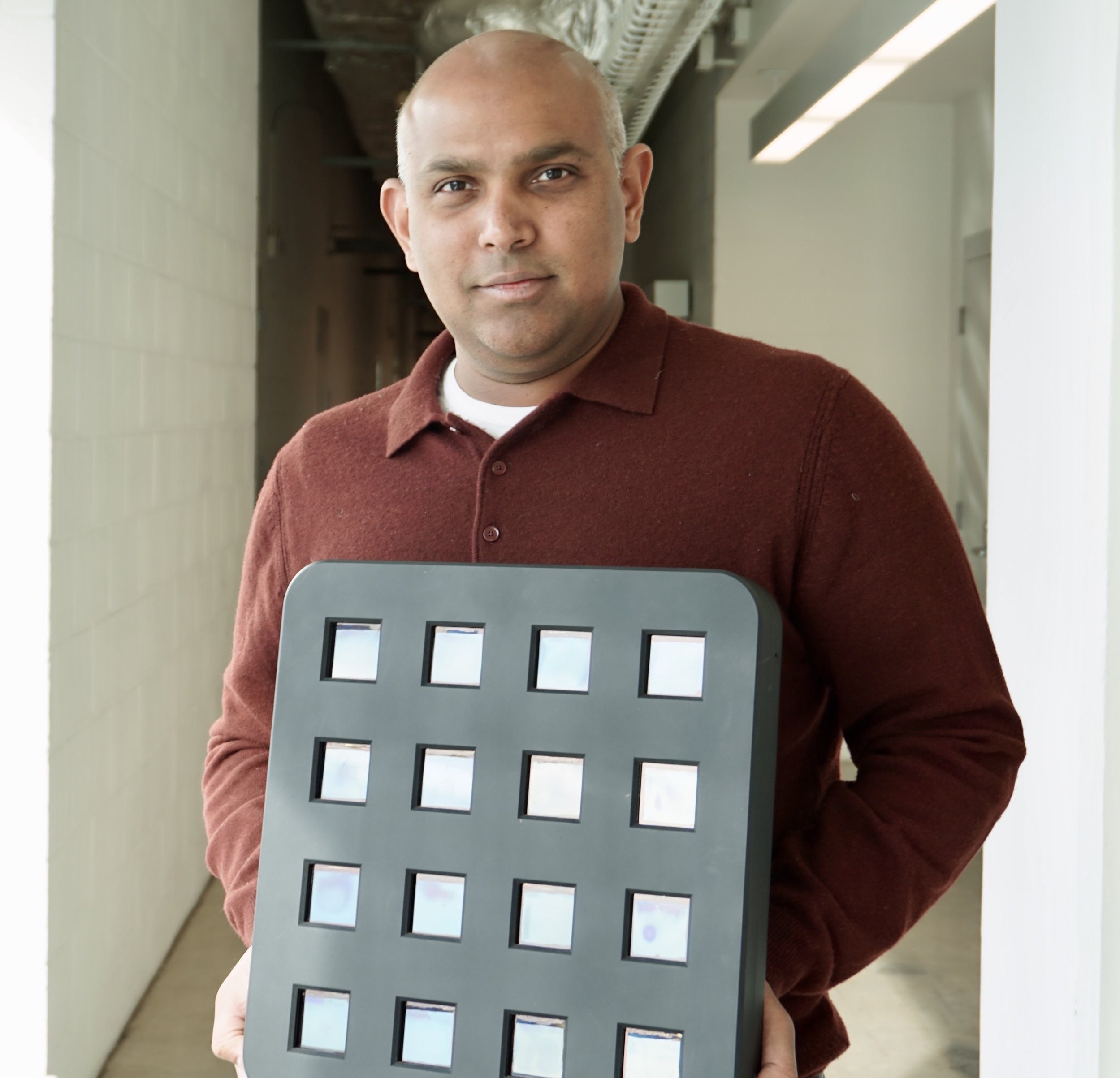
The system is designed to be economical at mass-manufacturing scale
SunHydrogen, Inc. published a photo of the largest version to date of its nanoparticle-based green hydrogen technology.
The image unveiled shows a panel that houses multiple hydrogen generators and contains 16 times more hydrogen generator area than the Company’s previous small-scale model. Multiple arrays of hydrogen generators bolster hydrogen production rates.
This prototype is currently the only self-contained nanoparticle-based hydrogen generation device of its kind that splits water molecules into high-purity green hydrogen and oxygen using the sun’s energy.
SunHydrogen’s nanoparticle technology directly uses the electrical charges created by sunlight to generate hydrogen when the sun is shining. However, this prototype was also designed to support 24-hour operation even when the sun is not shining by powering the catalyst and membrane integration assembly with renewable grid electricity from wind or hydropower sources.
The Company’s previous small-scale model, publicized in December 2022, was designed to fit a single nanoparticle-based hydrogen generator for testing in a controlled environment.
“This larger-scale panel moves us one step closer to producing commercial-scale hydrogen panels,” said SunHydrogen’s Chief Scientific Officer Dr. Syed Mubeen.
“Just like a solar panel is comprised of multiple cells, our hydrogen panel encases multiple hydrogen generators, as pictured. However, because we are growing our own nanoparticle semiconductor units using low-cost, abundant materials, we are not reliant on expensive solar cell materials and architecture. We believe that when our efficiency goals are met, this will prove to be one of – if not the most – economical green hydrogen solutions,” Dr. Mubeen concluded.
SunHydrogen’s Iowa scientific team is currently working to increase the hydrogen production rate per panel by increasing the hydrogen generator area to panel area ratio, as well as overall panel size. The Company is also working to improve overall solar-to-hydrogen efficiency through its agreement with the National Renewable Energy Laboratory (NREL), as well as with its industrial partner InRedox and the Singh Lab at the University of Michigan. In parallel, the Company is working to improve the overall stability of the hydrogen generators.
“I am extremely proud of our team and our industrial partners for meeting another milestone in the path to scaling up our technology, and I am grateful for our shareholders’ patience and support as we work to improve efficiency, overcome challenges, and bring our vision to fruition,” said SunHydrogen’s CEO Tim Young.
Note: A hydrogen generator refers to the entire unit structure composed of substrate, protective layer, photovoltaic layers, andoxidation/reduction catalyst, in which billions of nanoparticles split apart water at the molecular level. A hydrogen panel houses multiplearrays of such hydrogen generators. Future communications will continue to clarify this distinction between hydrogen generator andhydrogen panel.
To learn more about SunHydrogen, please go here.