The Hidden Pressure Point in Data Center Power Systems
Precision behind uptime
Industry discussion around data centers tends to focus on what is biggest: larger campuses, heavier power demand or more sophisticated digital infrastructure. But as these environments become more complex, resilience depends on more than their headline features. It is increasingly shaped by the supporting engineering technologies that help power systems respond reliably under pressure.
This is especially true in facilities where rapid shifts in computing demand can place corresponding strain on fuel delivery and control systems. In these settings, consistent performance depends not only on major equipment, but on how effectively the wider system manages precision and stability under changing conditions.
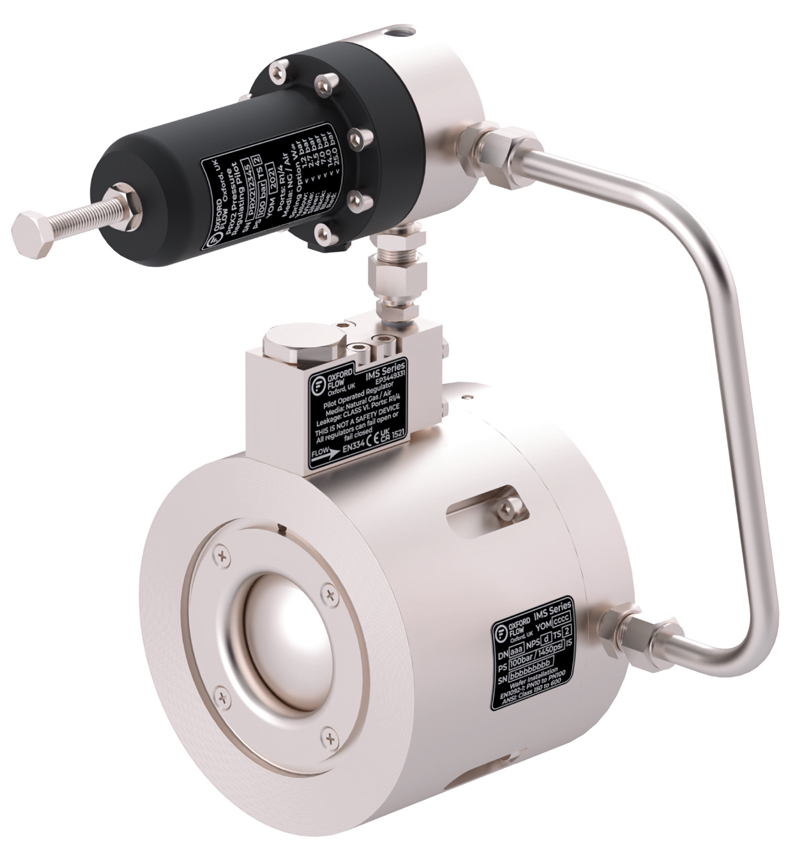
One of the most overlooked components in that system is the pressure regulator. Generally treated as a commodity hardware, essential but fundamentally interchangeable. Yet in modern data center power systems, particularly those relying on natural gas power generation, their performance can play a far more important role than many operators realize.
Technologies operating in these environments must therefore be engineered to deliver consistent precision, stability and responsiveness under rapidly changing conditions. This may sound relatively straightforward but becomes far more demanding in practice. As engines ramp up in response to shifting load, the regulator must adapt quickly enough to avoid pressure changes or instability in fuel delivery. Precision in pressure control is not simply a matter of component specification; it's closely linked to how reliably the engine itself can perform under dynamic operating conditions. As generation systems are asked to respond faster and more often, the tolerance for drift, delay or inconsistency reduces drastically. What makes this more challenging is that performance issues at regulator level do not stay contained for long. In tightly engineered power systems, small inconsistencies in pressure control can ripple outward, affecting combustion stability, engine efficiency and maintenance intervals. Where operators are managing multiple units in parallel, that effect becomes harder to ignore. The regulator is therefore not just a point component in the fuel chain, but part of the wider conditions that determine how smoothly and predictably onsite generation can respond when demand changes quickly.
Click image to enlarge
A more dynamic operating environment
Many of the components used in industrial gas systems were originally designed for a relatively stable operating environment. Utility networks and traditional industrial processes tend to experience gradual changes in pressure and flow, giving equipment time to respond.
But data center power systems live in a much more dynamic world. As of late 2025, the US alone hosts more than 4000 operational data centers, nearly half of all the facilities worldwide. In these new conditions, computing demand fluctuates, whether due to AI workloads or bursts of cloud traffic, and engines can ramp up and down rapidly. Fuel demand surges and dips in tandem, creating operating environments that legacy regulators were never designed to handle. This places greater technological demands on control components, which must maintain accuracy and stability even as system conditions shift rapidly.
In particularly high-density facilities like in Northern Virginia, home to the largest data center hub in the world, where servers power nearly all the major AI and cloud services globally, the margin for error is minimal. Pressure regulators that lag or drift from their target pressure have a measurable impact on performance. Engines lose efficiency, mechanical wear accelerates and performance across multiple units can degrade simultaneously.
In practical terms, this makes repeatability just as important as outright responsiveness. A regulator must not only react quickly to changing demand but do so consistently over time and across operating cycles. In power environments where multiple engines may be running in parallel, even small variations can become magnified at system level.
The case for a new generation of pressure regulators
These factors make it clear that traditional pressure regulators are no longer sufficient. Historically, pressure regulators in industrial gas systems were treated as standardized components, with operators selecting a tried and tested option based on familiarity and proven reliability. Performance differences were often assumed to be marginal and risk was low. Now modern data center power systems challenge that assumption. Rapidly changing loads, high-density facilities and tight uptime expectations mean standard is no longer enough. Here, innovation in pressure regulator design matters.
By combining compact form factors, faster response characteristics and simplified mechanical design, modern regulators are able to maintain precise pressure control. These design improvements also reduce routine maintenance needs, allowing operators to spend less time on service interventions and more time optimizing overall system performance.
Their smaller footprint also means they can be integrated more easily into high-density engine rooms, freeing space for additional equipment and simplifying system layouts in constrained facilities.
In data center environments, operational gains are rarely driven by one dramatic change. More often, they come from reducing friction across the wider system: lowering maintenance requirements, simplifying installation, improving control accuracy and making more efficient use of limited space. In high-density engine rooms, where multiple systems need to operate reliably with minimal disruption, compact and lower-maintenance technologies can create meaningful long-term value. Equipment that's easier to maintain performance under fluctuating demand supports a more resilient operating model overall. For operators managing uptime-sensitive assets, these are not minor advantages. They can help reduce operational burden, limit service interventions and improve performance predictability over the life of the asset.
These improvements may seem incremental on their own, but when US data centers consume over 90 billion kWh of electricity annually, they translate to measurable gains in efficiency, reliability and operational resilience.
Precision in fuel delivery can't be treated as an afterthought but must be considered as a prerequisite for keeping systems running optimally, at scale. By improving precision, footprint and maintenance demands, these pressure regulators not only enhance performance but also support long-term operational resilience and cost efficiency.
The infrastructure behind uptime
For data center operators, reliability is no longer just an engineering objective. It is tied directly to revenue protection, service continuity and long-term asset performance. As campuses grow larger, denser and more power-intensive, the systems that support them are coming under closer scrutiny. With billions of dollars flowing into new infrastructure and delivery timelines under pressure, there is less room for supporting equipment that cannot perform.
That shift is changing how operators think about component value. Technologies once selected primarily on the basis of familiarity or footprint alone are now being judged on how they contribute to resilience, maintainability and system efficiency over time.
At Oxford Flow, our pressure regulators have been designed with these circumstances in mind. By maintaining stability under dynamic load conditions and simplifying integration in dense installations, they help operators protect both performance and profitability.Technologies developed for these environments are built to meet the same expectations of uptime, performance and reliability that define modern data center infrastructure. In dense facilities, these details can influence everything from layout efficiency to service access and maintenance planning. A component that is smaller, simple and easier to integrate can remove friction at several points across the asset.
Pressure regulators may never be the headline technology in data center infrastructure, but as data center power systems grow, scale and complexity, those once-overlooked components are starting to matter more than many operators realized.