Ultra-Thin Low ESL MLCCs for In-Vehicle ADAS Applications
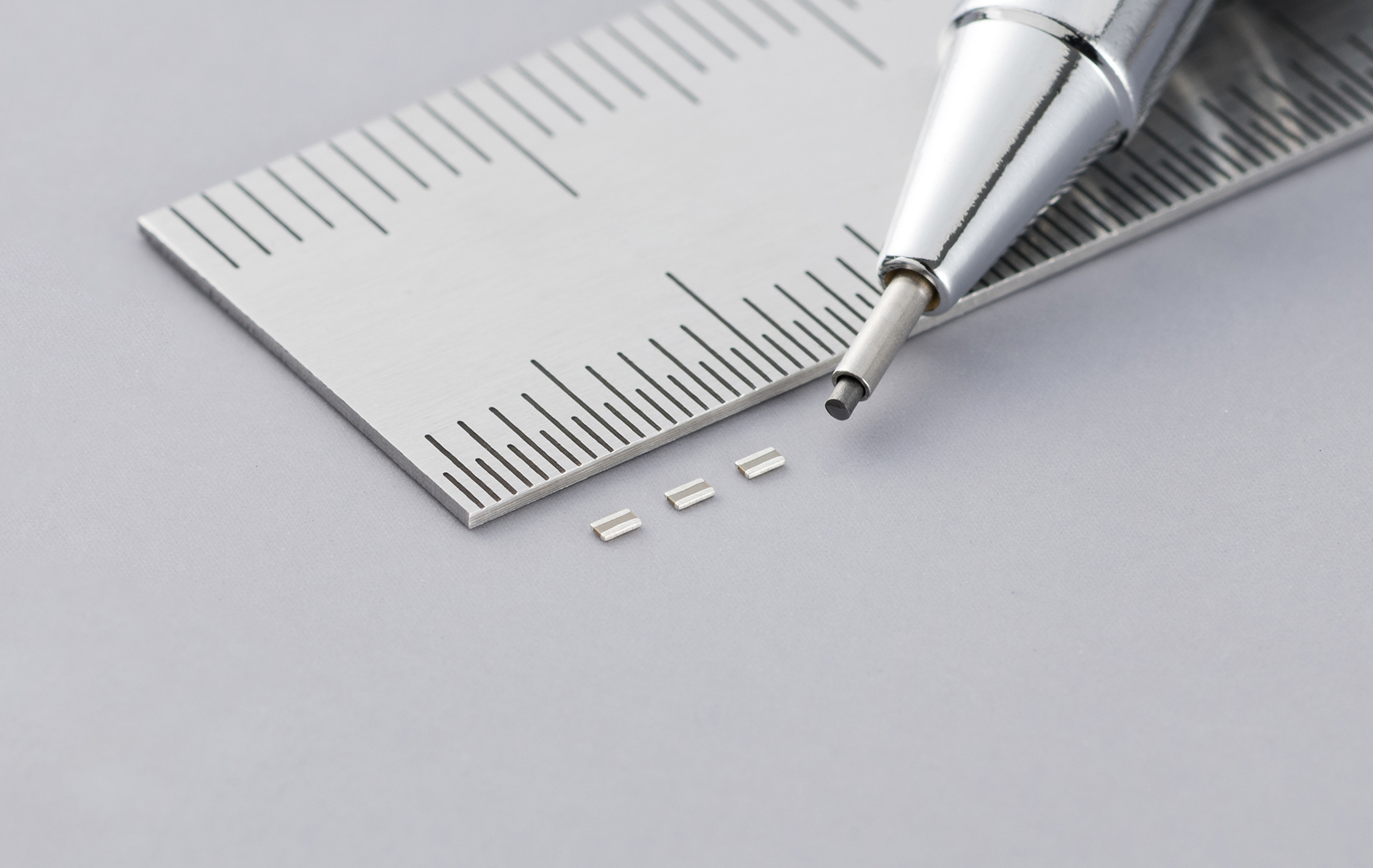
Murata announced the ultra-thin LW reversed, low equivalent series inductor (ESL) multilayer ceramic capacitor (MLCC) with a capacitance value of 1.0 µF ±20% for 4 Vdc-rated automotive applications. With a 0204 inch size (0.5 x 1.0 mm) footprint and maximum thickness of just 0.22 mm, the LLC152D70G105ME01 decoupling capacitor can be implemented on the back of a processor package, contributing to lower impedance of a power supply line.
Compared to standard MLCCs, the LW reverse construction flips the electrodes through 90° so they are positioned on the long side of the rectangular chip. This change in construction reverses the length-to-width ratio, providing effective noise suppression in high-frequency applications.
As advanced driver-assistance systems (ADAS) continue to evolve to increase safety and, ultimately, deliver self-driving vehicles, ICs for in-vehicle equipment have become increasingly high-performance. To stabilize these ICs, more focus is being put on lowering the power supply lines’ impedance. Thanks to Murata’s proprietary thin layer technology for ceramic elements and thin-sheet formation technology, the LLC152D70G105ME01 LW reversed, low ESL chip MLCCs are effective for achieving a low-impedance design.
For more information about the LLC152D70G105ME01 LW reversed, low ESL chip MLCCs, visit here.
 Single.jpeg)