Company Wants to Mass-Produce Data Centers on an Assembly Line
The U.S. (and much of the developed world) is going to need a whooooooole lot of data center capacity this decade – Goldman Sachs Research estimates that U.S. data center power demands, driven largely by A.I. infrastructure, will reach 66 GW by 2027, climbing to 95 GW by the end of that same year.
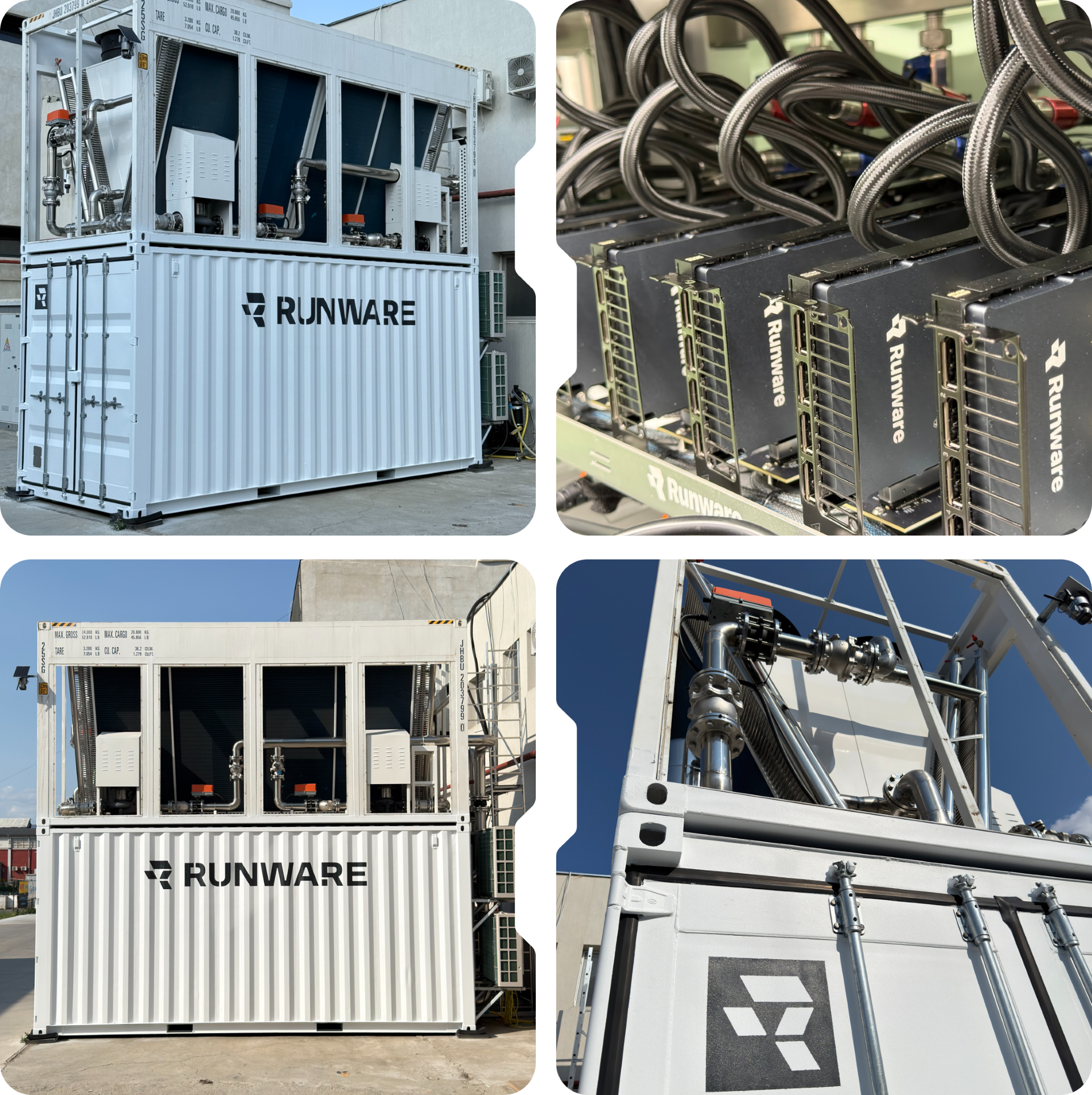
But how do we ramp up so high in an efficient and environmentally-conscious manner? AI infrastructure company Runware has an answer to the first item with its Sonic Inference Pod, a modular data center, and as for the environment? That’s less clear.
The tech, itself, is rather impressive, even if the idea of modular anything is nothing new. Flaviu Radulescu, co-founder and CEO of Runware, apparently told TechCrunch that it wants to increase production at its Romania-based factory to 30 megawatts of data center capacity per day by 2028 (yes, per day), an insane figure that would basically match what the entire U.S. adds every year.
A second factory is also under construction, where the Sonic Inference Pods would be assembled in an assembly line-like process, massively scaling-up output in the same way such facilities have been doing since the early 20th century.
Naturally, customers would be able to customize the modular facilities to their bespoke specifications, and Runware claims the target build time per data center to 48 hours, though that would only include installation and set-up and not build time.
And the company is keeping a sharp eye on the bottom line.
“Our cost structure is very different,” Radulescu said. “We do have headcount and materials cost,” he continued. “But our factory staff is cost-effective relative to the value of deploying compute for AI.”
Many of the cost issues would be solved by designing many of its systems in-house.
Of course, many U.S. critics are less concerned with data centers’ cost and more so with their environmental footprint – mainly, the strain on the power grid and freshwater resources, since water is often needed for cooling purposes.
On that, the company was a bit less clear, though it’s definitely on their mind. Apparently, the pods will use a closed-loop liquid cooling system “with air-cooled radiators to release heat,” completely sidestepping the need for local freshwater.
And on the greater issue of power, Radulescu claims their pods run “completely silent up to temperatures of 86 degrees Fahrenheit. We use energy from renewable sources whenever possible,” he continued. “We are actively working on expanding our network of energy providers and sites. We’re aiming to have renewables as our main energy source.”