Electric School Bus Could Cut Fuel Costs by 60%
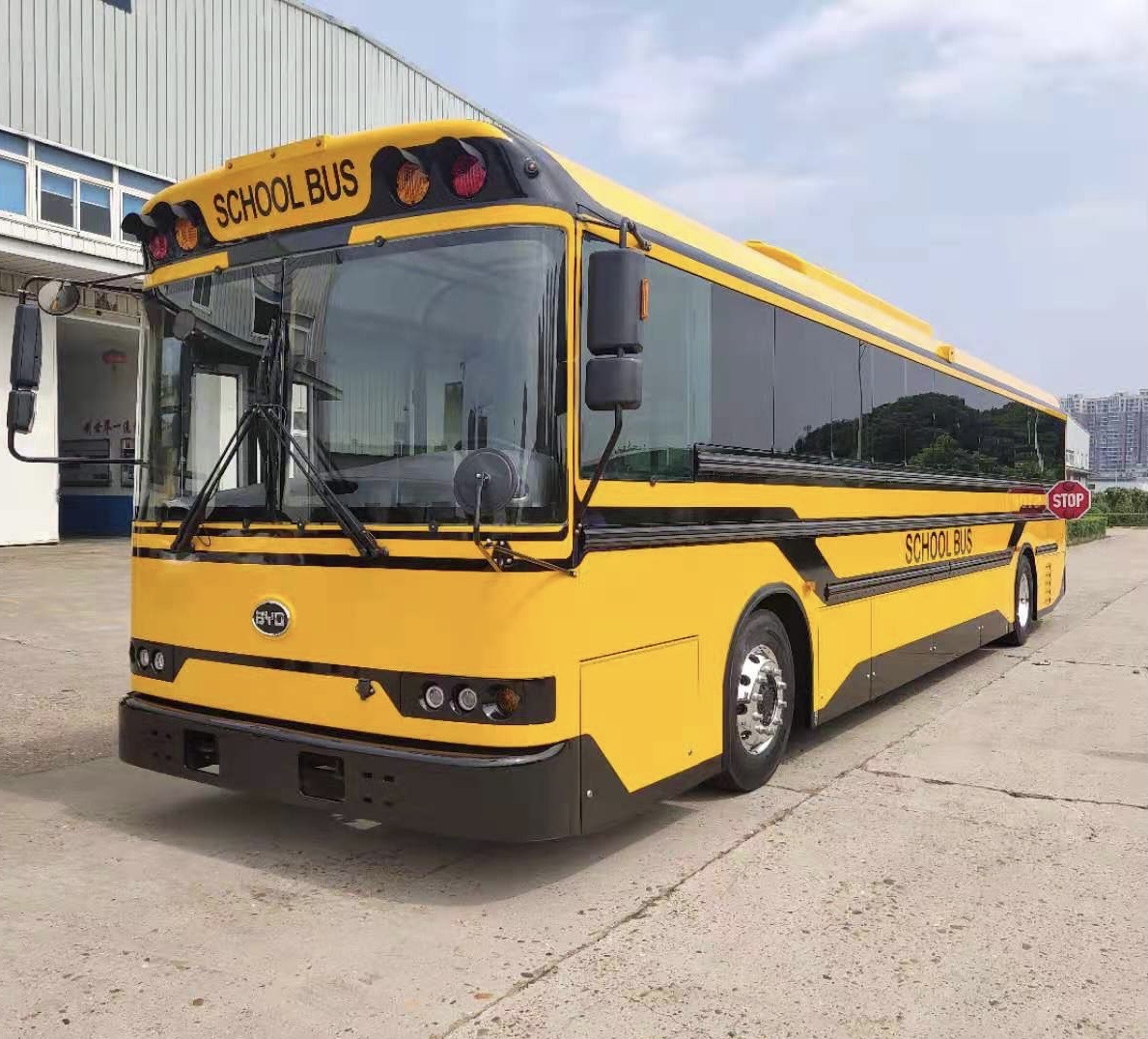
The transportation sector is the top cause of greenhouse-gas emissions – accounting for 28% of GHGs – so it makes sense that schools would convert their buses to electric. And Chinese automaker BYD aims to help make that happen.
BYD (Build your Dreams) has a broad portfolio ranging from all-in-one energy storage solutions to battery-powered garbage trucks and other electric vehicles in the industrial space.
Their stated goal is to “to change the world by creating a complete, clean-energy ecosystem that reduces the world’s reliance on petroleum.”
Fitting then, that one of their next big projects is right in the heart of the biggest contributor to greenhouse-gas emissions.
BYD’s Type D battery-electric school bus utilizes a lithium iron phosphate battery, supposedly the safest and most reliable in the EV industry, and their range tops out at around 155 miles/charge.
The buses come in configurations of 35, 38, and 40 feet (35-45 feet is considered a full-size school bus), feature an ADA liftgate, and they can seat 84 people.
Of course, the biggest question is price – EVs often trade a short-term investment for long-term savings, and that “investment” is sometimes insurmountable for individuals.
According to the American Association of School Administrators, annual average costs for operating and maintaining a single school bus range from $34,000 to $38,000, and for their part, BYD claims their battery-electric technology can cut fuel costs by as much as 60% compared to diesel vehicles. Supposedly, fewer moving parts and less vibration can also cut maintenance costs by as much as 60%.
“We believed the Type D electric bus needed to be appealing to kids while at the same time offer the upmost safety features and driver ergonomics, be equipped with a safe, high-performance battery, and have plenty of storage capacity for road trips,” said Samuel Kang, BYD’s Head of Total Technology Solutions.
Read more here.