Going Circular for Sustainability
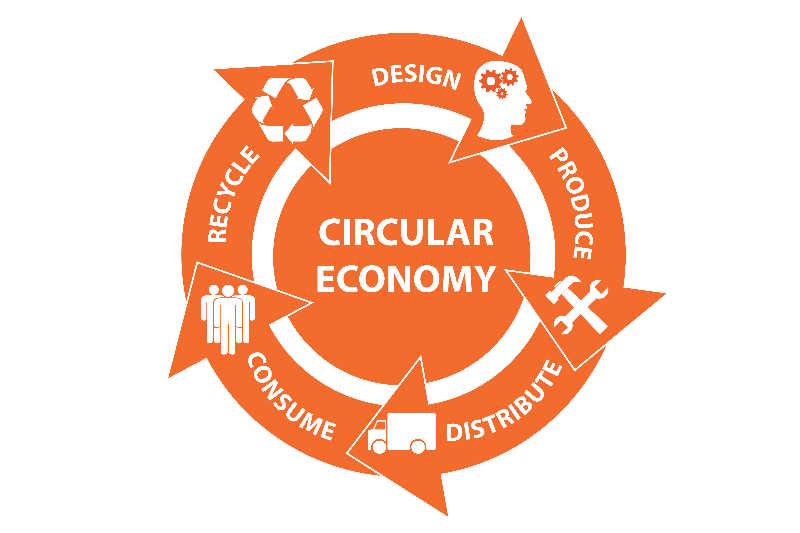
There is some real momentum building in the electronics industry behind the idea of a circular economy. Waste happens at every point in the production of electronic devices, from the initial resource extraction, through production and end of life disposal. Extraction of resources is often very polluting and usually relies heavily on fossil fuels. Production of electronic devices uses tonnes of water, chemicals and energy. Every year millions of tons of e-waste are sent to landfills instead of being recycled. This can often lead to poisons leaching into the earth as the e-waste breaks down. According to the World Economic Forum, e-waste stream will amount to 57.4 million tonnes in 2021, worth nearly $60 billion, with under 20% formally collected and recycled. The circular economy would allow much of that e-waste to be salvaged or reused, while lowering the need for new resources to be extracted and cutting down on the resources required during production. Of the 20% that is recycled, a a proportion will be illegally exported to developing countries for the process.
Infineon has been invested in sustainability for a long time, and the company has been recognized as one of the top 10% most sustainable companies globally in S&P Global’s ‘The Sustainability Yearbook 2020′. The company is attempting to become carbon-neutral by 2030, and cut its emissions by 70% from 2019 to 2025. It also acts as head and coordinator of the European research project EECONE (European ECOsystem for greeN Electronics), intended to make electronics in Europe more sustainable.
The company recently held a call to further explain how it sees the circular economy. Josef Haid, the company’s Distinguished Engineer, Security System Architectures said, “The circular economy is disruptive as a model because it includes the three P's of stability and sustainability - planet, people and profit. That might sound like a contradiction to those of us used to the linear model, where resources are extracted and used to produce goods, which are then distributed over the supply chain, consumed and then disposed of as waste. Economic growth often relies on over-extraction of resources and putting a lot of pressure on the environment. Then waste sits on the end of the cycle and leads to a lot of landfill and pollution. And this is why circularity is a concept is so interesting.”
While it is a notable concept, the circular economy still has to be put into practice. Wolfgang Dettmann, Vice President R&D Funding at Infineon went on to explain how the company is planning to take advantage of the circular economy, “We are working with partners to develop solutions to manage the end of life of electronic components or systems at the very beginning of their lifecycle. It's about how to design a product to decrease waste electronics in the future. In our design, we use the 6 Rs of sustainability - reduce, reliability, repair, reuse, refurbish, recycle. We also have to think of the manufacturing process and the recycling process at the same time. To assist in those processes, we have partners helping with recycling, and others looking at the material science of the design. Our product design also aims to reduce resource consumption and hazardous waste and replace critical substances.”
In practice, Infineon taken sustainable initiatives to support the circular economy, which include the introduction of evaluation kits using Soluboard, a recyclable and biodegradable printed circuit board (PCB) substrate based on natural fibres and a halogen-free polymer. The organic structure is enclosed in a non-toxic polymer that dissolves when immersed in hot water, leaving only compostable organic material – eliminating PCB waste and allowing components to be easily reclaimed.