Porsche's Electric SUV isn't for the Common Man
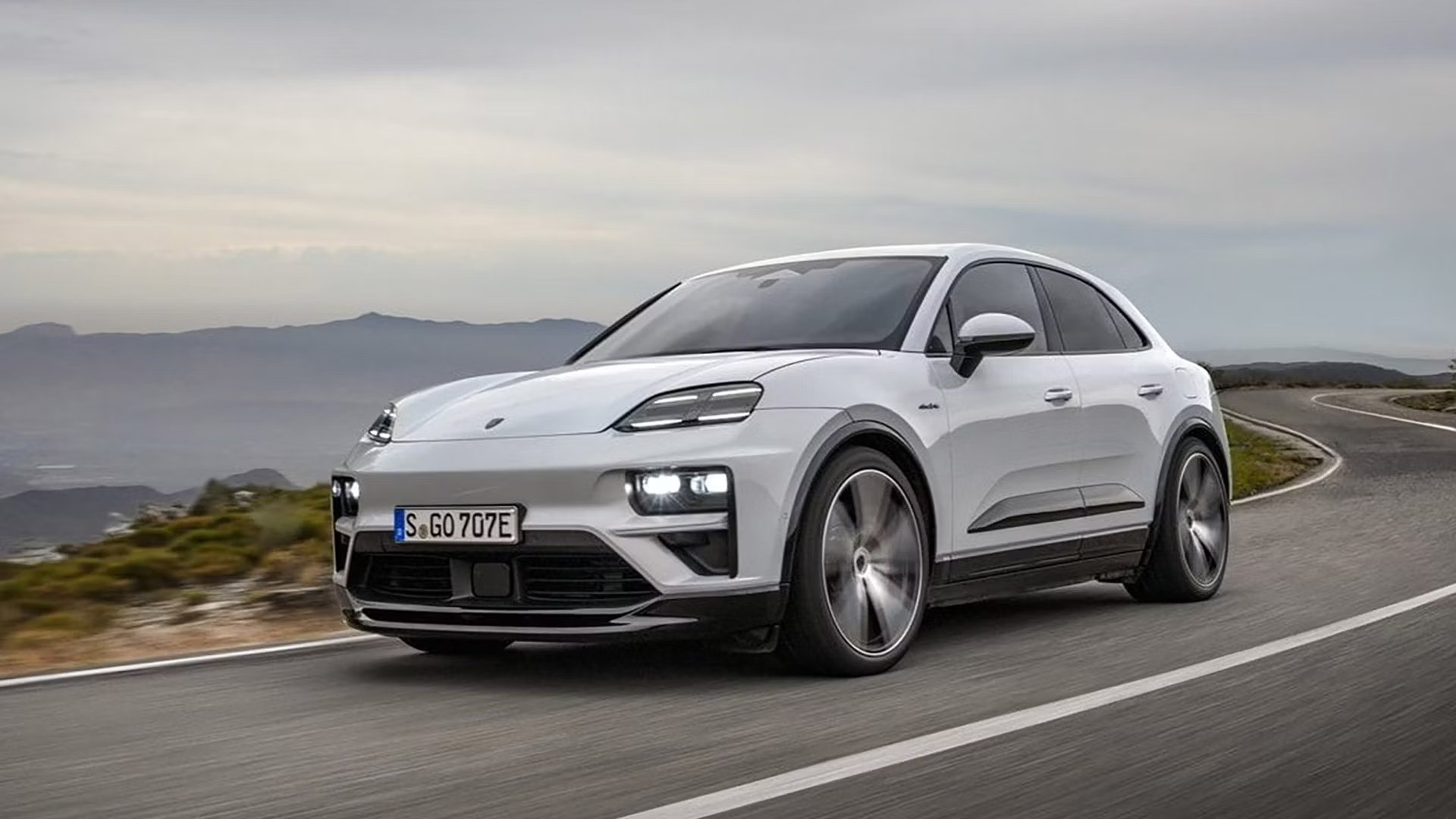
While it’s never been cheaper to electrify your transportation, Porsche’s new EV is unequivocally for wealthy patrons who want to go green. With a starting price of $78,800 (and $100K+ for the Turbo variant), Porsche’s Macan electric SUV won’t help normalize renewable energy, but it will leave a lasting impression.
In the past, we’ve talked about Porsche’s hybrid sedan, the Panamera, their hybrid Cayenne SUV, and their ambitious plans to install 500 “pit stop” recharging stations across North America.
Remarkably, their new Macan electric SUV may actually be the cheapest of the bunch, with the Panamera Hybrid starting at $115K+ and the Cayenne Hybrid SUV coming in north of $90K.
By that standard, the electric Macan is a bargain…OK, not really.
The two Macan models, the Macan 4 and Macan Turbo, both have a dual-motor all-wheel-drive powertrain and up to 402 and 630 horsepower, respectively.
The Macan also uses the Premium Platform Electric (PPE) platform, which was co-developed with Audi and provides an 800 V powertrain. This gives the EVs a good bit of pep, with the Macan 4 going from zero to 60 mph in 4.9 seconds (and a 136-mph top speed), and the Macan Turbo reaching 60 mph in 3.1 seconds, with a top speed of 161 mph.
Its battery – connected to a DC fast-charger – can supposedly go from 10 to 80 percent in about 21 minutes, and according to Car and Driver, it’ll likely have an electric range from 250-300 miles.
Course, the gas-powered version is anywhere from $6K to $20K more than the EV, though if you’re buying a Porsche, any Porsche, is money really a pertinent factor.
Porsche President and CEO of North America, Timo Resch, took a more diplomatic approach, saying that:
“Ultimately, it’s a customer’s choice…for what I want to do, is it more on the internal combustion engine side or am I on the battery electric side? And then this pretty much decides what direction to go. I think this is the way forward, and for Porsche, there couldn’t be any other direction because we always try to make the customer and their decision and their desire for our product, our highest priority.”
.jpg)
Accelerating Isolated Power Supply Design
05/10/2017