What the $1.2 Trillion Infrastructure Bill has for EVs and Renewables

The House of Representatives passed a $1.2 trillion bill on Friday that earmarked billions for clean energy R&D and which President Biden called "a once-in-generation bipartisan infrastructure bill that will create millions of jobs, turn the climate crisis into an opportunity, and put us on a path to win the economic competition for the 21st Century."
We can certainly debate the merits of what Biden said (except the bipartisan bit, since 13 Republicans did, in fact, vote for it), but that’s beyond the scope of our publication. What’s undeniable is the various disbursements for a modern electric grid buoyed by renewable energy, a nationwide electric vehicle charging network, the development of wind and solar on public lands and building a workforce for offshore wind, and several other items.
A full third of the outlays, nearly $500 billion, is dedicated to the INVEST in America Act, to “rebuild and reimagine the nation’s transportation infrastructure,” along with a $100 billion investment in broadband funding for Western Maryland, $130 billion in school infrastructure targeted at high-poverty schools, and $100 billion for our nation’s affordable housing infrastructure.
But a significant portion is dedicated towards renewable energy, including $70 billion for a renewable electric grid, and the following:
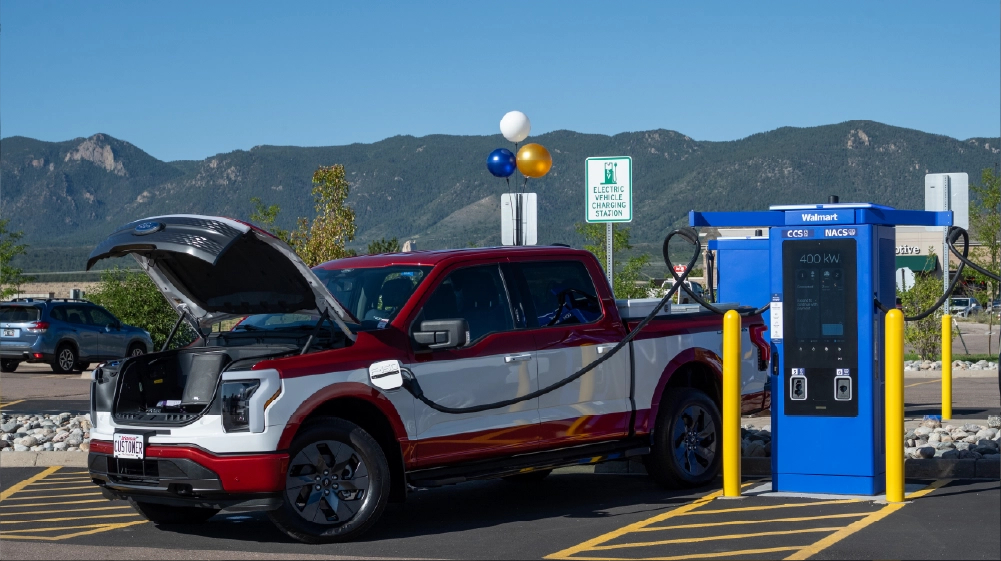
· $7.5 billion for a nationwide network of EV charging stations
· Boosting the EV tax credit by $5,000
· $250 million for an energy efficiency revolving loan fund capitalization grant program
· $225 million grant program to update building energy codes
· $355 million for a Energy Storage Demonstration Projects and Pilot Grant Program
· $8 billion for four clean hydrogen hubs and $500 million for clean hydrogen manufacturing and recycling
· $5 billion to purchase electric school buses and hybrids
Be sure to check the full bill out.