Combining Intelligence and Performance for Motor Control
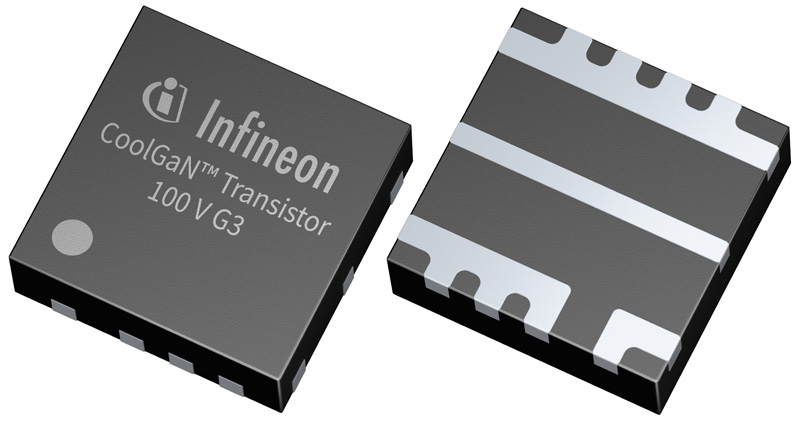
A combination of wide-bandgap power electronics and modern control technology can form the basis for compact, efficient and powerful motor controls.
Figure 1a: CoolGaN transistors in various package variants. (Source: Infineon)
The requirements placed on modern motor controls are continuously rising: They must deliver higher efficiency, enable more compact designs and provide increasingly precise control. Whether the application is robotics, drones, industrial plants or micromobility, solutions are required that deliver higher performance from smaller installation spaces. Wide-bandgap semiconductors, particularly gallium nitride (GaN), play a key role in this regard, especially when combined with a flexible microcontroller architecture.
Wide-bandgap technology on the rise
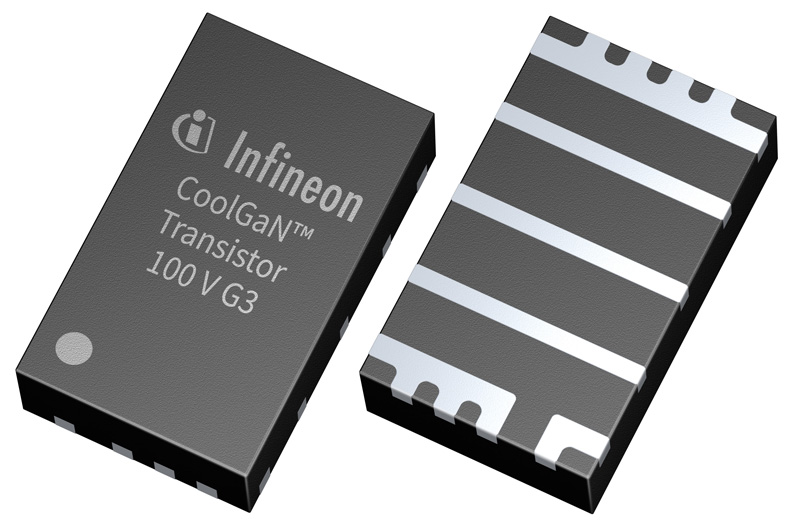
Unlike traditional silicon MOSFETs, GaN transistors offer numerous key advantages (Figure 1).
Click image to enlarge
Figure 1b: CoolGaN transistors in various package variants. (Source: Infineon)
A major advantage is their significantly higher switching speed, which enables switching frequencies up to the megahertz range. This permits the use of smaller passive components, like inductors and capacitors, resulting in more compact and lighter designs. At the same time, the fast switching capability reduces switching losses, boosting the efficiency of DC/DC converters, inverters and motor controls.
GaN transistors achieve higher power density due to their ability to handle greater voltages and currents. This is particularly advantageous for high-frequency applications and precise controls. In addition, the lower energy losses lead to reduced heat generation. This enables the use of smaller, or even passive, cooling solutions and lowers thermal requirements.
Another technical advantage is the lower gate charge (QG) of GaN transistors, which enables faster and more energy-efficient control. This is especially beneficial for high-frequency applications and precise controls. Additionally, GaN is characterized by high robustness at high electrical voltages, as the material tolerates stronger electric fields than silicon. This characteristic makes GaN transistors especially well-suited for high-voltage applications, such as electric mobility and industrial drive technology.
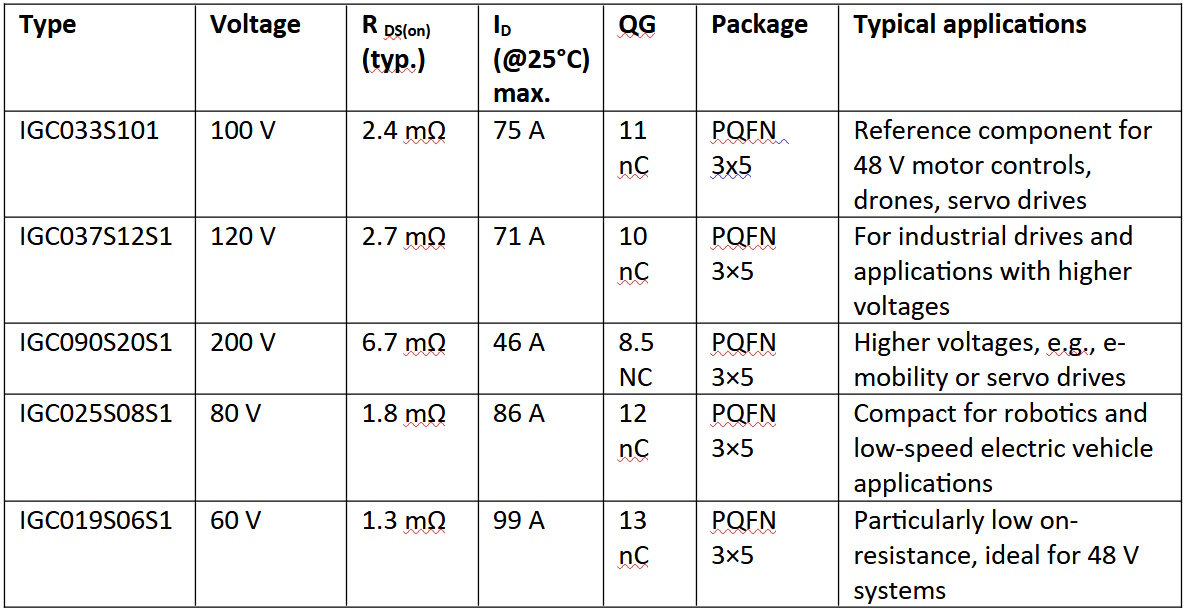
Infineon offers a wide range of GaN transistors. The table below presents a comparison of selected GaN transistors.
Click image to enlarge
Table 1: Comparison of various Infineon GaN transistors
Rethinking motor controls
The special properties of gallium nitride transistors open up new possibilities for motor controls, especially in brushless DC motors (BLDC), servo drives, robotics and other electric drive systems.
However, GaN transistors sometimes require more sophisticated gate trigger circuits. Further design challenges stem from the different types of GaN, such as depletion mode and enhancement mode. However, these challenges can be overcome by integrating specialized gate drivers and management functions, allowing the full potential of GaN to be exploited in the system.
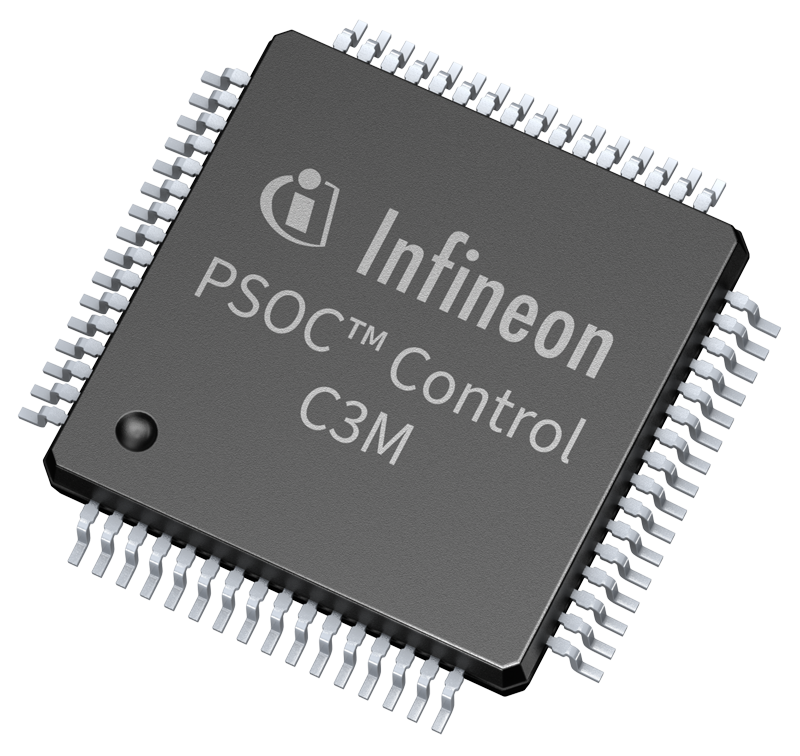
A practical example of this is a 48 V BLDC drive with 308 watts of power and up to 4,000 revolutions per minute. Raising the field-oriented control (FOC) from 20 kHz to 100 kHz, combined with GaN transistors and the PSOCTM Control C3 microcontroller, boosts efficiency from 89% to over 96% (Figure 2). Simultaneously, the motor temperature drops from 68 °C to 55 °C, while the GaN components remain stable.
Click image to enlarge
Figure 2: Microcontroller PSOC Control C3M with integrated peripheral functions for motor control applications. (Source: Infineon)
This combination offers numerous practical advantages: Greater efficiency thanks to a higher switching frequency, reduced motor heating, a more compact design due to less cooling requirements and smaller components, as well as quieter, smoother motor operation with minimized current ripple and torque fluctuations. Additionally, precise control and built-in protection mechanisms enhance safety and system stability, for example by preventing overloads.
These advantages make this technology particularly interesting for applications such as robotic arms, drone propulsion systems, industrial servo systems and light electric vehicles. Featuring high-resolution PWM functions, fast analog-to-digital converters (ADCs) and integrated CORDIC and DSP units, the microcontroller provides a powerful control platform. This platform simplifies complex control algorithms and enables precise field-oriented control even at high speeds. The ModusToolbo Motor Suite development environment offers ready-made software libraries and tools that shorten development times. Moreover, it provides PSA Level 2 safety features for a safe and reliable system design.
Evaluation board as the basis for development
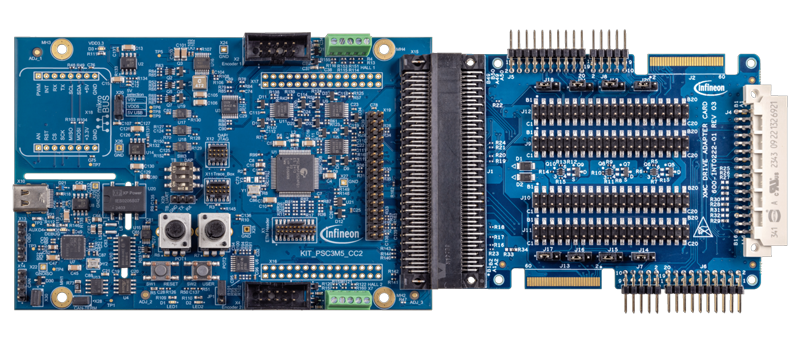
The Infineon KIT PSC3M5 CC2 is a compact evaluation board, providing developers with a versatile basis for evaluating motor controls (Figure 3). The board features a PSOC Control C3M5 microcontroller, offering high-resolution PWM, fast ADCs, as well as integrated CORDIC and DSP units. Various power levels, motor types and sensor systems can be connected via standardized interfaces, making the board highly versatile.
Click image to enlarge
Figure 3: Evaluation board KIT PSC3M5 CC2 with integrated debugger and MADK‑connection for rapid integration of various motors. (Source: Infineon)
The KIT is part of a modular platform concept and can be used both as a stand-alone control unit and alongside other evaluation boards, such as GaN power stages. This modularity enables rapid development and testing of various motor control topologies, including BLDC and permanent magnet synchronous motors (PMSM), as well as more complex multiphase applications.
The ModusToolboxMotor Suite also offers practical tools for configuration, runtime and static parameterization, signal analysis and a high-sampling-rate oscilloscope function. The ecosystem is further strengthened by the comprehensive availability of reference designs and complete evaluation kits, which enable particularly fast implementation and system integration.
Developers benefit from accelerated prototyping, shorter development cycles and an easy introduction to high-frequency, GaN-based motor controls.
Summary
The combination of wide-bandgap power electronics and modern control technology forms the basis for compact, efficient and powerful motor controls. It unites efficiency, intelligence and safety, thereby making it ideal for robotics, industry and electromobility.