Powering Electromobility Applications in Harsh Environments
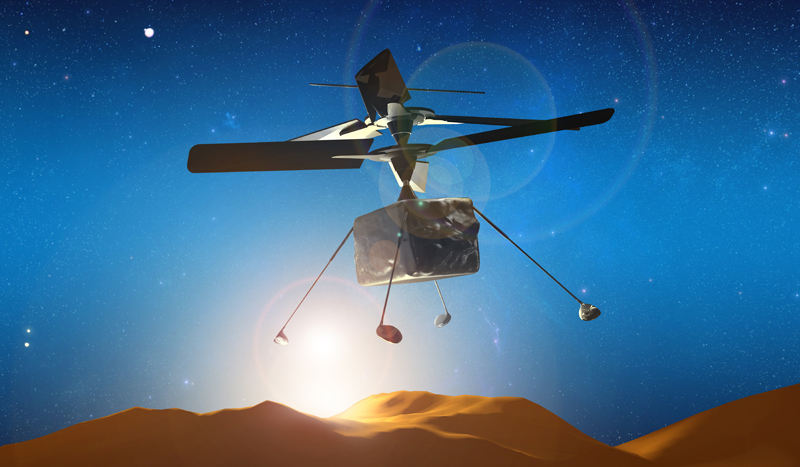
Few people realize that the technology used in the Mars Ingenuity helicopter’s maiden flight is also used in electric vehicles down on Earth
Perhaps the most fascinating example of electromobility occurred in April 2021: the maiden flight of the Ingenuity helicopter on Mars. Although electric vehicles on Earth do not have to operate in such harsh environments, their power electronics still need to work reliably in difficult conditions.
When Ingenuity took off on Mars, it was nearly 300 million kilometers away from Earth; the round-trip transmission time of a radio signal exceeded 32 minutes. During its flight, the helicopter consumed about 350 watts of power. The rechargeable lithium-ion batteries driving its two rotors were solar-powered.
The environment on Mars is harsh, with extreme temperatures and low atmospheric pressure, meaning much can be learned about the reliability and durability of the power electronics under challenging conditions through Ingenuity’s flight.
Terrestrial vehicles also have it tough
There are off-highway vehicles on Earth that operate in harsh environments, too. They include pallet/forklift trucks, loaders, tractors, and excavators, as well as an array of smaller machines for automated tasks or passenger transport. Like Ingenuity, they require motor drives, on-board and off-board chargers, and DC/DC converters to convert the voltage level between the drive battery and 12 V or 24 V for auxiliary equipment. These converter modules typically operate at outdoor temperatures of between –40 °C and +75 °C and are protected against the ingress of dust and water. Cooling is often only provided by a base plate; fans are hardly ever used due to their service life and noise-related properties.
Click image to enlarge
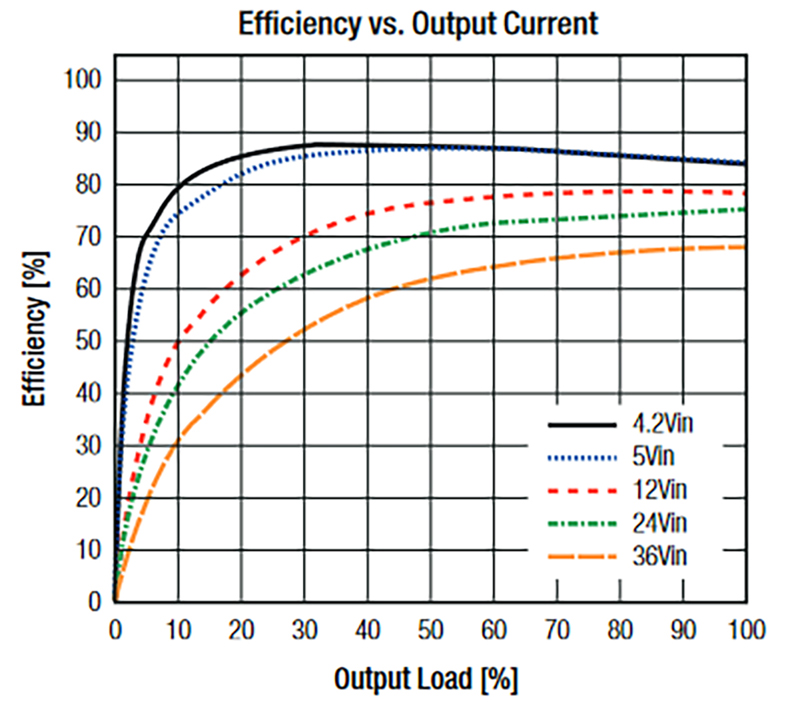
Figure 1: The RPX-DC/DC converter from RECOM is highly efficient (the 1.8 V output version is shown in the diagram)
Electronics to automotive quality standards
Many advances in the field of power electronics focus on electric vehicle solutions for people and goods. Improving efficiency to increase the range of the vehicles and to reduce the size and weight of the converters is a key factor of this work. This also applies to low-voltage DC/DC converters that also need to work reliably for many decades in the demanding environment of electric vehicles.
Self-driving electric vehicles can be seen as mobile data processors. They are equipped with components typically required for this, such as CPUs, FPGAs, and SoCs, all of which demand low-voltage precision power rails. Point-of-load (PoL) converters usually provide them. Converters that qualify for this application must ensure the highest level of reliability, e.g. through surface-mount solder connections with wettable flanks.
Further, the operating environment of an electric vehicle is susceptible to EMC (electromagnetic compatibility), and switching frequencies in the AM range can be problematic. Therefore, the converters must be kept within limited frequency ranges, which obviously restricts the circuitry design.
Also vibrations and both physical and thermal shocks pose particular challenges. RECOM’s high-efficiency RPX series (Fig. 1) is designed to withstand them (according to MIL-STD-883D). It can also be obtained from Rutronik as a Q-version, which meets the requirements of the automotive industry. The RPX is housed in an ultra-miniaturized, 3 mm × 5 mm QFN package that is just 1.6 mm tall with an over-molded flip chip on a leadframe. The output voltage can be trimmed from 0.8 to 30 V, while the input range is 4 to 36 V. It additionally provides comprehensive monitoring and control, something that is essential for electric vehicle applications.
Click image to enlarge
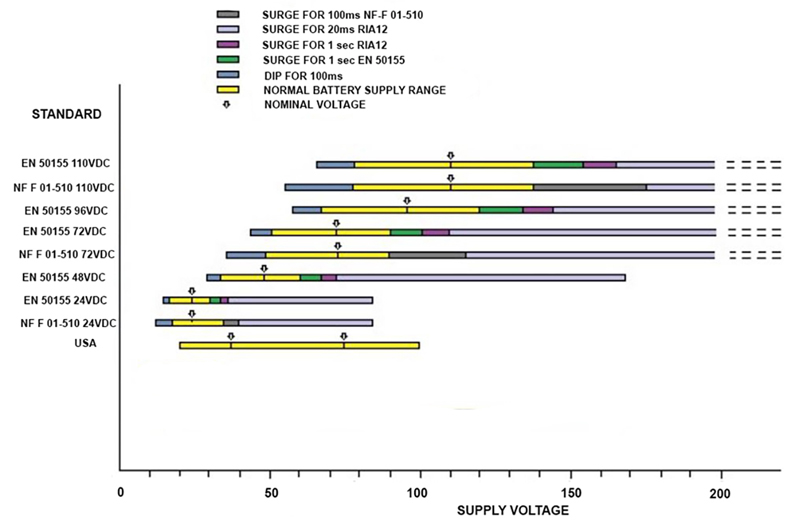
Figure 2: Rail supply voltages and their overvoltages cover a wide range of applications
Chargers for electric vehicles, whether for on the road or at home, must be small and should have the least possible impact on the environment. This again requires a high level of efficiency, not only in the main stage of the AC/DC charger, but also in a number of commonly available AC/DC and DC/DC auxiliary power supplies.
Off-board chargers generally operate in an environment of overvoltage category 3 (OVC III). Off-the-shelf AC/DC chargers are, therefore, often not suitable, especially if the charger needs to be bidirectional. The RECOM subsidiary Power Control Systems (PCS) specializes in customized products for high-kW applications. The power supplies available through Rutronik meet all relevant standards and feature an operating temperature range from –40 °C to +85 °C. Beside low noise and low ripple, they are characterized by a high level of efficiency.
Strict rules for rail electronics
While helicopters on distant planets do not have to meet international standards on functionality and safety, e-mobility applications on Earth are often heavily regulated. A prime example is the rail sector: DIN standard EN 50155 is the general standard here; while other standards regulate EMC, insulation systems, shock/vibration, fire protection, and electrical safety features. These standards ensure that power sources for drive, control, comfort, and communication devices operate reliably despite power problems and disturbances, such as transients, spikes, brownouts, and total mains failures, as well as a nominal supply voltage varying between 24 V and 110 V DC (Fig. 2).

Click image to enlarge
Figure 3: Family members of Recom’s RMD series
To meet these standards, modular converters require a high level of electrical and environmental protection, although only contact cooling is usually available. The DC/DC converters of RECOM’s RMD family satisfy all these requirements. They are available for applications in the range of 150 W to 1 kW.
Summary
The Ingenuity helicopter is certainly an inspiration – but probably very few people outside the energy technology community realize that the technology that made its maiden flight possible is also used in electric vehicles down on Earth. That technology may not have to face the same environmental conditions here on earth, but it still has to content with being operational for at least a decade in some pretty harsh automotive environments. In their earthbound role, they also have far more restraints in the way that they can be used.