Predictive Power: Innovations for Grid Stability
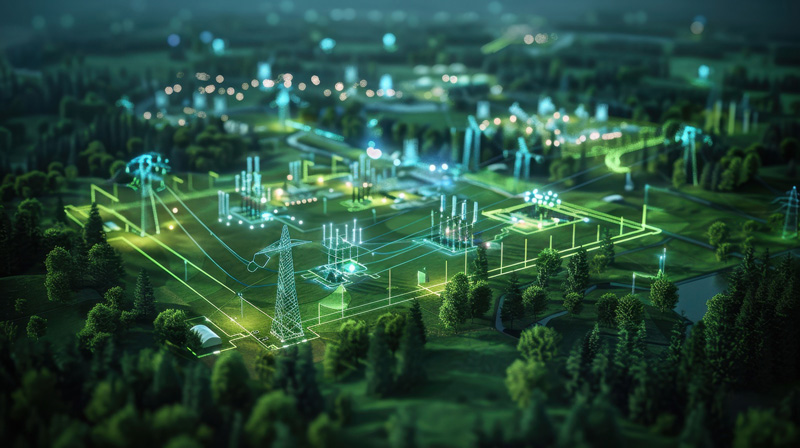
This article explores cutting-edge solutions being deployed worldwide to enable a new era of reliability.
The global energy transition is accelerating, driven by decarbonization targets, electrification of transport and industry, and the rapid deployment of renewable energy. At the same time, AI data centers are emerging as massive energy consumers, with projected power requirements reaching hundreds of megawatts per site to support advanced computing workloads.
This surge in demand compounds existing grid challenges, as traditional networks were designed for centralized, predictable generation—not for intermittent renewables and high-density loads like AI infrastructure. Maintaining grid stability—voltage, frequency and power quality—has become a critical imperative to prevent cascading outages, equipment damage, and economic disruption.
The Global Push for Grid Stability
Reports from IEEFAhighlight that grid modernization is a turning point for energy security. Investments in digitalization, storage and advanced controls are essential to prevent blackouts like the recent Iberian Peninsula event. Regulatory frameworks are increasingly incentivizing flexibility services, creating markets for technologies that enhance stability.
The International Energy Agency estimates that achieving net-zero emissions will require $21 trillion in grid investments by 2050, including expanded storage capacity, advanced digital infrastructure, and reforms to outdated planning rules. The urgency is clear: the cost of inaction could reach $38 trillion annually by 2050 due to climate-related disruptions and lost economic opportunities.
Global mobilization is underway as governments, utilities and technology providers recognize that flexible, digital grids are keys to the energy transition. At COP29, the Utilities for Net Zero Alliance (UNEZA) and 45 leading utilities pledged $117 billion in near-term investments to expand grid infrastructure, increase storage capacity six-fold by 2030, and refurbish 80 million kilometers of transmission lines by 2040.
Innovations Around the World
Large-Scale Battery Storage –Battery energy storage systems (BESS) have emerged as the backbone of modern grid stability. Europe is leading with projects like LEAG and Fluence’s 1 GW / 4 GWh battery system in Germany, the largest in Europe. This installation will provide frequency regulation, inertia emulation, and peak shaving, ensuring renewable energy availability even during low generation periods. Similarly, Zenobē’s Blackhillock project in Scotland supports offshore wind integration, replacing critical system services traditionally provided by fossil plants. These systems use advanced algorithms to deliver synthetic inertia and fast frequency response, stabilizing grids within milliseconds.
Community-Level Solutions – In Denmark, companies like CheckWatt aggregate household batteries, EV chargers and solar systems into virtual power plants (VPPs). These VPPs deliver frequency control and congestion management, reducing grid stress and enabling higher renewable penetration. This decentralized approach demonstrates how distributed flexibility can complement large-scale infrastructure.
Advanced Grid-Forming Technologies – As synchronous generators retire, inverter-based resources must provide essential grid services. Siemens Energy’s E-STATCOM uses supercapacitors to deliver artificial inertia, stabilizing frequency and voltage within milliseconds. Grid-forming inverters go further by actively maintaining voltage and frequency during disturbances, enabling black-start capability and supporting islanded operation. These technologies are critical for renewable-heavy grids, where traditional inertia is absent.
Artificial Intelligence
Artificial intelligence is rapidly becoming a cornerstone of grid reliability and optimization. Engineers at Princeton have demonstrated how reinforcement learning algorithms can dynamically control complex energy systems, including fusion-based grids, by predicting instability and adjusting operating parameters in real time. These models ingest high-dimensional sensor data streams—such as temperature, magnetic field fluctuations and load profiles—and apply risk-based optimization to prevent cascading failures before they occur.
Beyond control, AI is transforming predictive maintenance. According to Nature, advanced machine learning techniques now integrate physics-informed neural networks with historical failure data to forecast component degradation under variable stress conditions. This enables utilities to shift from reactive repairs to condition-based maintenance, reducing downtime and extending asset life.
From a strategic perspective, as highlighted by GreenMoney, AI-driven analytics are also reshaping investment priorities. Grid operators are deploying digital twins—virtual replicas of physical infrastructure—to simulate stress scenarios and optimize capital allocation for resilience. These tools combine real-time telemetry, weather forecasts, and market signals to orchestrate demand response and renewable integration at scale. The result is a grid that is not only more stable but also adaptive and economically optimized, capable of meeting the demands of electrification and AI-driven workloads.
Grid-Responsive Data Centers
Data centers are rapidly becoming one of the largest energy consumers in the digital economy, with hyperscale facilities projected to draw hundreds of megawatts per site to power AI workloads and cloud services. This surge places a significant burden on power grids, often requiring new transmission infrastructure and backup generation to meet peak demand.
However, the same data centers can also become key enablers of stability. Research from Boston University highlights how grid-interactive data centers leverage advanced control systems and AI-driven algorithms to dynamically adjust computing workloads in response to grid conditions. By participating in demand response programs, shifting non-critical tasks to off-peak hours, and even exporting stored energy from on-site batteries, these facilities act as virtual power plants. This flexibility helps balance supply and demand, smooth frequency fluctuations, and integrate intermittent renewables more effectively.
Technology Breakthroughs
As AI-driven analytics and predictive maintenance strategies transform grid operations, their success depends on hardware-level intelligence that can execute these insights in real time. This is where innovation in power conversion can play a crucial role. Power Integrations offers advanced gate driver solutions with integrated telemetry for predictive maintenance and 1700 V GaN devices enabling 800 VDC architectures for AI data centers. Together, these technologies not only enhance system resilience but also position data centers as active participants in grid stability.
Click image to enlarge
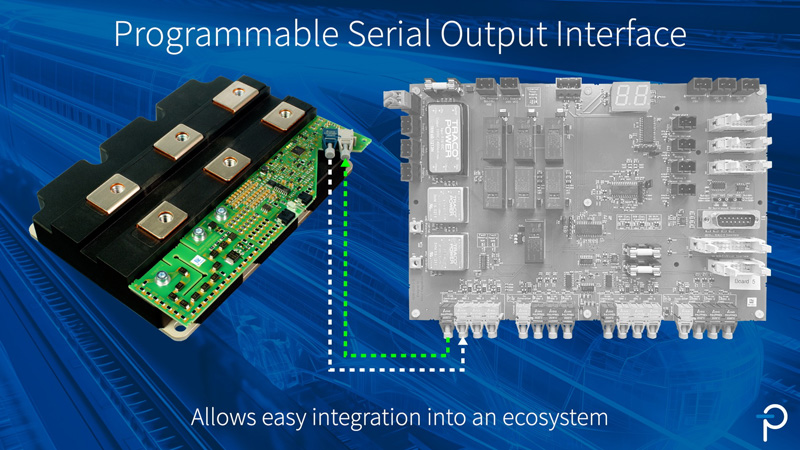
1SP0635 Digital – This plug-and-play gate driver family for 3300 V IGBT modules combines Power Integrations’ proven SCALE-2™ switching performance and protection features with a configurable isolated serial output interface, which augments driver programmability and provides comprehensive telemetry reporting for accurate lifetime estimation.
Key Features:
- Real-time telemetry: Monitors temperature, DC link voltage and gate status.
- Predictive maintenance: Accurate lifetime estimation reduces downtime and prevents catastrophic failures.
- Simplified design: Eliminates external sensors, reducing complexity and cost.
- Enhanced reliability: Supports critical applications such as rail traction, medium-voltage drives and grid infrastructure.
By embedding diagnostic intelligence into power electronics, Power Integrations enables operators to transition from reactive to proactive maintenance strategies—critical for grids that cannot afford unexpected outages.
Click image to enlarge
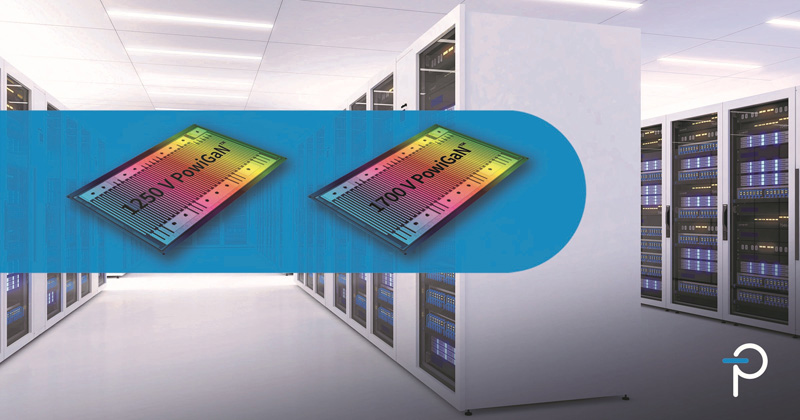
1700 V PowiGaN– Power Integrations is pioneering 1700 V gallium nitride (GaN) technology, which is critical for the next generation of 800 VDC power architectures in AI data centers. These ultra-efficient systems dramatically reduce conversion losses and enable direct high-voltage distribution, minimizing copper usage and improving overall energy efficiency.
By supporting higher voltage operation with GaN’s superior switching performance, Power Integrations helps data centers become grid-friendly assets, capable of dynamic load management and demand response. This evolution not only lowers operational costs but also contributes to grid stability by reducing peak demand and integrating seamlessly with renewable energy sources.
Looking Ahead
The future of grid stability will be defined by the convergence of hardware, software and AI. Global investment commitments—such as the $117 billion pledged by 45 utilities at COP29 and the World Economic Forum’s call for $21 trillion in grid upgrades by 2050—signal unprecedented momentum toward flexible, digital grids. These networks will integrate predictive analytics, high-voltage architectures, and intelligent power electronics to handle the dual challenge of renewable intermittency and surging AI-driven demand.
Achieving this vision requires collaboration across the energy ecosystem: technology providers delivering advanced semiconductor solutions, utilities embracing digitalization, and policymakers enabling market frameworks that reward flexibility and resilience. The high cost of inaction ($38 trillion annually by 2050) underscores the urgency of coordinated action.
Conclusion
Grid stability is no longer a passive attribute—it is an active, technology-driven imperative for the electrified, AI-powered future. Innovations such as grid-forming inverters, AI-driven predictive analytics, and large-scale storage are reshaping the global energy landscape.
Power Integrations is at the forefront, delivering high-voltage gate drivers with integrated telemetry for predictive maintenance and 1700 V GaN technology enabling 800 VDC architectures for AI data centers. These solutions ensuring grids are not only stable but adaptive, efficient and future-ready.