Wireless Power Technology Will Lead to Smaller IoT Devices
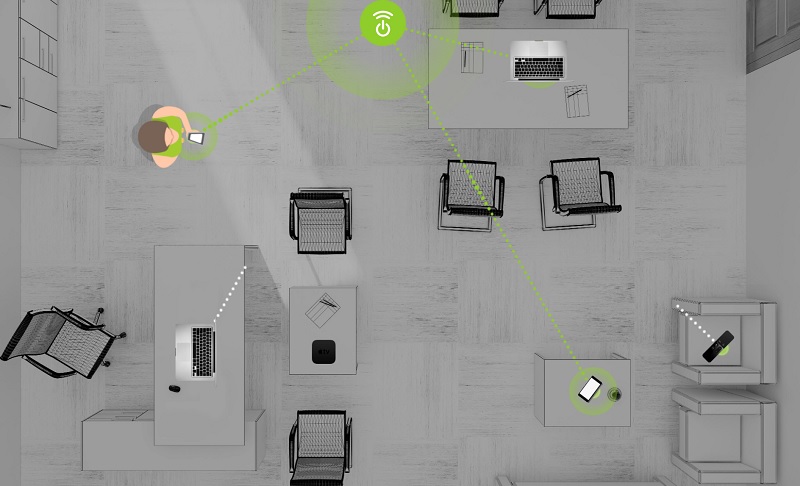
Ossia has passed both the EU and UK regulatory assessments for its RF based non-line-of-sight, wireless power technology.
The company’s Cota products were tested and certified for use in both the EU and the UK. The Type of Examination Certificates received from an EU Notified Body and UKCA Conformity Assessment Body confirm the Cota system’s compliance with the radio, emissions, immunity, and RF safety standards applicable under the EU Radio Equipment Directive and the UK Radio Equipment Regulation. Along with compliance with the European restrictions on hazardous substances in electrical equipment (RoHS) and product safety requirements, the Cota system complies with the UK and European Union essential requirements and can be licensed and sold with the CE marking in Europe and the UKCA mark in the UK.
Cota technology is a smart antenna system that is designed to safely charge multiple remote devices without user intervention at ranges of up to 10 metres. There are three main components of the Cota platform: The Cota Receiver, the Cota Transmitter, and the Cota Cloud. The Cota Receiver is based on a 3mm x 3mm IC, which can be built into any product. It is capable of receiving up to four watts of incoming RF power from the Cota Transmitter, which has an antenna arra with thousands of antennas. The receiver creats an active beacon radio signal, sending a low-power 2.4 GHz signal to the transmitter, which uses smart antennas to send the power signal back along the same path, whether that is a direct path or an indirect one. For safety, the signal will bounce off solid objects, and around any obstructions, following the same path used by the beacon to reach the transmitter. Any type of antenna can be used for the receiver. This method allows power to be safely transferred without direct line of sight, and without causing any harm. Multiple transmitters can work together to extend the range of power transmission up to much greater distances. The system is responsive enough to charge a watch while it is being worn, even if the owner’s hand is moving. Cota Cloud helps activate, manage, and monitor all connected devices, including making the decision of which devices need charged the most. The Cota wireless power system can also be retrofitted to existing technology through a Cota Forever battery, which fits within current AA battery design specs.
Cota technology is ideal for IoT type applications. The IoT depends on a huge amount of small sensor clusters that need to be powered. Often wiring these installations is not possible as they are inside machinery or located at a distance from the mains supply. The only other alternative is battery power. Batteries can be bulky, hard to dispose of, and contain rare minerals. They also need replaced regularly, which adds to the total cost of ownership. The Cota wireless power technology can either power the devices directly, which leads to smaller form factor designs, or it can be used alongside rechargeable batteries. Either way, the sensor cluster can be kept going in the field for longer periods without maintenance. As the transmitter and receiver are already communicating with each other, it is also possible for the data from the sensor cluster to be piggybacked onto that channel for some applications – meaning that the sensor cluster can be designed with a cheaper, smaller and less complex processor, or even without the need for separate wireless communications. This, in turn, lowers the required system power and makes wireless power suitable for a wider range of applications.
Ossia has also recently received three US FCC certifications for Cota wireless power technology. The new certification will extend the company's reach by allowing Cota Systems to be used in the EU and the UK.
https://www.ossia.com/