Nissan and NASA get together on solid-state battery materials
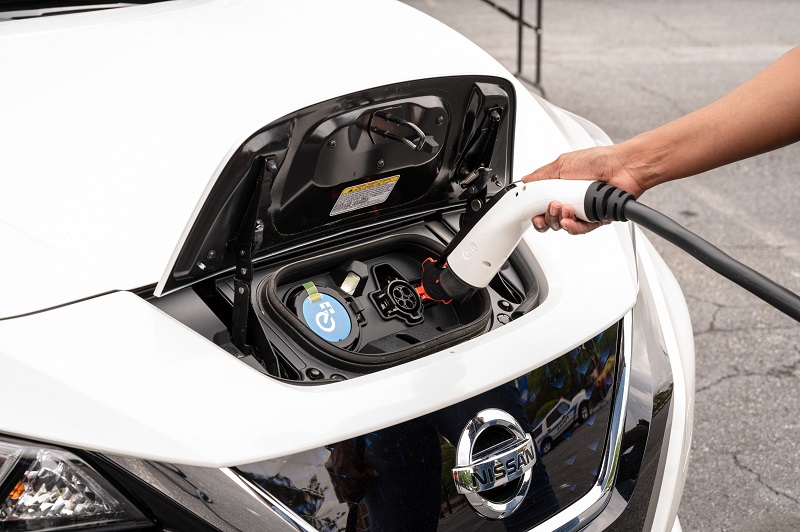
It looks like more and more automakers are looking to solid-state batteries for their future generations of electric vehicles. A few weeks ago I wrote about Mercedes’ partnership with Taiwanese battery maker ProLogium to develop next-generation solid-state batteries. VW and startup QuantumScape are also working together, as are Toyota and Panasonic. While Ford seems to be going it alone in the US $185 million research hub it announced last year. Now, Nissan has shown us a bit more detail of its own plans by unveiling a prototype production facility for laminated all-solid-state battery cells, and also announcing a partnership with NASA on the development of the technology. The new prototype facility will develop the solid-state batteries that Nissan hopes to launch in 2028. It was based within the Nissan Research Center in Kanagawa Prefecture.
The prototype facility will be part of Nissan’s Ambition 2030 plan, where the company aims to launch an EV with all-solid-state batteries developed in-house by fiscal 2028. A pilot production line is planned at its Yokohama Plant in fiscal year 2024, with materials, design and manufacturing processes for prototype production on the line to be studied at the prototype production facility. Nissan believes all-solid-state batteries can be reduced to $75 per kWh in fiscal 2028 and to $65 per kWh thereafter, which will place EVs at the same cost level as petroleum-powered vehicles. Solid-state batteries have an energy density approximately twice that of conventional lithium-ion batteries, shorter charging time due to superior charge/discharge performance, and lower cost thanks to the use of cheaper materials.
Kunio Nakaguro, executive vice president in charge of R&D, said: "Nissan has been a leader in electrification technology through a wide range of R&D activities, from molecular-level battery material research to the development of safe, high-performance EVs. Our initiatives even include city development using EVs as storage batteries. The knowledge gained from our experience supports the development of all-solid-state batteries and we’ve accumulated important elemental technologies."
As to the NASA partnership, details are pretty scarce at the moment. Associate Press has reported that the Japanese company will work with NASA and the University of California San Diego to test new materials that are suitable for use in solid-state batteries. The end goal will be a batter that is half the size of current batteries and can be fully charged in 15 minutes. Both Nissan and NASA have a need for the new technology, which will also be stable enough to be used for other applications, such as heart pacemakers.
According to AP, Nissan Corporate Vice President Kazuhiro Doi said, “Both NASA and Nissan need the same kind of battery. The two organisations are using what’s called the “original material informatics platform - a computerized database, to test various combinations to see what works best among hundreds of thousands of materials. The goal is to avoid the use of expensive materials like rare metals, which are needed for lithium-ion batteries”.