Autonomous Vehicle is Pulled over by the Police, Appears to Flee the Scene
Now here’s an interesting conundrum that I haven’t run across yet (but which will be very common in the near-future).
While it’s true that fully autonomous vehicles (and computers in general) can’t make mistakes – in theory, anyway – they’re only as perfect as the people who program them. And since driverless cars like Cruise's autonomous Chevrolet Bolt EVs can only make decisions and calculations to the extent of its programming, we’re bound to see more weird scenarios like this pop up.
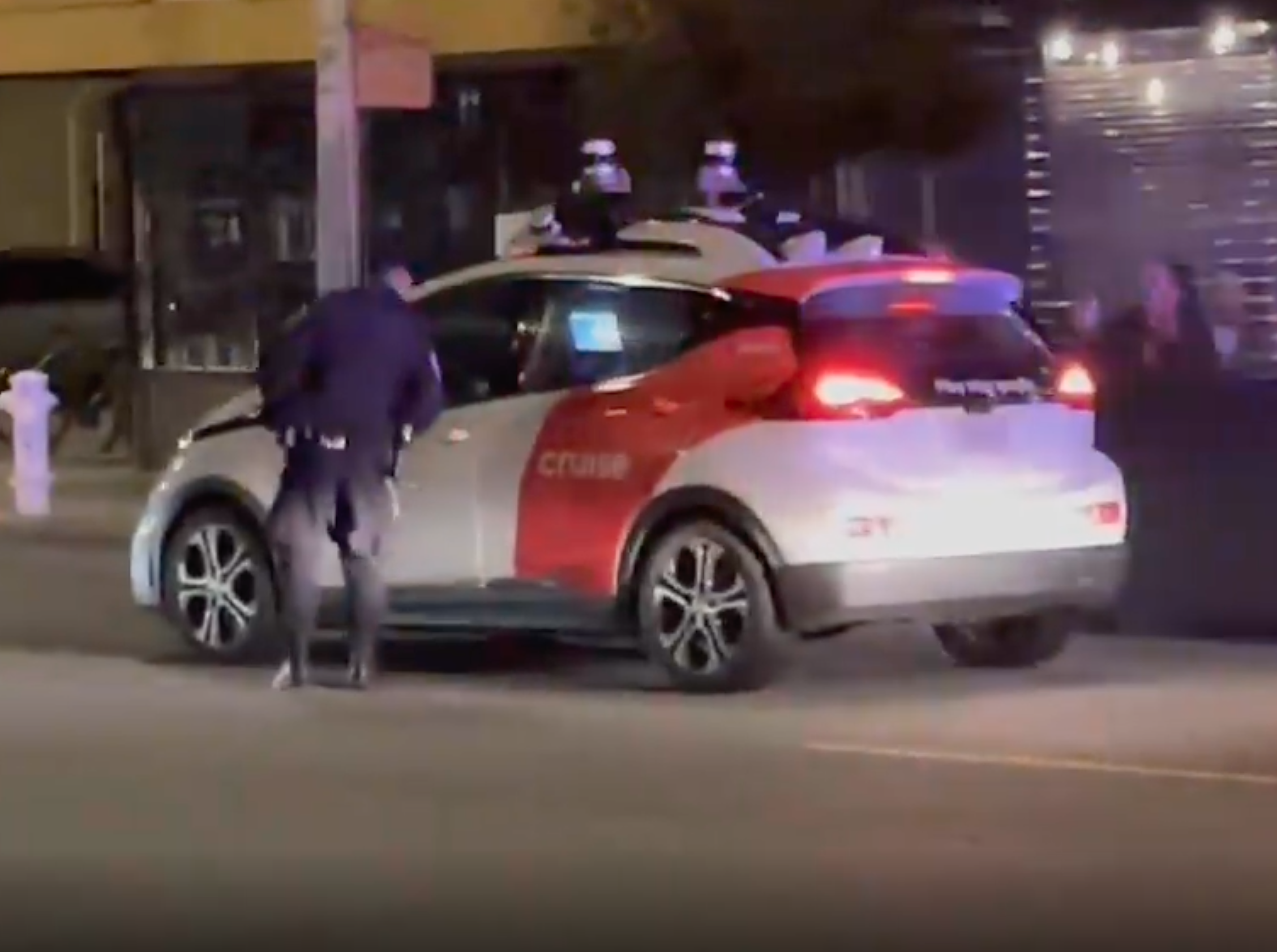
Here's the executive summary – San Francisco police pull over an autonomous Cruise vehicle, likely for its headlights not being on, and after a quick encounter, the Chevy Bolt appears to be fleeing the scene.
Course, the truth is probably a lot more nuanced (and boring).
In video posted to Instagram, you can see SFPD officers approaching the vehicle, with one of them saying "There's nobody in it."
After the first officer to make contact walks away for a moment, the car accelerates, before pulling over again.
I can only assume the Cruise vehicle “thought” the traffic stop was over once the officer walked away, however much time had elapsed. But put yourself in the SFPD’s shoes – how would you react to a driverless vehicle that appears to be fleeing the police?
Luckily, the situation didn’t escalate any further, and the Cruise vehicle stayed put for the duration. But what happens when an autonomous vehicle won’t stop for the authorities? A rogue driverless car that won’t obey the police becomes a serious danger to bystanders and motorists, alike.
These are the sorts of odd scenarios that could delay further deployment of fully-autonomous vehicles – even if human drivers create far more deadly situations.
In fact, this wasn’t even the first autonomous vehicle pulled over by the police – in 2015, a Google self-driving car was stopped in Mountain View, California, for going 24 mph in a 35 mph zone, but no ticket was issued.
In this latest case, the SFPD contacted Cruise, which assured them the autonomous Bolt wasn’t trying to flee the scene, the company corrected the headlight issue, and no one (or no thing) was penalized.