Editor Blogs

    California Regulations Hold AV Manufacturers Liable for Moving Violations
    05/05/2026
    Jason Lomberg, North American Editor, PSD
    Tag: @ca @california #avs #autonomousvehicles #powerelectronics
    California Regulations Hold AV Manufacturers Liable for Moving Violations
    California Regulations Hold AV Manufacturers Liable for Moving Violations

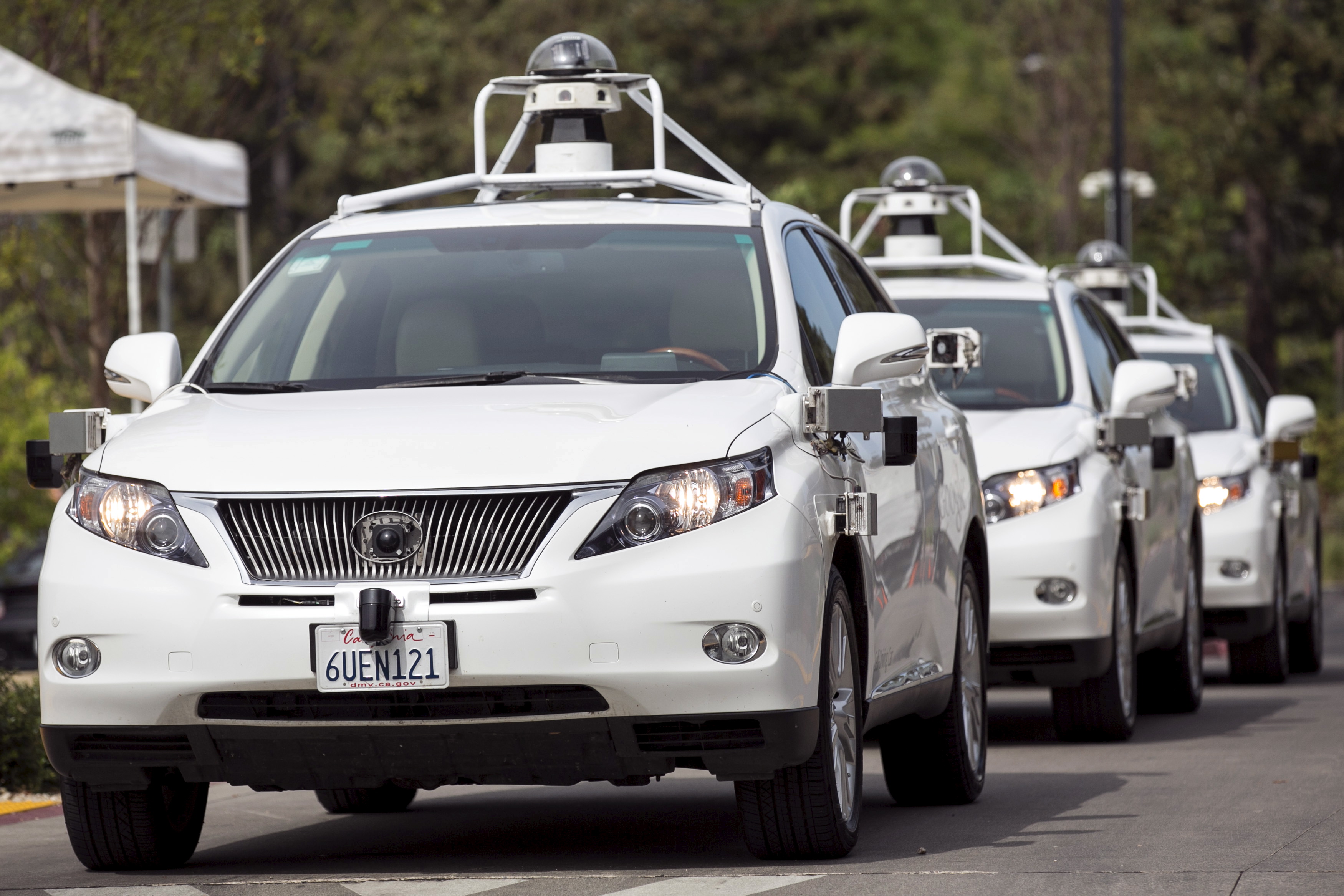
    ­California has closed a legal loophole by holding autonomous vehicles – or more specifically, their manufacturers – responsible for moving violations.

    As-is, autonomous vehicle liability is anything but certain. Because many of the semi-autonomous or “driver assistance” systems explicitly require an alert, human “operator” to monitor the vehicle at all times and potentially take control, liability often falls on the human occupants.

    Even when said vehicles are involved in fatal accidents.

    If the autonomous systems failed, regardless of human supervision, then liability gets a bit murkier.

    But what about fully autonomous vehicles with no human occupants? AV companies will often go to extreme lengths to avoid culpability, but what happens when the blame can’t be foisted onto humans?

    New California regulations would enable law enforcement agencies to “cite AV companies for moving violations committed by their vehicles, requiring AV companies to respond to first responder calls within 30 seconds and authorizing local emergency officials to issue electronic geofencing directives to clear AVs from active emergency zones.”

    Law enforcement would be empowered to issue a “Notice of AV Noncompliance” to manufacturers when an AV commits a moving violation.

    California DMV Director Steve Gordon added that “California continues to lead the nation in the development and adoption of AV technology, and these updated regulations further demonstrate the state’s commitment to public safety.”

    Will any part of the new regulations, AB 1777, inhibit the growth of AVs? Unlikely, since California is already the undisputed king of autonomous vehicles and AV testing. But it does portend some potentially substantial court cases, with far-reaching consequences.
    Recent
    Battery Life: How Can We Get More from Each Charge?

    Battery Life: How Can We Get More from Each Charge?

    04/12/2017
    Meng He, Executive Business Manager, Core Product Group, Maxim Integrated
     Creating Smaller, More Efficient Isolated Power Supplies with Iso-Buck Converters

    Creating Smaller, More Efficient Isolated Power Supplies with Iso-Buck Converters

    04/17/2017
    Reno Rossetti, Principal Technical Writer, Maxim Integrated
    Accelerating Isolated Power Supply Design

    Accelerating Isolated Power Supply Design

    05/10/2017
    Reno Rossetti, PhD, EE, Maxim Integrated
    The Pope Receives his First Electric Car

    The Pope Receives his First Electric Car

    06/02/2017
    Jason Lomberg, Editor, North America, PSD

    Power Systems Design

    146 Charles Street
    Annapolis, Maryland 21401 USA

    Power Systems Design

    Power Systems Design is a leading global media platform serving the power electronics design engineering community. It delivers in-depth technical content, industry news, and product insights to engineers and decision-makers developing advanced power systems and technologies.

    Published 12× per year across North America and Europe, Power Systems Design is distributed through online and fully digital editions, complemented by eNewsletters, webinars, and multimedia content. The platform covers key areas including power conversion, semiconductors, renewable energy, automotive electrification, AI power systems, and industrial applications—supporting innovation across the global electronics industry.