Intel Announces Investments Around Europe
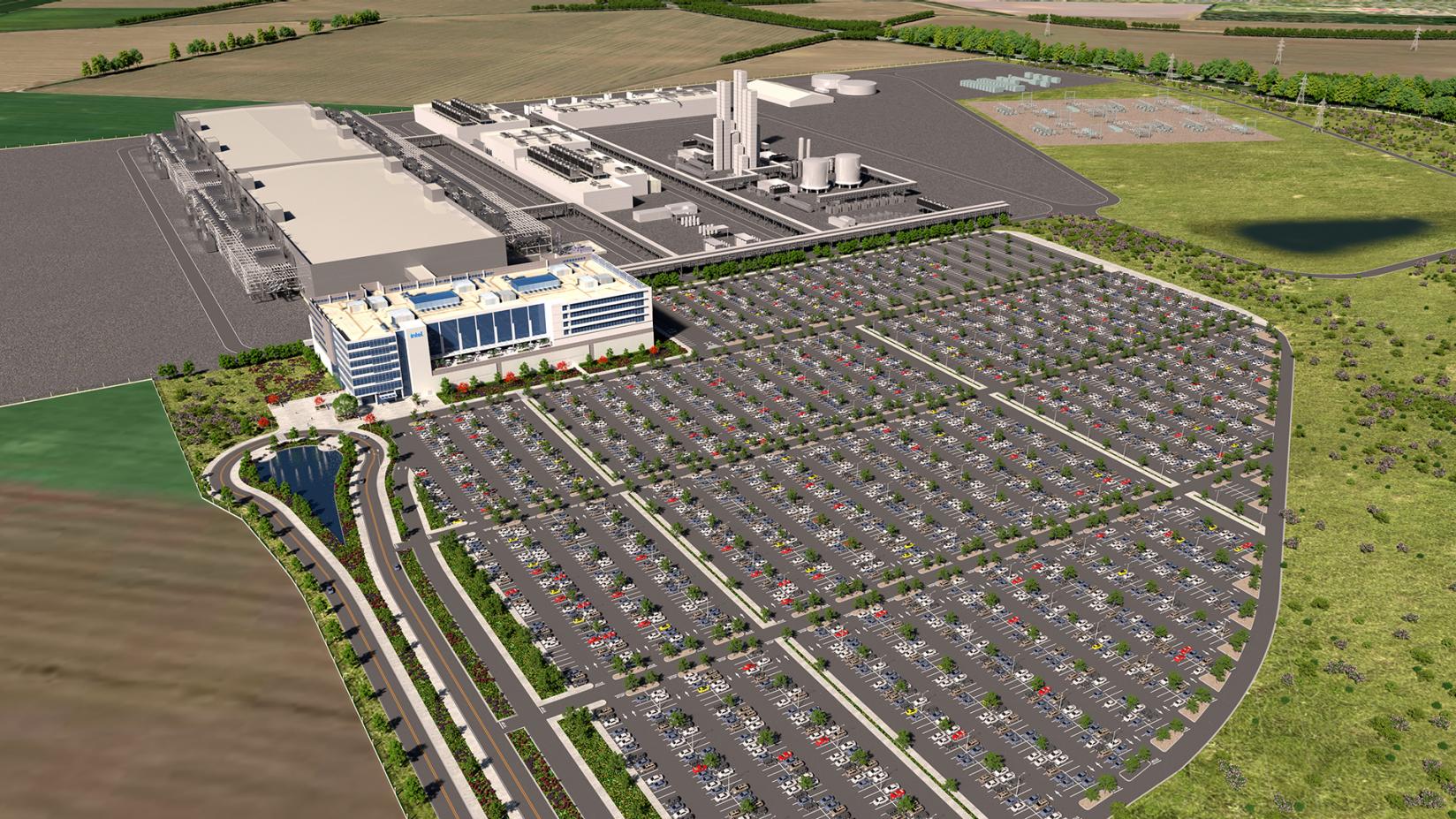
As I’ve written I this space before, issues seen during the COVID-19 pandemic have prompted governments and organisations around the world to try make the supply chain more robust in their own areas. Now, we are seeing some of the first solid signs of that commitment, but it is not without its own controversy. Intel has announced a plan to invest up to 80 billion euros in the EU, along with details of the first tranche of that investment. Other semiconductor companies has said that the type of chips that Intel plans to make are not the type that Europe needs, and the EU subsidies could be put to better use.
Intel’s initial 33 billion euro investment will include a brand new leading-edge semiconductor fab mega-site in Germany, a new R&D and design hub in France, and R&D, manufacturing and foundry services in Ireland, Italy, Poland and Spain. Intel claims the investment will bring the most advanced technology to Europe and create a next-generation European chip ecosystem with a more balanced and resilient supply chain.
The company’s CEO, Pat Gelsinger said: “Our planned investments are a major step both for Intel and for Europe. The EU Chips Act will empower private companies and governments to work together to drastically advance Europe’s position in the semiconductor sector. This broad initiative will boost Europe’s R&D innovation and bring leading-edge manufacturing to the region for the benefit of our customers and partners around the world.”
The new megasite will see Intel develop two semiconductor fabs in Magdeburg, Germany. Planning will start immediately, construction is to begin next year and production is planned to come online in 2027. The fabs will make chips using Intel’s latest Angstrom-era transistor technologies for both foundry customers and Intel as part of the company’s IDM 2.0 strategy. Intel’s initial investment in Magdeburg will be 17 billion euros, creating 7,000 construction jobs over the course of the build, 3,000 permanent high-tech jobs at Intel, and tens of thousands of additional jobs across suppliers and partners.
The first tranche of investment will also include investment to expand Intel’s Leixlip facility in Ireland. The company will spend an additional 12 billion euros doubling the manufacturing space to bring Intel 4 process technology to Europe and expanding the foundry services there. Once complete, this expansion will bring Intel’s total investment in Ireland to more than 30 billion euros.
Intel and Italy are also negotiating terms on a state-of-the-art back-end manufacturing facility that would cost up to 4.5 billion euros. The factory would create around 1,500 Intel jobs and an additional 3,500 jobs from suppliers and partners. Operations would start between 2025 and 2027. This investment is in addition to the growth that Intel expects to see in Italy through its planned acquisition of Tower Semiconductor. Intel also plans to build its new European R&D hub near Plateau de Saclay, France, which will create 1,000 new high-tech jobs. France will also become Intel’s European headquarters for high performance computing (HPC) and AI design capabilities. In addition, Intel will establish its main European foundry design centre in France.
Objections to the EU’s funding of the plan came from European manufacturers. According to the Financial Times, two executives, who remained anonymous, claimed that the high-tech chips that will be produced by Intel are not what Europe requires. They said that Europe should provide subsidies to provide extra capacity for chips more widely used in the areas that Europe leads, such as efficient chips for the automotive industry. This argument was countered by Thierry Breton, the EU’s internal market commissioner who said, “I was always very clear. We will not put public money to do this. We need to prepare cutting edge technology”.
.jpg)
Accelerating Isolated Power Supply Design
05/10/2017