Open Source Software for EV Charging Innovation
Across the world, governments are trying to push the adoption of electric vehicles. At the same time, one of the reasons that consumers are reluctant to follow that guidance is because of the lack of charging facilities. The same governments that are telling us all that we should buy EVs, and many of whom have put an end date on the sale of ICE vehicles in their countries, have been struggling to find the money to install the infrastructure that would make them much more viable and attractive to users. Some automotive companies have tried to help by installing their own charging facilities, but even that is a drop in the ocean to what will be required to support the amount of EVs that are predicted to be on the road in the near-term future.
However, the lack of charging facilities in place, combined with an increasing demand also brings an opportunity for other private entities to enter the market. To do that, those companies would have to be able to have one or more charging designs that suited their needs and could be easily adapted both technologically to fulfil different charging profile needs and geographically to account for different currencies and other regional factors. Reference designs are readily available to provide the basis for the hardware for the system with a little customization, but the software has the potential to be more time consuming and complex to generate. Even if the reference design comes with low-level software for control, application software is still required.
To help ease that process Versinetic has launched a new open source software reference platform that is designed to be as flexible as possible to enable innovation and differentiation. The EVerest solution was developed as part of the Linux Foundation Energy initiative to promote interoperability and standardisation across the industry. It is a modular, flexible software stack that has been designed for EV charging station manufacturers and operators. The platform’s wide feature set, development community and open-source flexibility make it an ideal solution to form the basis of EV charging systems.
The framework provides a modular architecture that allows for interchangeable modules and easy addition of new features. This open-source approach offers several advantages, including enabling local energy management applications and allowing solutions from the community of developers who can contribute to the code base. The modular design makes it simpler for charging station manufacturers to customise and extend the software for specific needs. Customisation options include dialling home for remote diagnostics, creating custom load balancers and interfacing with Home Management Systems interfacing with additional hardware, payment terminals, site meters and RFID.
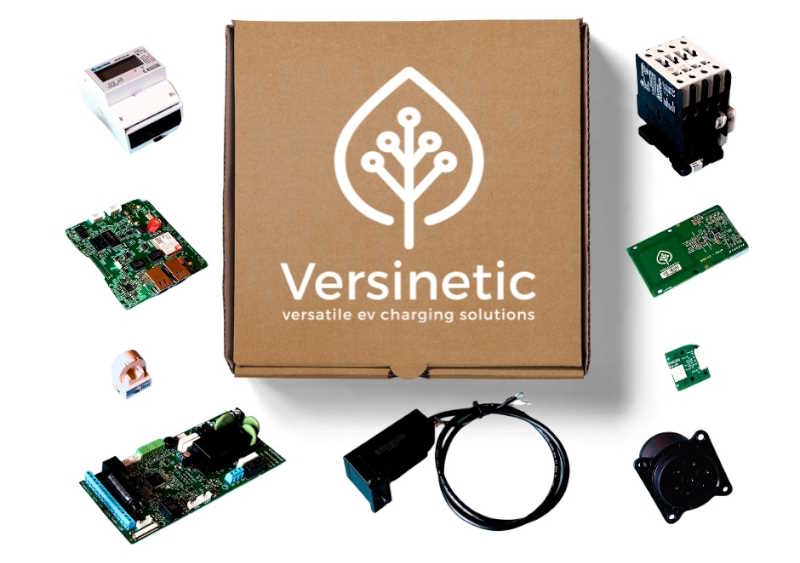
To further assist manufacturers and operators get to market more cheaply and quickly, Versinetic has ported EVerest for EV Charging to its standard Charging Blox – a modular reference design containing hardware and low-level firmware.
.jpg)

Accelerating Isolated Power Supply Design
05/10/2017