Self-Driving Car Lacks Steering Wheel and Brake Pedals
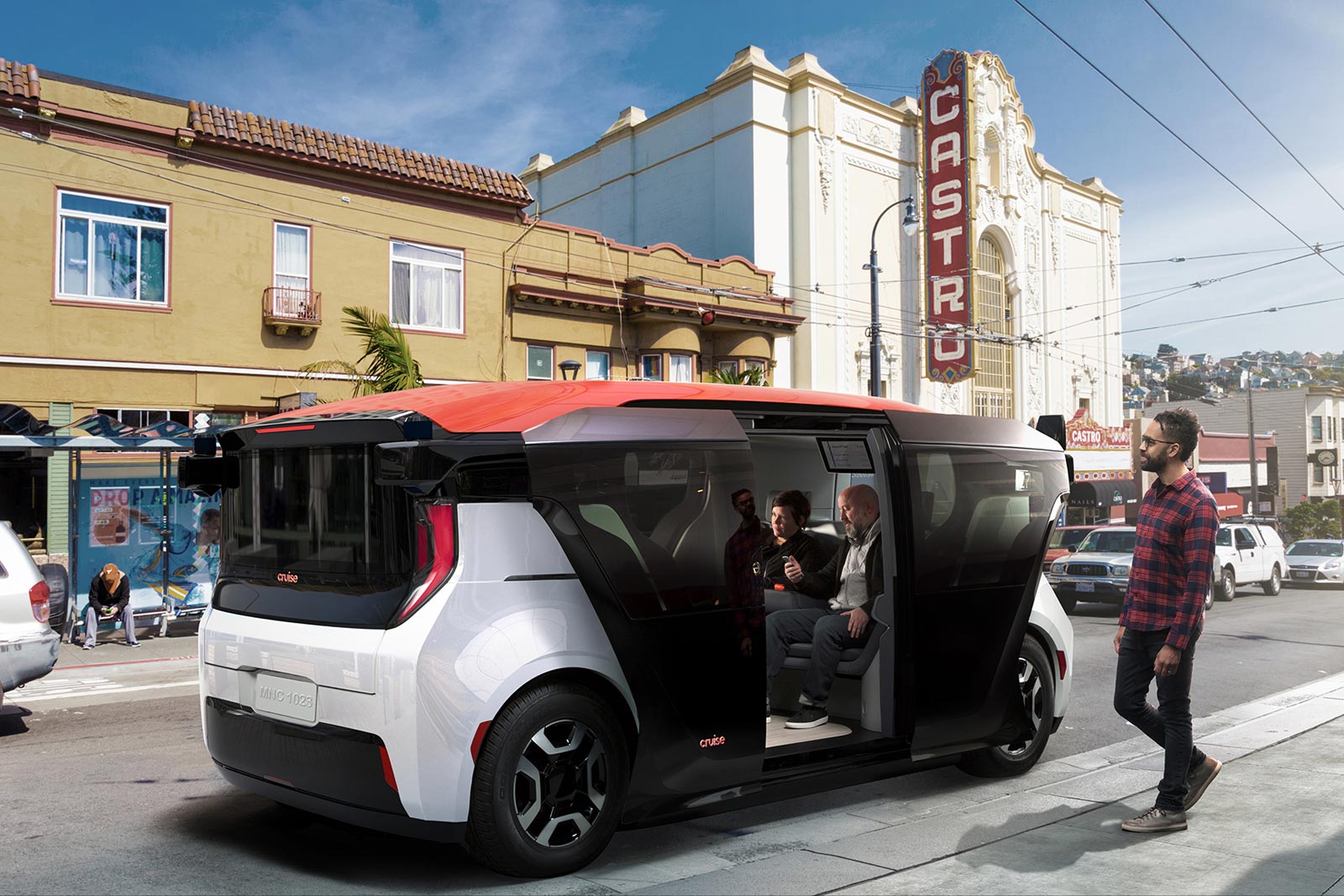
GM and Honda are taking the training wheels off with the Origin – a self-driving vehicle with no steering wheel, brake or accelerator pedals, or rear view mirror. That likely precludes the notion of a “safety driver,” and while that sounds mildly terrifying, fully-autonomous vehicles will have no need for human control instruments.
Prospective customers use a ridesharing app from Cruise – the self-driving subsidiary of GM – to hail an Origin vehicle, and the passengers enter a code to gain entrance. Meanwhile, sensors detect whether someone enters or exits, and while the vehicles lack a steering wheel or pedals, passengers can stop or start the car with the push of a button.
It all sounds futuristic, but in point of fact, nothing about the Cruise is science fiction (or really beyond existing technology). The true challenge will be traversing the bureaucratic red tape – GM and Honda will have to obtain an exemption from the National Highway Traffic Safety Administration since the Origin lacks a steering wheel (amongst other things).
Again, the prospect of giving up complete control behind the (non-existent) wheel sounds frightening, but perhaps that’ll help reduce human error – like the Uber semi-autonomous vehicle that struck and killed a pedestrian when its “safety driver” was streaming a TV show.
And while fully-autonomous vehicles might behave a tad more rational than we’re used to, the idea of dramatically reducing – or outright eliminating – one of the leading causes of death should outweigh our own discomfort.
Cruise's CTO, Kyle Vogt, claims the Origin should be on the roads “pretty soon.”