Sodium-Ion Battery Validated at 160 Wh/kg Energy Density
Its only a few weeks since I last wrote about lithium-free batteries, but it a subject of intense interest to the industry and things move fast. Lithium is not exactly scarce, but it is hard to find in extractable quantities. That extraction process is also normally very damaging to the environment. Li-ion batteries also use other elements in their manufacture that are very scarce, or come from areas of the world that might
In my previous article on the subject, I wrote about a team of researchers from Tokyo who had discovered a method of bringing the energy density of sodium ion batteries to the level of lithium ion ones. This time, it is a little different. Northvolt has developed a working Na-ion battery, that may not have the same energy density as Li-ion, at least not initially, but it still packs enough of a punch to make it useful for some less damanding applications. Not only has the company removed lithium from the battery chemistry, but in doing so, it has also removed the other hard to source materials.
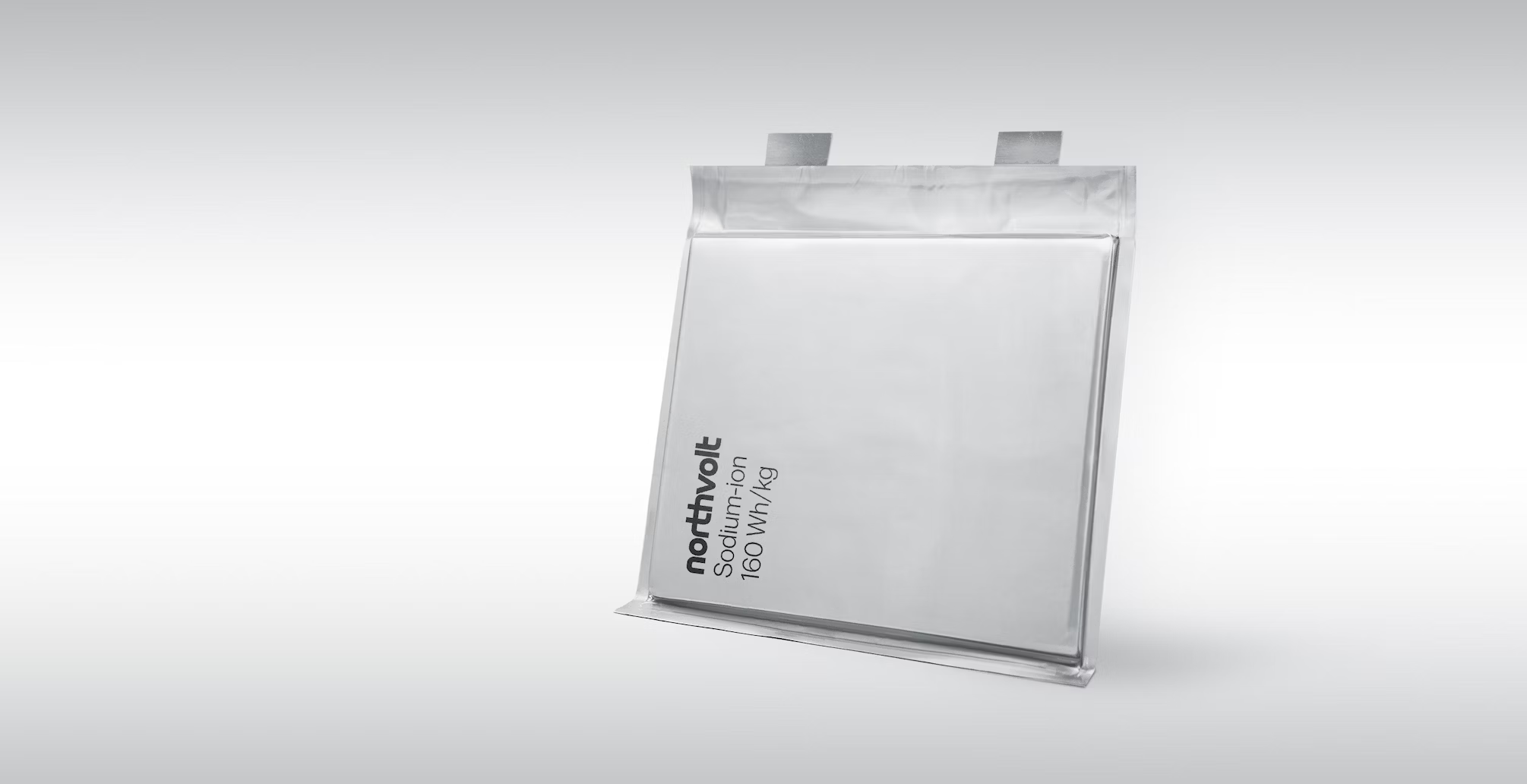
Northvolt’s new Na-ion battery will be used to provide cost-efficient and sustainable energy storage systems. The cell has been validated for an energy density of over 160 watt-hours per kilogram at the company’s R&D and industrialization campus, Northvolt Labs, in Västerås, Sweden. The new battery cell is safer, cheaper and more sustainable than conventional nickel, manganese and cobalt (NMC) or iron phosphate (LFP) chemistries. It has been produced with minerals like iron and sodium that are easily found on global markets. It has a hard carbon anode and a Prussian White-based cathode, and uses no lithium, nickel, cobalt or graphite. Northvolt plans to be the first to industrialize Prussian White-based batteries and bring them to commercial markets.
Peter Carlsson, CEO and Co-Founder of Northvolt, said, “We have developed a technology that will enable its widespread deployment to accelerate the energy transition. It’s an important milestone for Northvolt’s market proposition, but battery technology like this is also crucial to reach global sustainability goals, by making electrification more cost-efficient, sustainable and accessible worldwide.”
The sodium-ion technology, which Northvolt developed with research partner Altris, will provide the foundation for Northvolt's next-generation energy storage solutions. Its low cost and safety at high temperatures make it especially useful for energy storage solutions in developing markets. The technology’s ability to be produced with locally sourced materials will allow it to be manufactured anywhere as it is not reliant on traditional battery value chains.
The initial range of sodium-ion cells will be used primarily for energy storage, however, following generations of the battery will be designed to provide higher energy density, which will enable cost-efficient electric mobility solutions.
Carlsson concludes, “Our sodium-ion technology delivers the performance required to enable energy storage with longer duration than alternative battery chemistries, at a lower cost, thereby opening new pathways to deploying renewable power generation. The potential of sodium-ion in this market alone will make a tremendous impact in the drive towards global electrification.”
.jpg)
Accelerating Isolated Power Supply Design
05/10/2017