South Korean Robot Takes Buddhist Vows
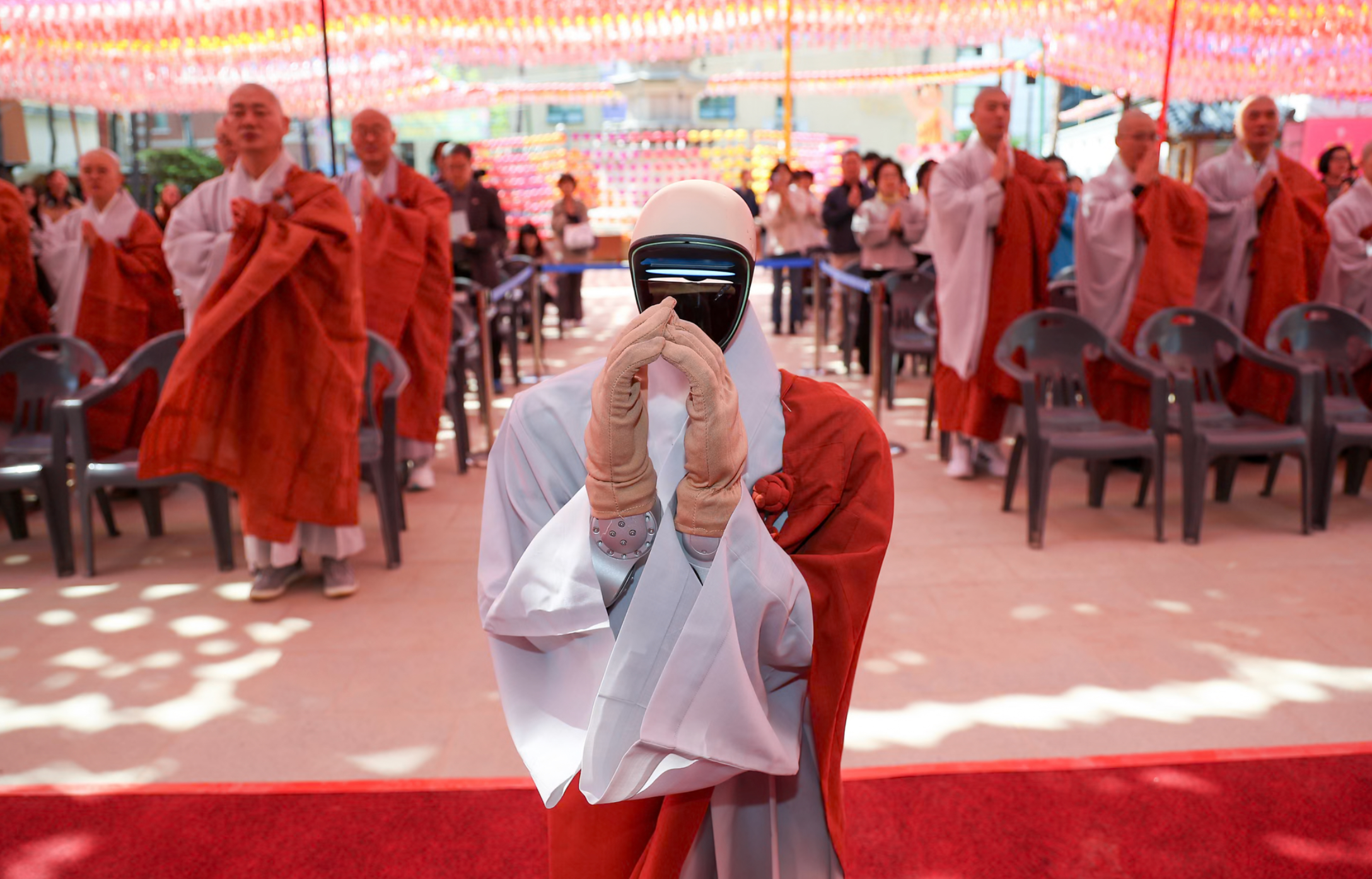
Buddhist monks at Seoul’s Jogyesa Temple just “ordained” a robot in a ceremony that was simultaneously a cynical publicity stunt and an earnest plea to younger generations. But it’s far more significant than that.
First, what it isn’t – the $13,500 Unitree G1 robot isn’t AI. It doesn’t think for itself in any meaningful way, and it doesn’t make its own decisions.
When monks asked if it would devote itself to Buddha, the 130-centimetre humanoid gave the preprogrammed response, “Yes, I will devote myself.” In fact, the entire interaction was scripted and/or preprogrammed. Even the Unitree bot’s movements were carefully controlled – literally, in fact, since it was operated remotely.
While the robot was given the dharma name Gabi (from Siddhartha Gautama and the Korean word jabi, or mercy), it never really pledged fealty of its own volition. And it’s not hard to see why the Buddhist faith is so desperate to reach youngsters – while South Korean Buddhism made up about 22.8% of the population in 2005, that figure has dropped to about 16% in 2025.
And as you might expect, religious devotion is heavily dependent on age, with up to 80% of young Koreans in their 20’s completely unaffiliated and the Jogye Order – where this ceremony was held – seeing historically low annual monastic intakes.
Like most of the world, the youth of Korea are increasingly secular.
So I don’t blame them for wanting to try something. Anything to reach the youth.
While Buddhist Monks must abstain from 5 very specific vices, the robot had its own, specially-formatted vows – according The New Web, it promised to “protect life, refrain from damaging property or other robots, respect and obey humans, abstain from deceptive behaviour, and conserve energy by not overcharging.”
Not coincidentally, the aforementioned vows align almost perfectly with all the robotic conduct that’s subject to litigation.
Is this a true expression of religious faith, a publicity stunt, or a sincere youth outreach program? Yes.
.jpg)
Accelerating Isolated Power Supply Design
05/10/2017