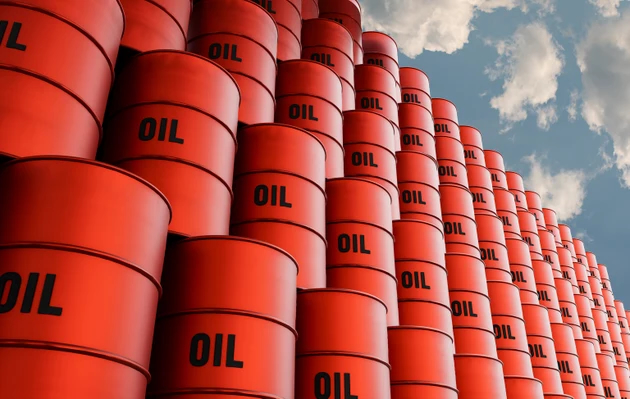
The War in Iran Could Trigger Historic Oil Prices
Amidst the surfeit of geopolitical fallout from the war in Iran, you probably guessed that some pain at the pump was coming. Whether you support or oppose the war, we can all agree that Middle East conflicts, natural disasters, and…almost anything out of the ordinary lead to instability in the market and skyrocketing oil prices. And the Iranian campaign is apparently no different…to say the least.
Last week, crude oil surged upwards, going from $72 per barrel the previous week to $108, before settling at $90.90. And this is just the beginning, with many predicting oil could hit historic highs by the end of March.
The Russian-Ukrainian war provides a good blueprint for what to expect, with the conflict disrupting energy supplies, and crude oil briefly surging to $123 per barrel. In a broader sense, and since Europe was relying so heavily on Russian Liquefied Natural Gas (LNG), the war forced the world to reassess their energy schemes. In a few cases, it even led some countries – like Germany – to restart their own fossil fuel production (like coal).
But it was actually a global pandemic, not war, that triggered all-time oil highs. During the height of COVID-19, few were driving, so refineries maintained a much lower supply, and once restrictions were loosened, consumers were suddenly faced with a dramatic imbalance between supply and demand, with gas prices reaching a record-high $5.01 per gallon nationally in 2022.
And many analysts believe it could get even worse in the coming weeks.
The X-factor is the Strait of Hormuz, through which 20% of the globe’s oil supply passes through. And right after the start of military operations, Iran took a rather drastic step.
"The strait is closed,” said an official of Iran’s Revolutionary Guard Corps at the beginning of March. “If anyone tries to pass, the heroes of the Revolutionary Guard and the regular navy will set those ships ablaze.”
And while Iran’s navy has been effectively destroyed, the Strait remains closed. Moreover, an oil crunch always has a domino effect on the global economy.
David Johnson, CEO of Vervent, a global financial services powerhouse, noted that “Higher oil prices also complicate the inflation story. Energy costs feed directly into transportation, manufacturing, and food prices, which means a sustained spike can push inflation higher just as central banks are trying to bring it down. That puts policymakers in a difficult position—growth may be slowing at the same time inflation is rising.”
I assume none of that is all that surprising – especially since many of our readers lived through the oil embargoes of the ‘70s and their catastrophic financial impact.
As of March 8th, the average price per gallon in America was $3.45, and unless the war ends quickly (or the Strait of Hormuz is fully reopened), the pain at the pump is about to become unbearable.
.jpg)


Accelerating Isolated Power Supply Design
05/10/2017