Fully Calibrated MEMS Pirani Vacuum Transducer Designed for Cost-Effective OEM Integration
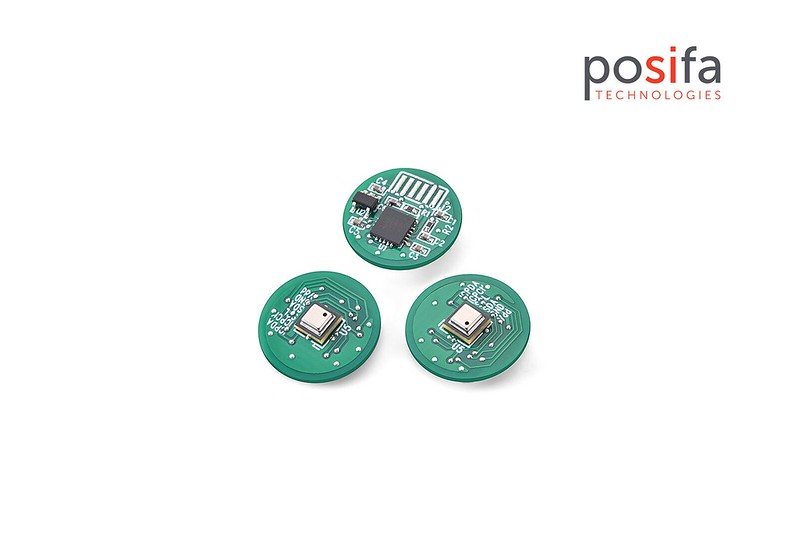
Device Packages a MEMS Pirani Sensor and Microcontroller-Based Measuring Electronics in a Compact PCB Assembly
Posifa Technologies introduced its new PVC4100 series fully calibrated MEMS Pirani vacuum transducer. Designed for cost-effective OEM integration, the device consists of a surface-mount MEMS Pirani sensor and microcontroller-based measuring electronics — all packaged in an ultra-compact PCB assembly featuring a connector-terminated wire harness.
The PVC4100's sensor element is based on Posifa's second-generation MEMS thermal conduction chip, which operates under the principle that the thermal conductivity of gas is proportional to its vacuum pressure. The transducer's microcontroller-based measuring electronics amplify and digitize the senor's signal, providing output via an I²C interface. To compensate for variations in thermal conductivity due to changes in ambient temperature, the device features a temperature-compensation algorithm, which takes its input from a built-in temperature sensor.
The transducer released today is ideal for digital vacuum gauges and leak detection in closed systems maintained under primary vacuum pumps, such as vacuum-insulated panels. For these applications, the device combines low power consumption with extremely fast response times of 250 ms and a wide effective range from 0.1 millitorr (0.013 Pa) to 1 atm (760 torr, or 101 kPa), with accuracy of 15 % from 1 millitorr to 200,000 millitorr. Readers may contact Posifa to discuss options for customizing the transducer's specifications.
For more information, go here.
.jpeg)