Technical Features

    May 2025
    Transformer Design Comparisons for Mitigating EMI in Gate Driver Circuits

    Click image to enlarge

    Figure 1: Gate driver circuit diagram with a Bourns transformer

    While gate driver-based converters deliver improved efficiency, speed and signal integrity, their high frequency switching features can produce elevated levels of conducted electromagnetic interference (EMI), posing challenges to electromagnetic compatibility (EMC) and overall system reliability. To solve this
    Date:
    03/29/2026
    Optimizing Flying Capacitor Multilevel Converters for GaN Technology

    Figure 1: Power schematic circuit for the bi-directional three-level, two-phase converter

    Introduction Modern power systems demand higher efficiency, increased power density, and reduced electromagnetic interference (EMI)—all while adhering to shrinking size constraints. Among the converter topologies addressing these challenges, the Flying Capacitor Multilevel (FCML) converter stands out for it
    . . . Learn More
    Date:
    05/30/2025
    80 PLUS Ruby – The New Efficiency Target for Data Centers

    Click image to enlarge

    Figure 1: 80 PLUS requirements for 277 V / 480 V internal redundant PSUs (Source: CLEAResult)
    ­The 80 PLUS standard has now entered its third decade, and the 80% efficiency requirement is a dim and distant memory. However, the announcement of the new ‘Ruby’ level within the 80 PLUS framework is the first step forward in 14 years and will be critical in reducing data center power consumption. This ar
    . . . Learn More
    Date:
    05/01/2025
    Monolithic Driver and DrMOS Technology Improves Power Design

    Click image to enlarge

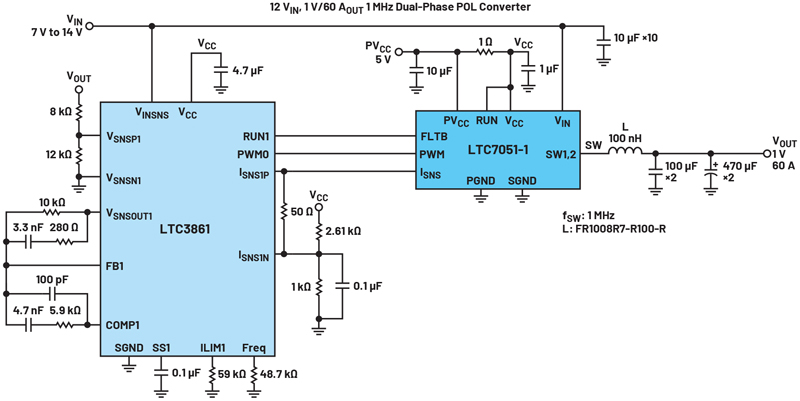
    Figure 1: Dual-phase POL converter

    ­Through the advancement of technology, microprocessors have become denser and faster on a horizontal scale thanks to the multicore architecture. Thus, the corresponding power required by these devices has increased drastically. Such power for microprocessors is provided by a voltage regulator module (VRM). There are two m
    . . . Learn More
    Date:
    05/01/2025
    Bridging the Communication Gap to the MCU on an IIoT Device

    Click image to enlarge

    Figure 1: Near field communication (NFC) and I2C can work together to overcome limitation to current approaches to device configuration and security

    ­Secured communication with industrial devices such as sensors, actuators, and remote controllers is paramount for smart factory managers who wish to leverage machine learning (ML) and artificial intelligence (AI) to enhance production efficiency. It is equally important for them to verify that their equipment an
    . . . Learn More
    Date:
    05/01/2025
    Rethinking Power for AI Processors

    Click image to enlarge

    Figure 1: Modern computing demands more power, efficiency, and scalability, creating a shift toward higher voltage IT and power infrastructure in data centers

    ­The continued evolution of artificial intelligence (AI), machine learning (ML), and large language models (LLMs) is fueling a global demand for more sophisticated and power-optimized data centers. Research by Goldman Sachs estimates that data center power demand will grow by 160% by 2030, driven largely by th
    . . . Learn More
    Date:
    05/01/2025
    Enabling Near-DUT Voltage Sense and Control

    Click image to enlarge

    Figure 1: With tester voltage references VSS Sense and VDD Sense on the tester side of the socket, parasitic losses can decrease voltage control

    ­The arrival of high-performance computing (HPC) and artificial intelligence (AI) is having significant effects on the semiconductor devices developed to serve these applications. AI and HPC chips do have some differences. AI chips are optimized for deep learning and neural-network processing and can tolerate re
    . . . Learn More
    Date:
    05/01/2025
    The Daily Use of EV Chargers: Human Interface Technology

    Click image to enlarge

    Figure 1: EV parked outside residential home
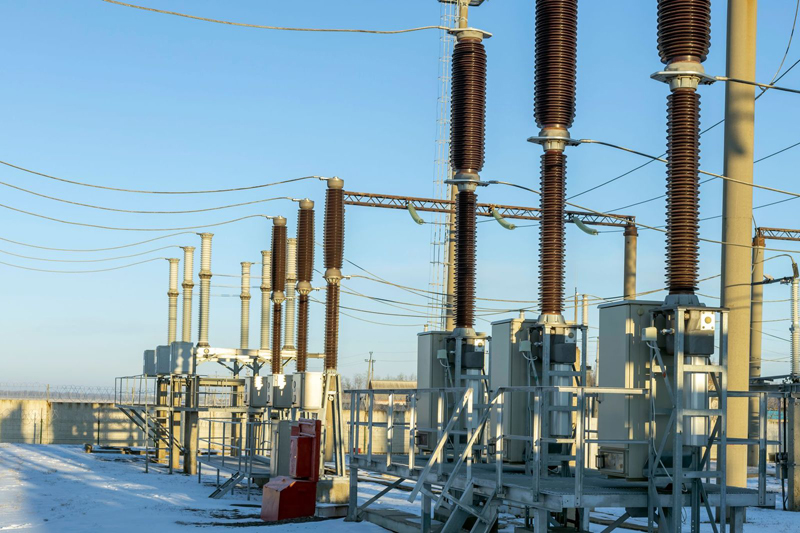
    ­Automotive manufacturers are increasingly offering a wider selection of EVs to their fleet, which requires a larger quantity of easy-to-use chargers for customers. There are several types of chargers that are currently in use including Level 1, Level 2 and DC fast chargers depending upon their size and capacity. Ho
    . . . Learn More
    Date:
    05/01/2025
    Detecting IT Power System Resistive and Capacitive Faults with Insulation Monitoring Technology

    Click image to enlarge

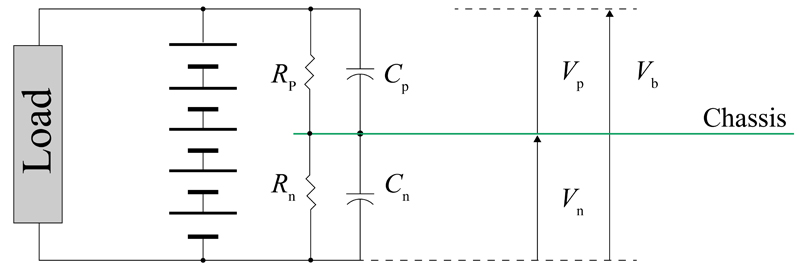
    Figure 1: Generalized IT power system
    ­While sales of electric vehicles in the U.S. have underperformed their once-lofty expectations, their continued expansion and maturity has pushed regulators toward greater specificity around the various safety standards which surround them and the corresponding charging infrastructure. One area which rem
    . . . Learn More
    Date:
    05/01/2025
    Exploring How Silicon Carbide is Transforming Energy Systems

    Click image to enlarge

    Figure 1: One area these experts are excited about is the decarbonization of the grid, which involves transitioning away from fossil fuel power plants (like coal and oil)

    ­Silicon carbide (SiC) has become a cornerstone for enhancing efficiency and supporting decarbonization across industries. It’s an enabler for advanced power systems, addressing growing global demands in renewable energy, electric vehicles (EVs), data centers and grid infrastructure. SiC technology has advantages ov
    . . . Learn More
    Date:
    05/01/2025
    Revolutionizing Smart Homes with UWB and Matter for a Seamless Future

    Click image to enlarge

    ­The smart home industry has come a long way, with connected devices promising convenience, efficiency, and enhanced living environments. Yet, for all the progress, two persistent challenges have hindered widespread adoption: interoperability among devices from different manufacturers, and the need for greater in
    . . . Learn More
    Date:
    05/01/2025

    Power Systems Design

    146 Charles Street
    Annapolis, Maryland 21401 USA

    Power Systems Design

    Published by Power Systems (PSD) serves all aspects of the Power Electronics market including but not limited to Power Conversion, Power Management, Intelligent and Embedded Motion, Automotive, Renewable Energy, Energy Efficiency and Lighting. PSD is published 10x per year in English with separate print editions for Europe and North America and is published 6x per year in China. PSD Apps are available for Android & iOS. Additionally qualified power engineering professionals may subscribe and receive PSD daily PowerSurge newsletters.