Motor Drives, Robotics & Controls

    November 2022
    UTA Professor's Aim: Robots to Assist with Everyday Tasks

    Fillia Makeon

    ­A University of Texas at Arlington computer science researcher is developing a robotic system that helps people with spinal cord injuries perform everyday tasks, and she’s involving members of the UTA Movin’ Mavs wheelchair basketball team in the effort. Fillia Makedon, a distinguished professor in the De
    . . . Learn More
    Date:
    11/07/2022
    Light-Driven Molecular Motors Light Up

    These are the first authors of both papers described in the news story, Lukas Pfeifer (L) and Ryojun Toyoda. Both succeeded in making a fluorescent light-driven molecular motor. This is the first time that two photochemical properties were combined in one motor molecule.

    ­Rotary molecular motors were first created in 1999, in the laboratory of Ben Feringa, Professor of Organic Chemistry at the University of Groningen. These motors are driven by light. For many reasons, it would be good to be able to make these motor molecules visible. The best way to do this is to make them fl
    . . . Learn More
    Date:
    11/07/2022
    Space-Making 'Robot Rooms' Promise Practicality, Escape

    Keith Evan Green, director of the Architectural Robotics Lab, Cornell
    ­In millions of homes today, voice commands prompt “smart” devices to turn on lights, change the temperature or deliver weather forecasts, while robotic vacuums autonomously hunt for crumbs and dust bunnies. But what if robots and computer intelligence weren’t just in the room – they were the room?
    . . . Learn More
    Date:
    11/04/2022
    Bring Your Next Battery Charger Project to Life with Minimum Design Risks

    Click image to enlarge

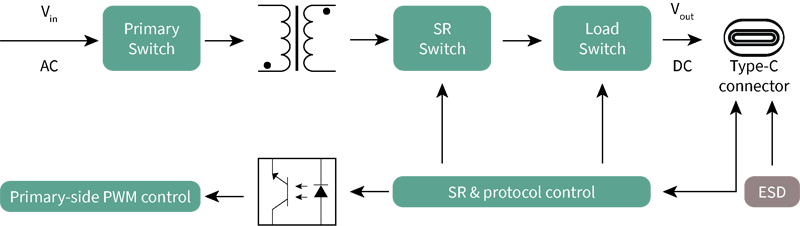
    Figure 1. Infineon offering cover key components in chargers (colored in green)

    ­Every day more and more of the devices and equipment used in our daily life are powered by batteries. For example, we can find electronic equipment with batteries around the house, such as cordless power tools, drones, and other domestic robots (e.g., robotic vacuum cleaners, lawnmowers, etc.). At the same time, due to rising fuel prices, government incentives, and rising awareness about air pollution, common modes of transportation such as bicycles, scooters, and mopeds have now also turned into electrical vehicles. All of these applications are
    . . . Learn More
    Date:
    11/01/2022
    No Motors and Control – No Robots

    No Motors and Control – No Robots

    ­The word “robotics” sometimes conjures thoughts of factories using machines to eliminate human labor, but today’s robots and collaborative robots – “cobots” – can help humans by augmenting or replacing tedious tasks. In the home this can be a robot vacuum. Or, on a larger scale, an all-electric au
    . . . Learn More
    Date:
    11/01/2022
    Adhesion Control Protects Inspection Robot Investment

    Click image to enlarge

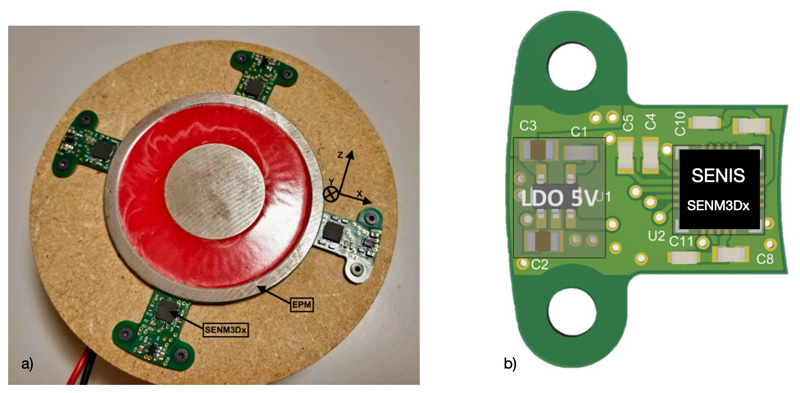
    Figure 1: a) Gripper foot prototype in bottom view with four equally distanced SENM3Dx sensors on PCBs and the electro permanent magnet (EPM). The magnetic axis definition is shown for one sensor. b) Sensor PCB bottom view with SENIS SENM3Dx
    ­Robotic solutions are well recognized for their potential in the field of inspection and maintenance, especially for ferrous (steel) structures, such as complex bridge structures and towers. In practice, this means that industrial climbing robots equipped with electro permanent magnet (EPM) grippers are used wh
    . . . Learn More
    Date:
    11/01/2022
    Brushless DC Motors and Their Drives - Design Considerations and Challenges

    Click image to enlarge

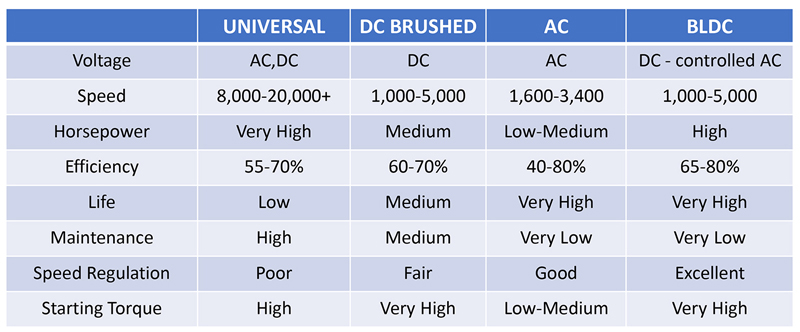
    Figure 1: Comparison of motor performance for the same frame size (source: Groschopp)

    ­From their simple beginnings in the 18th century, motors have become ubiquitous, consuming more than half of current global energy production, according to ‘4E Electric Motor Systems Annex’ (EMSA). It’s also stated by the International Energy Agency (IEA) that typically 95% of a motor’s lifecycle cost is
    . . . Learn More
    Date:
    11/01/2022
    Making Sense of Sensors

    Ally Winning, European Editor, PSD

    November is electronica month. It has been four years since the last show and it is looking like things will be picking up where they left off. According to the organizers, over 2,000 exhibitors have already booked up for this year’s event, which will take place in Munich from November 15th to 18th in 14 of th
    . . . Learn More
    Date:
    11/01/2022
    The World's Leading Trade Fair and Conference for Electronics

    Jason Lomberg, North American Editor, PSD
    ­It’s that time of year! Well...not the one with reindeer and a jolly fat man, but arguably the most important time of year for our industry. First, though, I hope everyone had a spookily satisfying All Hallow’s Eve and you didn’t go up too many sizes after sampling your kids’ candy haul (I may ha
    . . . Learn More
    Date:
    11/01/2022
    High-Density Power Modules Boost Performance for a New Generation of Mobile Robots

    Click image to enlarge

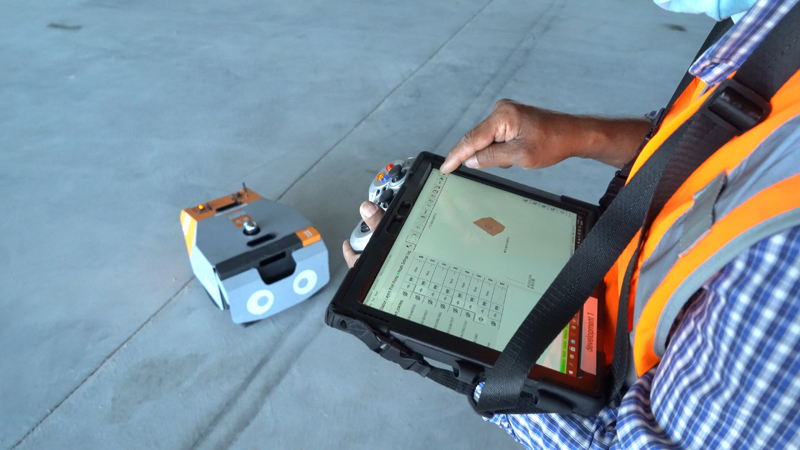
    Figure 1: Dusty eliminates the conventional, labor-intensive process of physically transferring building plans onto the floor with a robot programmed at the job site to automate the same task.

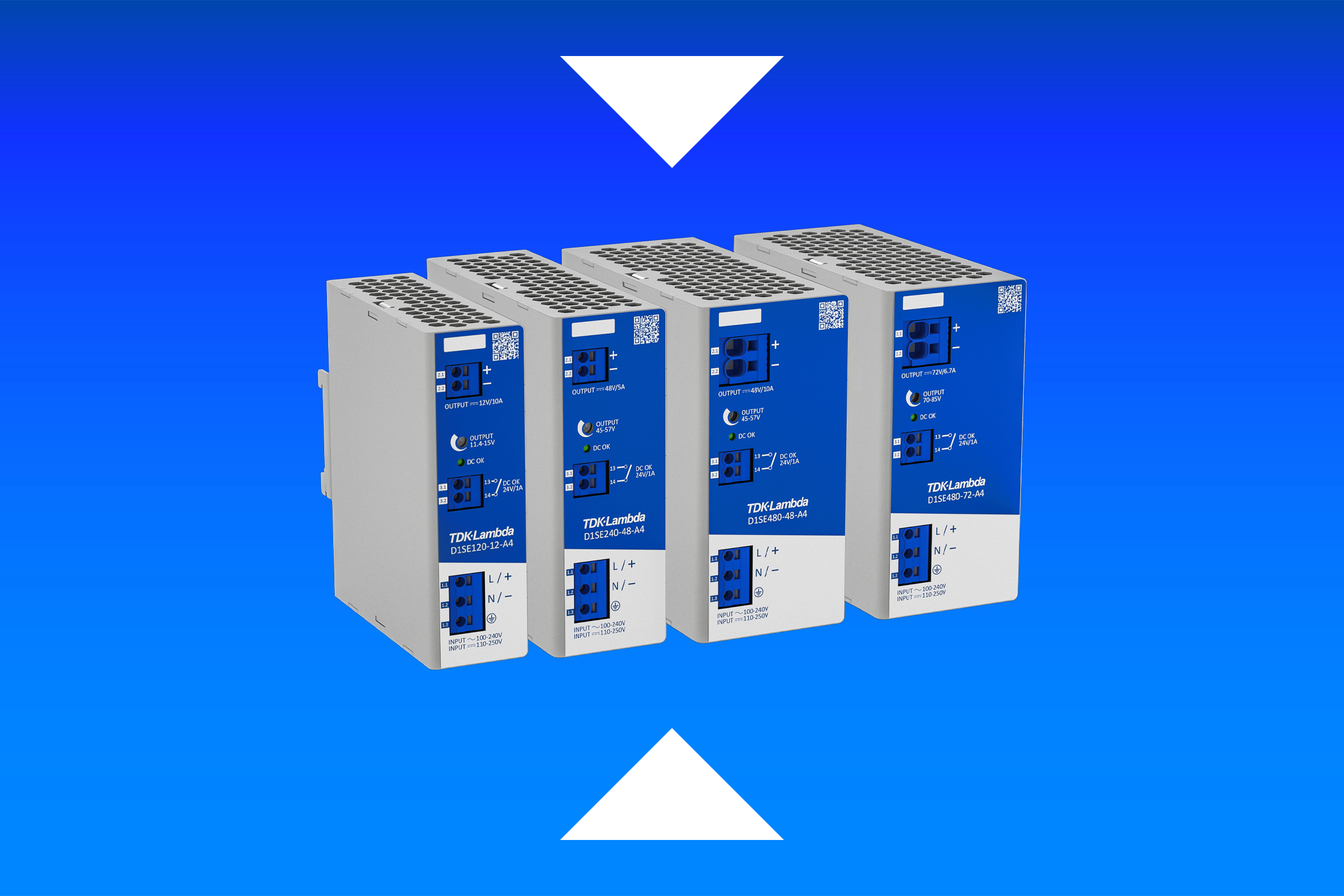
    ­Innovations in power conversion technology are enabling a transformation in robotics design. Today’s integrated power modules address the demanding size, weight, power budgets and cost efficiencies required to move robots from factory, residential and commercial applications into a vast new landscape bounded onl
    . . . Learn More
    Date:
    11/01/2022
    Archive

    Power Systems Design

    146 Charles Street
    Annapolis, Maryland 21401 USA

    Power Systems Design

    Power Systems Design is a leading global media platform serving the power electronics design engineering community. It delivers in-depth technical content, industry news, and product insights to engineers and decision-makers developing advanced power systems and technologies.

    Published 12× per year across North America and Europe, Power Systems Design is distributed through online and fully digital editions, complemented by eNewsletters, webinars, and multimedia content. The platform covers key areas including power conversion, semiconductors, renewable energy, automotive electrification, AI power systems, and industrial applications—supporting innovation across the global electronics industry.