Technical Features

    May 2024
    Transformer Design Comparisons for Mitigating EMI in Gate Driver Circuits

    Click image to enlarge

    Figure 1: Gate driver circuit diagram with a Bourns transformer

    While gate driver-based converters deliver improved efficiency, speed and signal integrity, their high frequency switching features can produce elevated levels of conducted electromagnetic interference (EMI), posing challenges to electromagnetic compatibility (EMC) and overall system reliability. To solve this
    Date:
    03/29/2026
    Qorvo Hard-Wires Safety Features into Motor Controllers for 44V-72V Power Tools and Appliances

    Click image to enlarge

    Figure 1: PAC52711
    Introduction We're all familiar with the pervasive hum of gas-powered gardening equipment in the spring, summer and fall, from hedge trimmers, leaf blowers, chainsaws, and jack hammers, not to mention the droning of snowblowers in the winter. While gas-powered tools have long been a staple for outdoor mainte
    . . . Learn More
    Date:
    05/31/2024
    New Power Supply Concepts Needed for Intelligent Edge Sensors

    Click image to enlarge

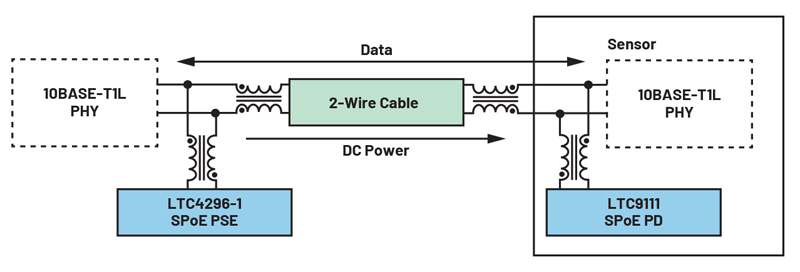
    Figure 1: SPoE supplies up to 52W via a single 2-wire cable up to 1km in length
    ­A smart sensor is created by adding a microcontroller to the sensor. However, this unit has higher current consumption, so new concepts for supplying the higher current are required. This is especially true for existing industrial plants and infrastructure. The solutions should provide easy and secure means of
    . . . Learn More
    Date:
    05/01/2024
    How the IIoT is Changing the Face of Manufacturing

    Click image to enlarge

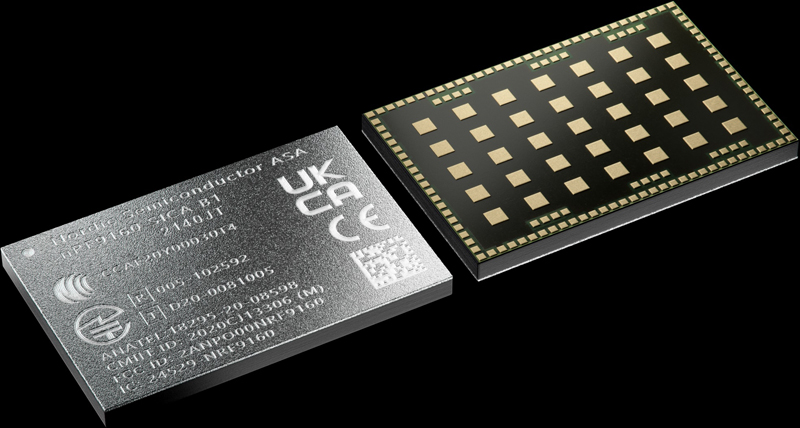
    Figure 1: Nordic’s nRF9160 SiP is the lowest power complete cellular IoT solution on the market – extending battery life
    ­Digital computers first disrupted factory automation in the late 1960s. The machines ushered an era of computer aided design (CAD), consistent manufacture of complex components, greater automation using programmable logic controllers (PLCs), and higher productivity. The period was considered the third generation of
    . . . Learn More
    Date:
    05/01/2024
    Circuit Simulation Shapes Up for Energy-Conscious Design

    Click image to enlarge

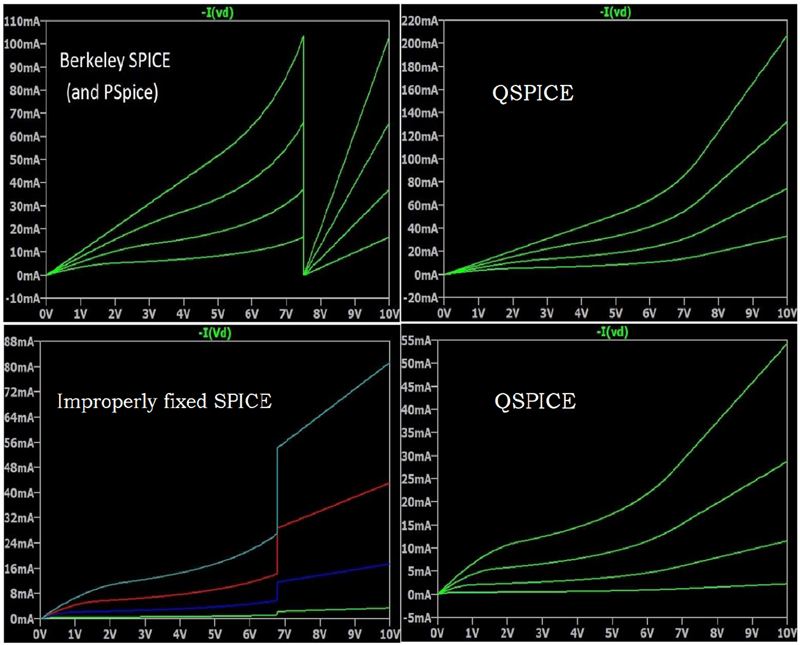
    Figure 1: Improved I-V curves
    ­SPICE (Simulation Program with Integrated Circuit Emphasis) was created at Berkeley in 1970 and has become the reference for integrated circuit simulators, receiving an IEEE Milestone in Electrical Engineering and Computing award in 2011. The ability to model components and simulate their behavior has empowered ge
    . . . Learn More
    Date:
    05/01/2024
    GenAI – Helping to Tame the Most Power-Intensive Computing Application on Earth

    Click image to enlarge

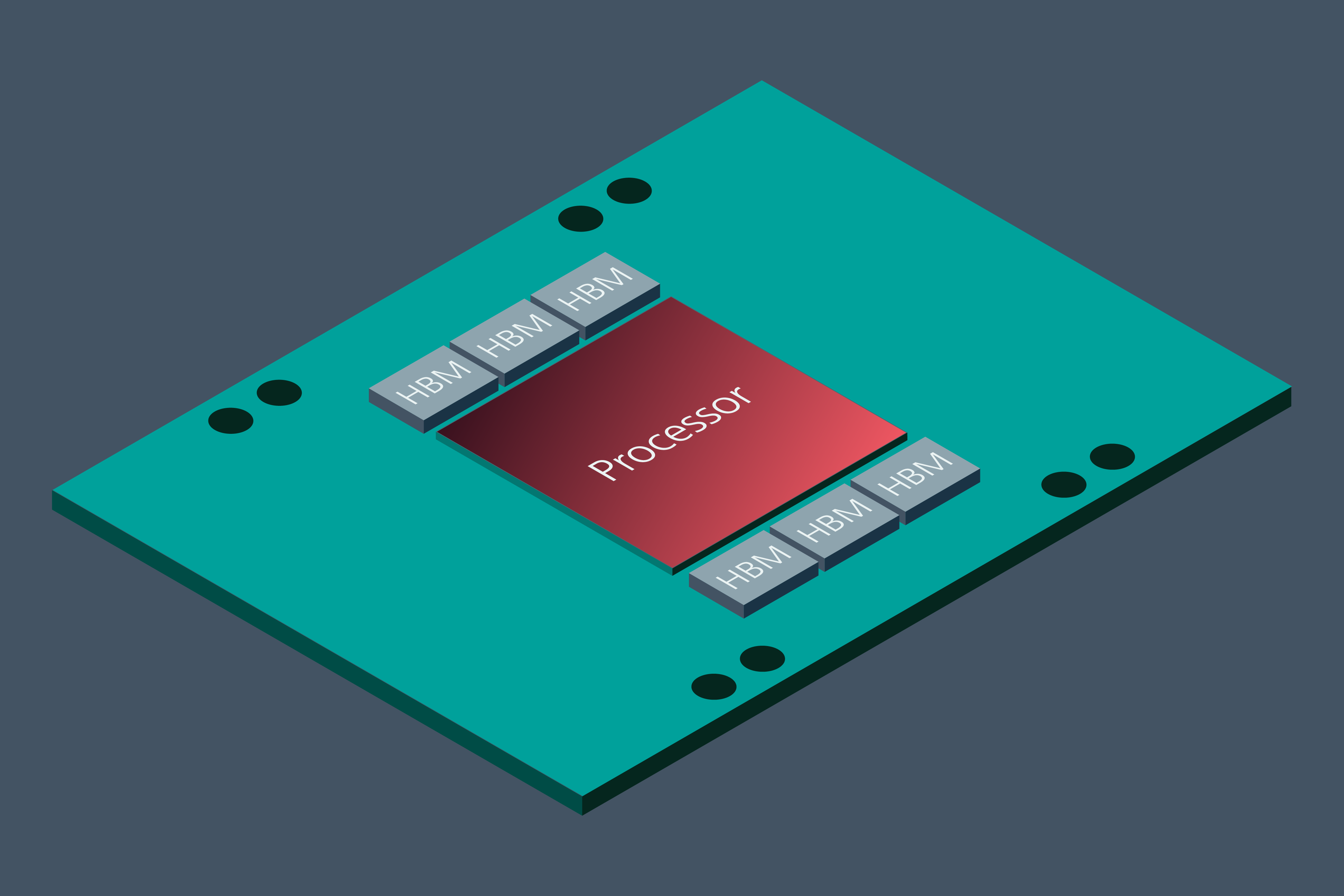
    Figure 1: GenAI training GPU-based processor chiplet complex with high-bandwidth memories (HBMs) mounted on an accelerator module (AM)
    ­Training generative AI (genAI) neural network models typically take months, with thousands of multi-billion-transistor GPU-based processors, high-bandwidth SDRAMs, and terabit per second optical network switches operating simultaneously and continuously. While genAI holds the promise of increasing human productivity, it
    . . . Learn More
    Date:
    05/01/2024
    Galvanic Isolation Keeps Pace with Control Requirements

    Click image to enlarge

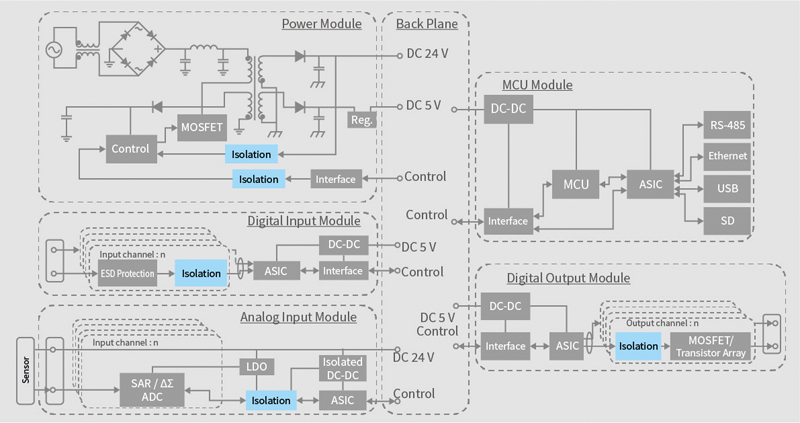
    Figure 1: Isolation locations in a PLC

    ­There are two distinct trends in the design of the electronic systems that support motors. On one side are power generation and electrical distribution subsystems that operate at voltages that are moving toward the kilovolt regime. On the other are high-speed MCUs that enable advanced algorithms to optimise sy
    . . . Learn More
    Date:
    05/01/2024
    Improving Residential Solar System Designs

    Click image to enlarge

    Figure 1: Residential Solar Inverter System Block Diagram
    ­The deployment of residential solar systems, which is expected to proliferate over the next five years, will provide many benefits to users, including providing a reliable, clean, green energy source to power home appliances, charge electric vehicles and transfer power back to the grid. This article provides an
    . . . Learn More
    Date:
    05/01/2024
    How to Extend Data and Power over Extended Distances

    Click image to enlarge

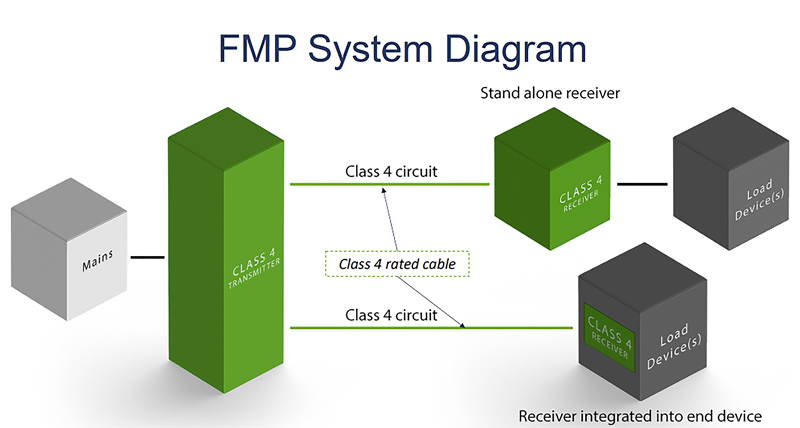
    Figure 1: Illustration of FMP System
    ­Class 1, 2, and 3 circuits are classified as remote-control, signaling, and power-limited circuits in the National Electrical Code (NEC). The NEC defines such circuits as that portion of the wiring system between the load side of the overcurrent protection device (OCPD) or the power-limited supply and all co
    . . . Learn More
    Date:
    05/01/2024
    Power Modules: One Shortcut to EMI Compliance

    Click image to enlarge

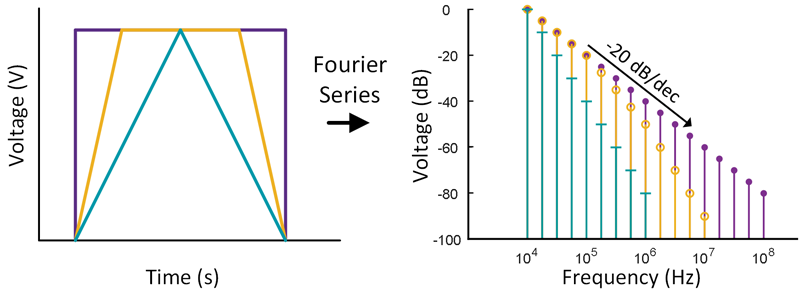
    Figure 1: Notional spectra for a square, trapezoidal, and triangular signal

    ­Electronic devices that are in proximity or share common conductors are susceptible to electromagnetic interference (EMI) that can disrupt their operation. Minimizing emissions is necessary to ensure that electrical systems do not interfere with each other’s normal operation when placed in the same environment. Po
    . . . Learn More
    Date:
    05/01/2024
    Archive

    Transformer Design Comparisons for Mitigating EMI in Gate Driver Circuits

    Mar 29,2026
    Matthew Russell, Master’s student at University College Cork, and a student engineer at Bourns Electronics Ireland

    1250 V/1700 V GaN HEMTs for NVIDIA 800 VDC Architecture

    Jan 31,2026
    Kamal Varadarajan & Chris Lee, Power Integrations

    Future-Proof Automotive High-Voltage-to-SELV Conversion

    Dec 30,2025
    Greg Green, Director of Automotive Marketing, Vicor

    Power Systems Design

    146 Charles Street
    Annapolis, Maryland 21401 USA

    Power Systems Design

    Power Systems Design is a leading global media platform serving the power electronics design engineering community. It delivers in-depth technical content, industry news, and product insights to engineers and decision-makers developing advanced power systems and technologies.

    Published 12× per year across North America and Europe, Power Systems Design is distributed through online and fully digital editions, complemented by eNewsletters, webinars, and multimedia content. The platform covers key areas including power conversion, semiconductors, renewable energy, automotive electrification, AI power systems, and industrial applications—supporting innovation across the global electronics industry.