Technical Features

    February 2021
    Transformer Design Comparisons for Mitigating EMI in Gate Driver Circuits

    Click image to enlarge

    Figure 1: Gate driver circuit diagram with a Bourns transformer

    While gate driver-based converters deliver improved efficiency, speed and signal integrity, their high frequency switching features can produce elevated levels of conducted electromagnetic interference (EMI), posing challenges to electromagnetic compatibility (EMC) and overall system reliability. To solve this
    Date:
    03/29/2026
    Variations to Perform: Introducing 65 W USB-PD Designs

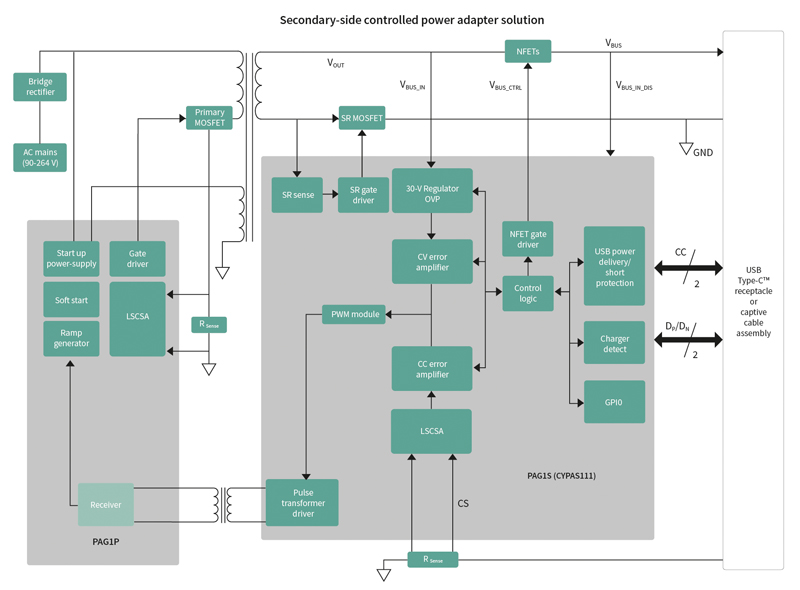
    Figure 1 Block diagram of a secondary-side controlled power adapter using PAG1S and PAG1P
    The continuous demand for charging devices in the shortest time is driving the charger market toward fast charging. On the one hand, the power delivered by these charges increases; on the other hand, their size is getting smaller and smaller, so it is necessary to design a higher power density. To meet the growing de
    . . . Learn More
    Date:
    02/28/2021
    Simple ADC Current Sensing

    Click image to enlarge

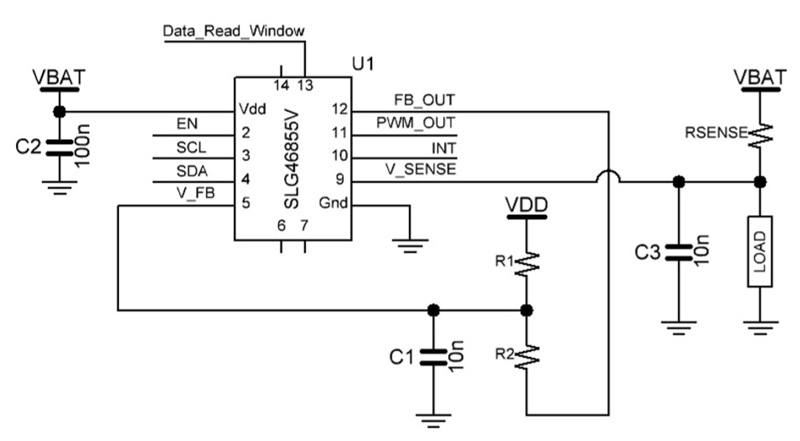
    Figure 1: External circuit schematic
    Dialog Semiconductor’s SLG46855V is able to sense load current and then interface with an MCU through an I2C connection. This ADC design provides current data to an MCU or SoC via I2C and can be customized to integrate other functions with available logic, all within a small 1.6 x 2.0 mm package. It can be us
    . . . Learn More
    Date:
    02/01/2021
    Switch Node Layout Considerations for EMC

    Click image to enlarge

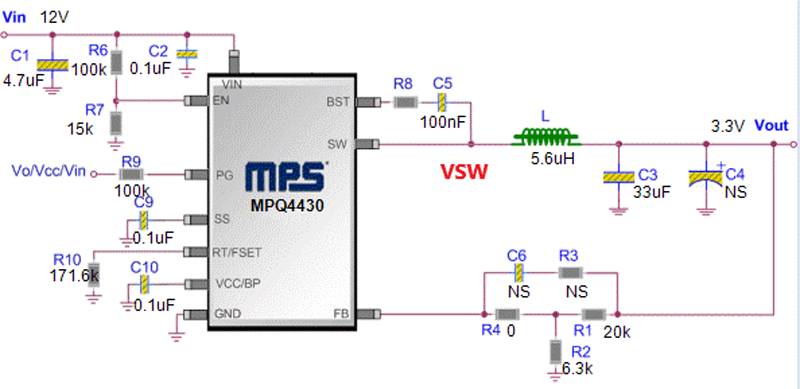
    Figure 1: MPQ4430 Buck Converter Example
    The circuit node is where one or more power semiconductor switches (such as a MOSFET or diode) connect to a magnetic energy-storing device (such as an inductor or transformer winding). The switching signals of this circuit node contain fast-switching dV/dt voltages and dI/dt currents that can easily couple onto surr
    . . . Learn More
    Date:
    02/01/2021
    Enabling the Transition to Advanced Motor Control

    Click image to enlarge

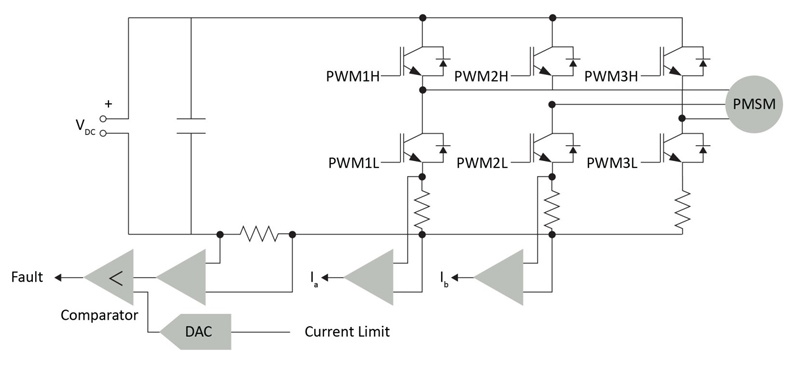
    Figure 1: A three-phase sensor-less PMSM control system that uses a three-phase voltage source inverter
    There are two main driving factors behind the adoption of advanced motor control systems based on Permanent Magnet Synchronous Motors (PMSMs) with sensor-less Field Oriented Control (FOC):  improving energy efficiency and strengthening product differentiation. While a PMSM with sensor-less FOC has been pr
    . . . Learn More
    Date:
    02/01/2021
    iCoupler Technology Benefits GaN Transistors in AC/DC Designs

    Click image to enlarge

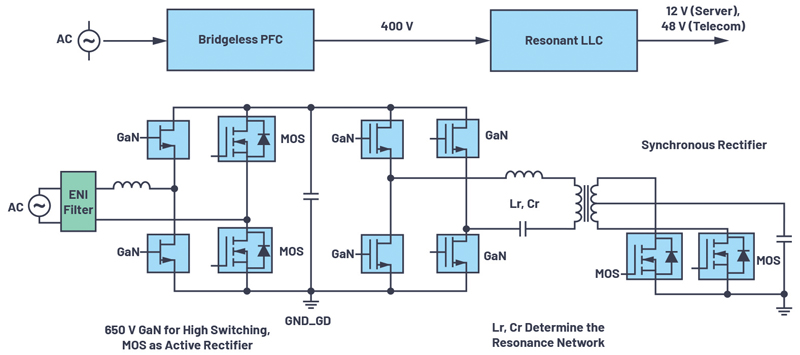
    Figure 1. Typical AC/DC power supply for telecom and server applications
    Highly efficient AC/DC power supplies are key to the evolution of the telecom and datacom infrastructure, as power consumption grows rapidly due to hyperscale data centers, enterprise servers, or telecom switching stations. However, the power electronics industry has reached the theoretical limit of silicon MOS
    . . . Learn More
    Date:
    02/01/2021
    Protecting Automotive Ethernet from ESD

    Click image to enlarge

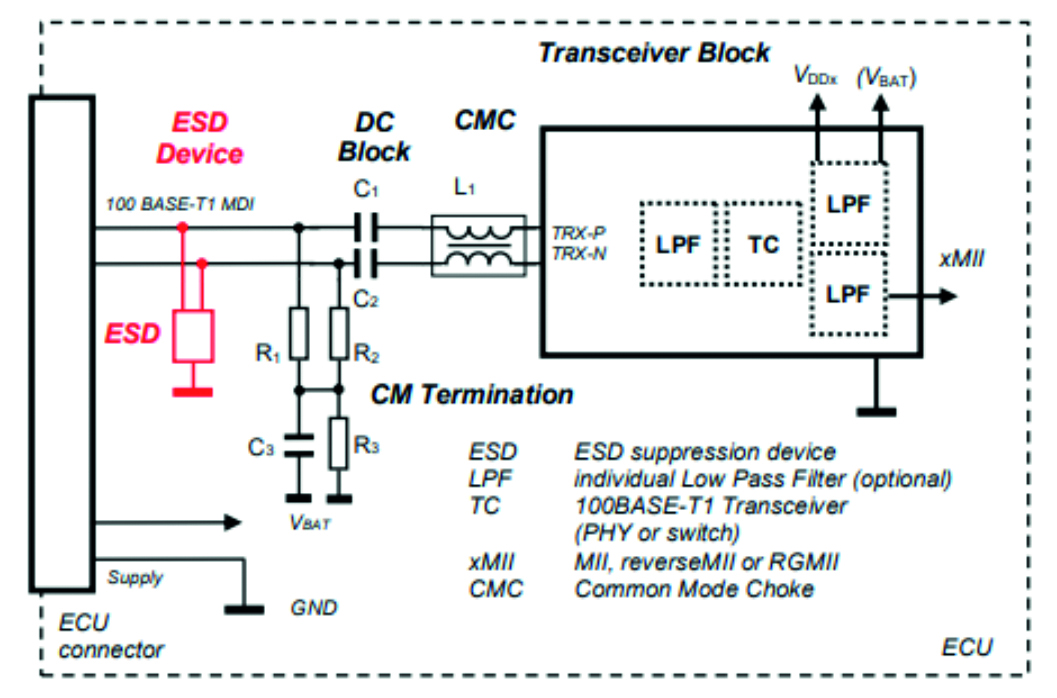
    Figure 1: Arrangement of ESD suppression device within the 100BASE-T1 MDI interface, OPEN Alliance SIG (2019)
    New trends in the automotive industry such as increased connectivity, electrification or autonomous driving are increasing the amount of data that must be transmitted around vehicles. This causes a corresponding increase in bandwidth requirements and existing protocols such as LIN, CAN-FD and FlexRay are no lo
    . . . Learn More
    Date:
    02/01/2021
    Enhancing Efficiency by Reducing Converter Stages and RON

    Click image to enlarge

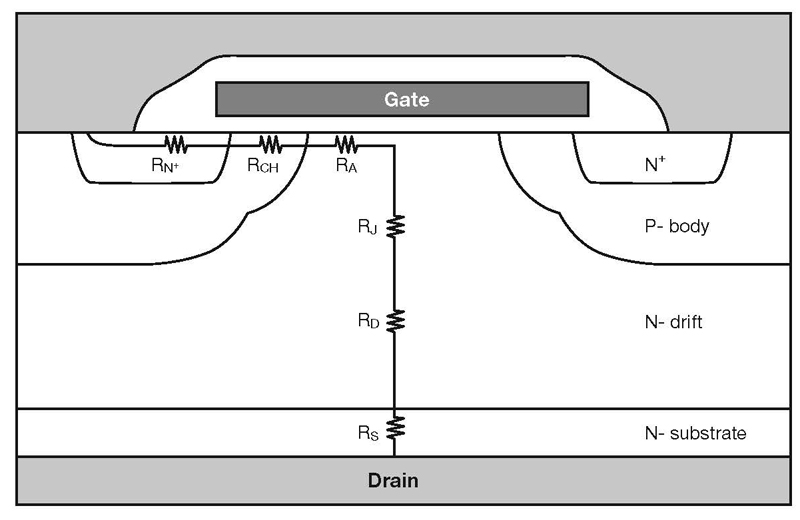
    Figure 1: RON is a product of the cumulative resistances from the drain to the source of a MOSFET device
    The latest ICs sport faster processors, denser memories/storage, and a wealth of features while increasing reliability and proving lower power usage. Moving to lower processor nodes and relying on lower operating voltages enable these enhancements without dramatically increasing die area, cost, and the need for
    . . . Learn More
    Date:
    02/01/2021
    Fixed Ratio Converters Boost Battery Powered Systems

    Click image to enlarge

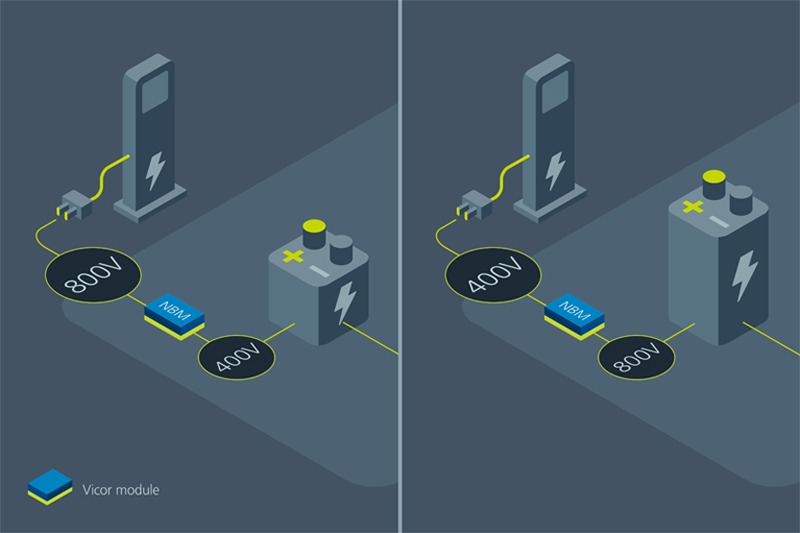
    Figure 1: To make EVs and charging stations compatible, independent of whether they use the same voltage, the power delivery network uses a Vicor non-isolated fixed-ratio bus converter module (NBM) to convert either 800V to 400V or 400V to 800V at 6kW. This high-efficiency, high-density, scalable solution enables EVs of different battery voltages to utilize the same charging stations
    Fixed-ratio convertershave power density, efficiency and flexibility attributes that can enable higher-performing power delivery networks (PDNs). This is true even when faced with wide-output-voltage-range power sources, such as batteries or renewable energy sources. Unlike more popular, mainstream regulated DC
    . . . Learn More
    Date:
    02/01/2021
    The Speed at Which Power is Changing for Industry 4.0

    Click image to enlarge

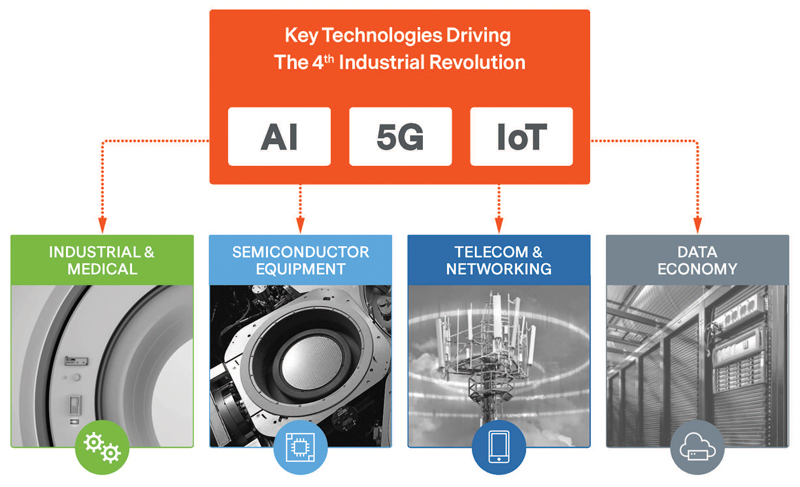
    Figure 1. The key technologies driving the 4th industrial revolution are impacting the power supply industry in more ways than ever before. How will power designers respond?
    Industry 4.0’s impact will dramatically change the world in the same way the preceding industrial revolutions did, only this time automation, artificial intelligence and process power will lead the way. We have already witnessed sci-fi-like innovation in a wide range of industries, from healthcare and telecom to
    . . . Learn More
    Date:
    02/01/2021
    A Push-Pull Topology for DC-DC Converter 12 V EV Applications

    Click image to enlarge

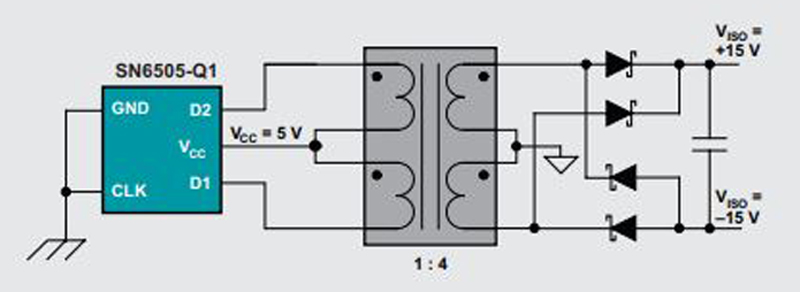
    Figure 1. A push-pull converter helps to streamline an isolated power supply design in 12V EV applications.
    DC-DC converters are employed in many high voltage applications such as ultra-capacitor energy banks, motor drives, high voltage battery systems and solar inverters. They’re one of the fundamental blocks of a power electronic design and are used to ‘condition’ voltage from one level to another – either to
    . . . Learn More
    Date:
    02/01/2021
    When to Use Single vs. Dual DC/DC Buck Regulators

    Click image to enlarge

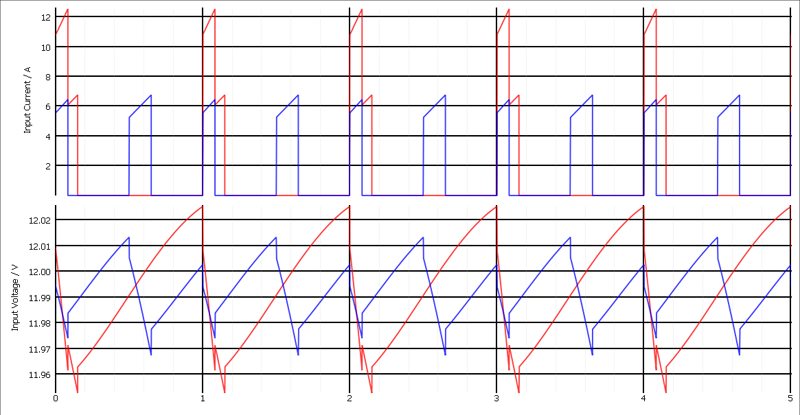
    Figure 1: Input current and ripple with in phase switching (red) and out-of-phase switching (blue)
    There are trade-offs to make when choosing between a single output regulator and a dual output regulator. In this article, I will discuss the advantages of both and highlight when to use one or the other, using the single 6-A TPS543620 output DC/DC regulator and dual 6-A TPS541620 output DC/DC regulator from Texa
    . . . Learn More
    Date:
    02/01/2021
    Accelerate Your USB Power Delivery Battery Charger Designs

    Click image to enlarge

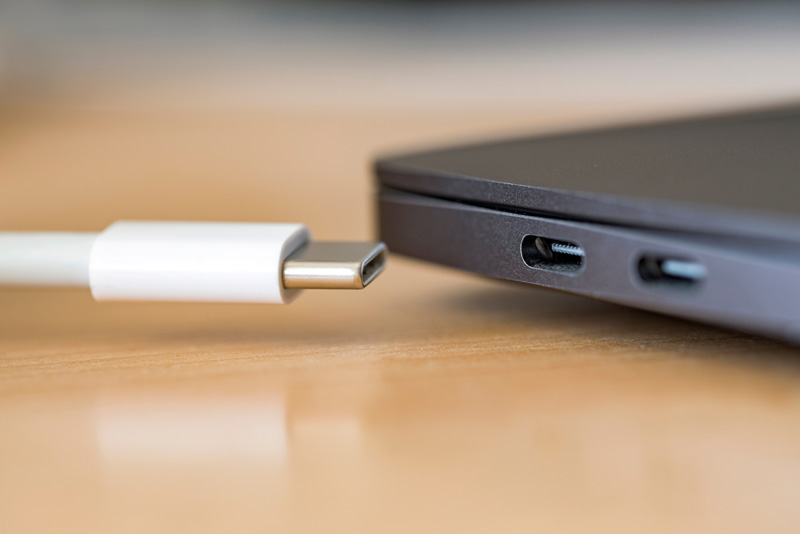
    Figure 1. USB Type-C and USB Power Delivery are bringing the conveniences of fast data transfer and charging to portable devices
    In devices operated by high-capacity 2S batteries, USB Power Delivery (PD) is a boon as it enables fast charging that gets these products back in operation with little downtime (Figure 1). Also, many applications that previously used AC-DC barrel adapters are migrating to USB PD for convenience and standardization
    . . . Learn More
    Date:
    02/01/2021
    Selecting Power Inductors

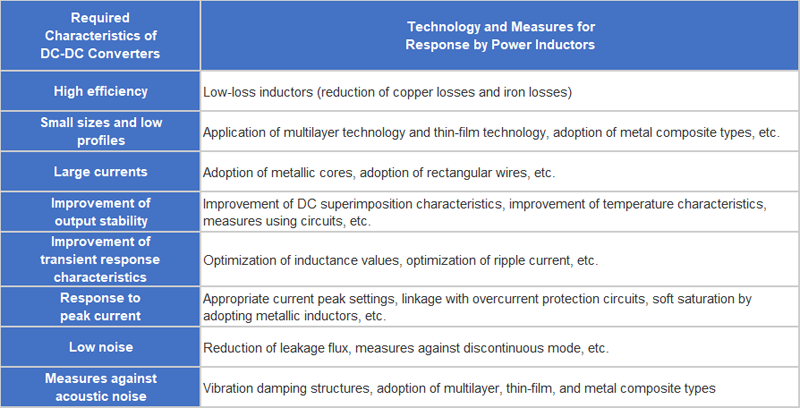
    Table 1

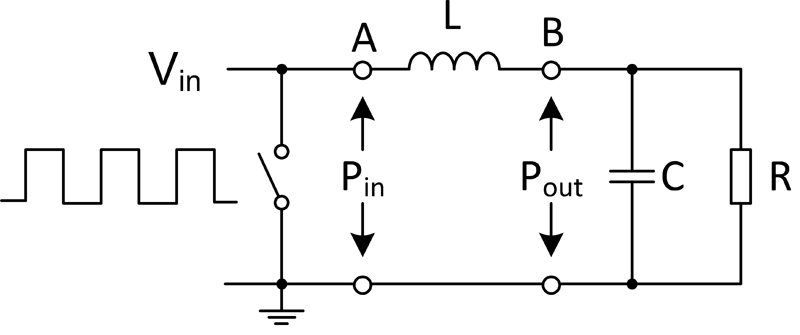
    When the power supply voltage is decreased, voltage fluctuations can become more dangerous, requiring a high-performance DC-DC converter in order to operate within safe parameters. DC-DC converters can help to address these requirements, and power inductors are crucial components that affect DC-DC converters’ pe
    . . . Learn More
    Date:
    02/01/2021
    New Converters Deserve (and get) Better Inductors

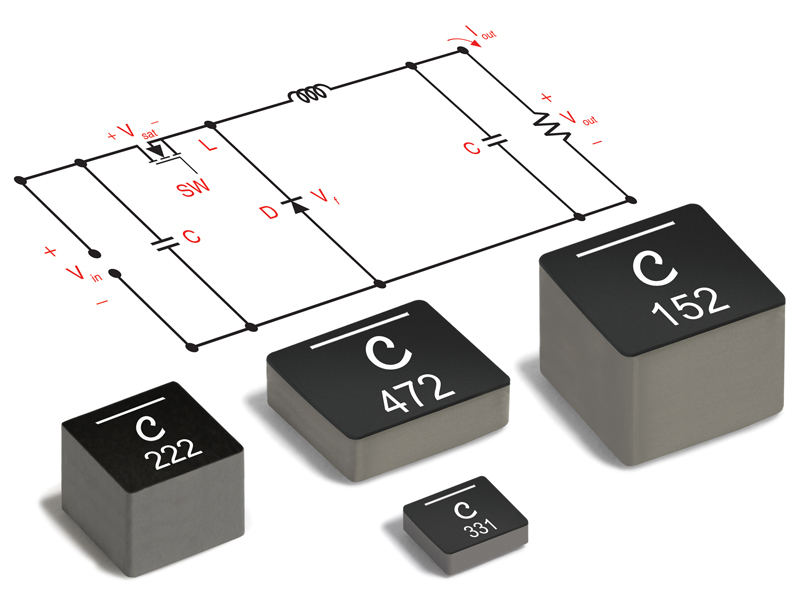
    Coilcraft inductor schematic

    New inductors are introduced all the time. In such an established industry as ours, it is quite natural that many new products represent small, evolutionary improvements or solve unique problems.  Occasionally, however, major generational breakthroughs do come along that challenge designers into new way
    . . . Learn More
    Date:
    02/01/2021
    Archive

    Transformer Design Comparisons for Mitigating EMI in Gate Driver Circuits

    Mar 29,2026
    Matthew Russell, Master’s student at University College Cork, and a student engineer at Bourns Electronics Ireland

    1250 V/1700 V GaN HEMTs for NVIDIA 800 VDC Architecture

    Jan 31,2026
    Kamal Varadarajan & Chris Lee, Power Integrations

    Future-Proof Automotive High-Voltage-to-SELV Conversion

    Dec 30,2025
    Greg Green, Director of Automotive Marketing, Vicor

    Power Systems Design

    146 Charles Street
    Annapolis, Maryland 21401 USA

    Power Systems Design

    Power Systems Design is a leading global media platform serving the power electronics design engineering community. It delivers in-depth technical content, industry news, and product insights to engineers and decision-makers developing advanced power systems and technologies.

    Published 12× per year across North America and Europe, Power Systems Design is distributed through online and fully digital editions, complemented by eNewsletters, webinars, and multimedia content. The platform covers key areas including power conversion, semiconductors, renewable energy, automotive electrification, AI power systems, and industrial applications—supporting innovation across the global electronics industry.