Technical Features

    August 2012
    Transformer Design Comparisons for Mitigating EMI in Gate Driver Circuits

    Click image to enlarge

    Figure 1: Gate driver circuit diagram with a Bourns transformer
    While gate driver-based converters deliver improved efficiency, speed and signal integrity, their high frequency switching features can produce elevated levels of conducted electromagnetic interference (EMI), posing challenges to electromagnetic compatibility (EMC) and overall system reliability. To solve this
    Date:
    03/29/2026
    Estimating bond wire current-carrying capacity
    Semiconductor manufacturers use wire bonds extensively to connect a chip's I/O pads, including power, to its package's external pins. Wire bonding processes typically use gold wire because
    . . . Learn More
    Date:
    08/28/2012
    High-side automotive battery monitoring

    Click image to enlarge

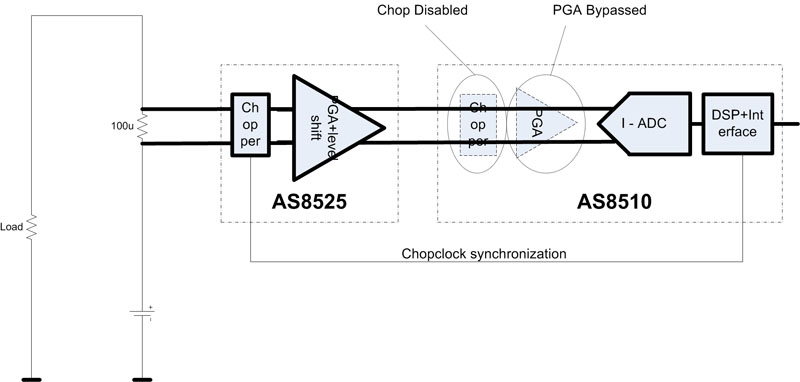
    Figure 1: Functional blocks for amsï½s two-chip sensor interface for high-side automotive battery current sensing.
    Manufacturers are electrifying more functions within a car, reducing the mechanical load on the internal-combustion engine. These functions include water, oil, and fuel pumps; valve actuation;
    . . . Learn More
    Date:
    08/28/2012
    Current sensing in an automotive environment

    Click image to enlarge

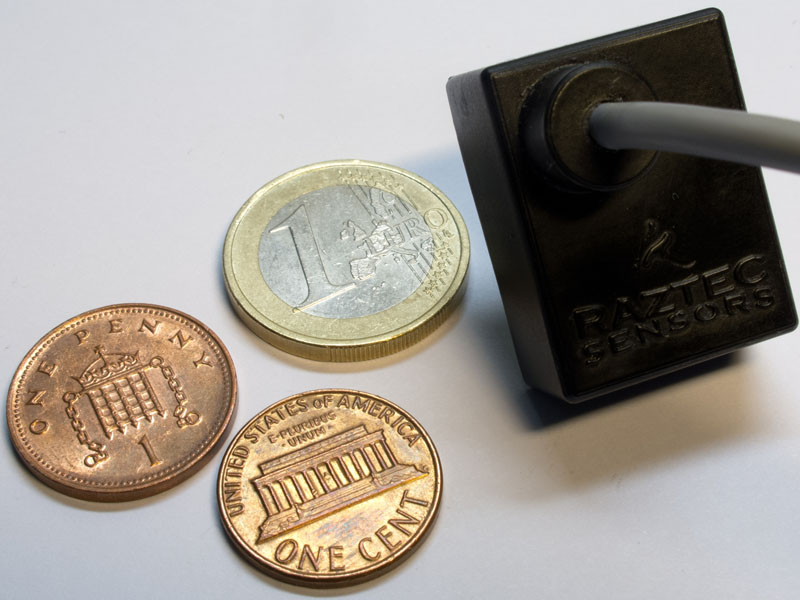
    Figure 1: An example of a shielded air-core open-loop current sensor from Raztec provides a strong combination of high performance in a small package and at low cost.
    The Automotive industry has long been the ultimate test ground for electronic components. Few terrestrial environments present such a combination of demands as does the under-hood locale
    . . . Learn More
    Date:
    08/28/2012
    Improving engine stop-start system design

    Click image to enlarge

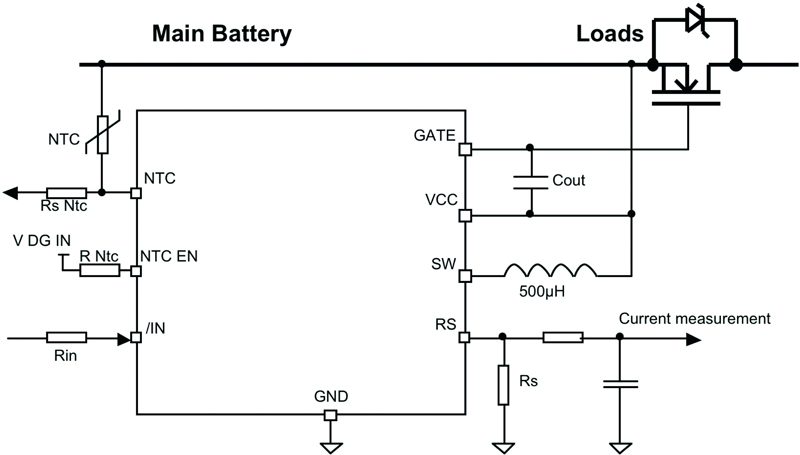
    Figure 1: Integrated gate driver with external passive components.
    Automatic engine stop-start is effective in helping reduce CO2 emissions from private cars. When integrated in an otherwise conventional combustion-engine power train, engine stop-start
    . . . Learn More
    Date:
    08/24/2012
    Non-contact driver�s ECG monitoring system

    Click image to enlarge

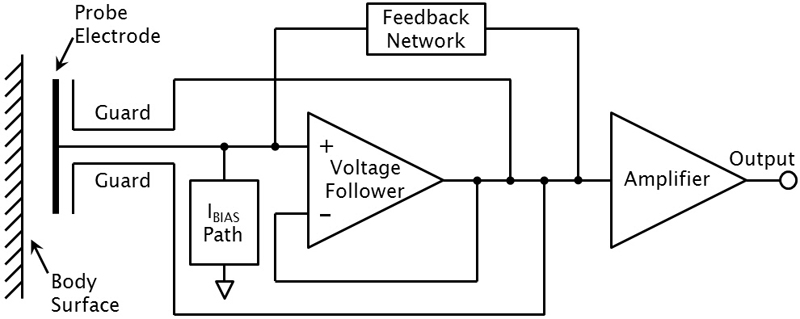
    Figure 1: Block diagram of a typical EPIC sensor
    EPIC (Electric Potential Integrated Circuit) is a very-high-impedance electric-field sensor that measures the ambient electric field with minimal disturbance. EPIC sensors are suitable for
    . . . Learn More
    Date:
    08/19/2012
    Hall effect current sensing in HEVs and EVs

    Click image to enlarge

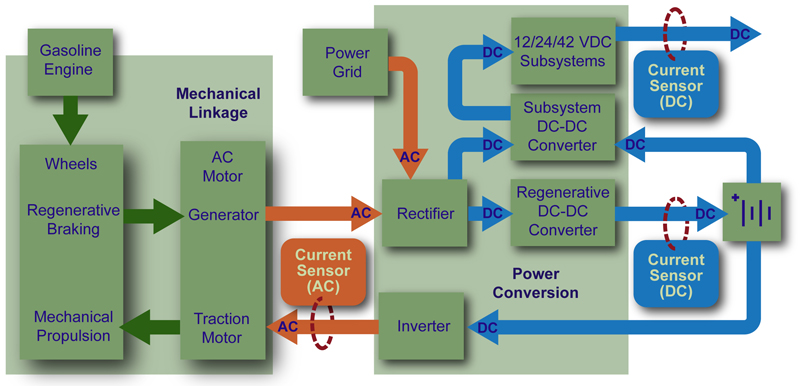
    Figure 1: Typical HEV system block diagram
    Consumers are embracing environmentally friendly green cars due to the rising cost of fossil fuels and a growing concern for the health of the environment. Sales forecasts predict that green
    . . . Learn More
    Date:
    08/19/2012
    Sleeping Conserves Energy

    Click image to enlarge

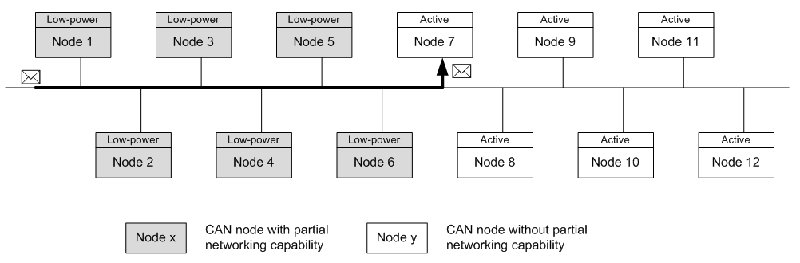
    Figure 1: CAN network with partial-networking controllers during the transmission of a message to ECU7 (without partial-networking support)
    Minimizing energy consumption has become a major factor for any new product design in recent years. Hardly any industry can afford to disregard this issue in the definition, development,
    . . . Learn More
    Date:
    08/19/2012
    Flexible power management for complex PCBs

    Click image to enlarge

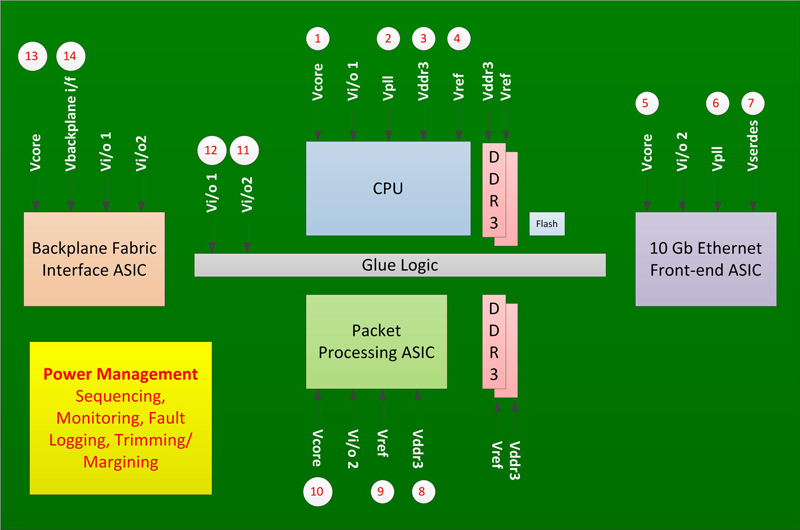
    Figure 1: Communication line card primary ICs and power supply requirements

    The number of power supplies on a board depends on the VLSI chip complement, the communication speed between them, and the number of other devices that require unique supplies. This
    . . . Learn More
    Date:
    08/18/2012
    Designing with low-leakage tantalum and niobium oxide capacitors
    DCL (direct current leakage) is an effect common to all capacitors. DCL values and behavior under varying electrical and environmental conditions relate to the capacitor's dielectric. The leakage
    . . . Learn More
    Date:
    08/13/2012
    Battery-charger trends in portable power products
    The first trend requires increased battery capacities. Unfortunately, users are often impatient and charge systems must recharge these increased capacities in a reasonable time, which leads to
    . . . Learn More
    Date:
    08/09/2012

    Power Systems Design

    146 Charles Street
    Annapolis, Maryland 21401 USA

    Power Systems Design

    Published by Power Systems (PSD) serves all aspects of the Power Electronics market including but not limited to Power Conversion, Power Management, Intelligent and Embedded Motion, Automotive, Renewable Energy, Energy Efficiency and Lighting. PSD is published 10x per year in English with separate print editions for Europe and North America and is published 6x per year in China. PSD Apps are available for Android & iOS. Additionally qualified power engineering professionals may subscribe and receive PSD daily PowerSurge newsletters.