Technical Features

    July 2012
    Transformer Design Comparisons for Mitigating EMI in Gate Driver Circuits

    Click image to enlarge

    Figure 1: Gate driver circuit diagram with a Bourns transformer

    While gate driver-based converters deliver improved efficiency, speed and signal integrity, their high frequency switching features can produce elevated levels of conducted electromagnetic interference (EMI), posing challenges to electromagnetic compatibility (EMC) and overall system reliability. To solve this
    Date:
    03/29/2026
    Safety and reliability in home alternative-energy systems

    Click image to enlarge

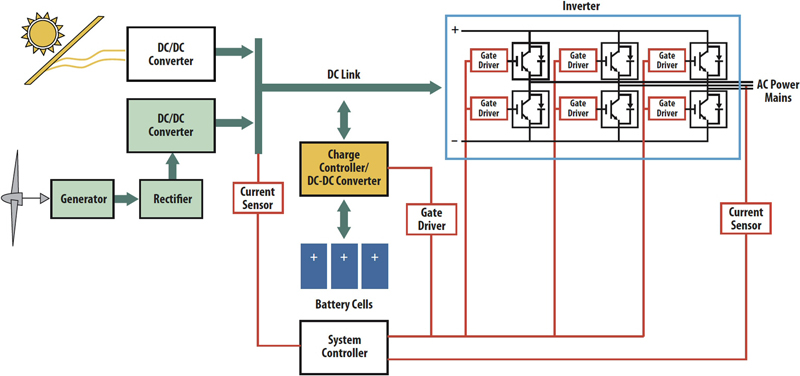
    Figure 1: A typical AES design includes power sources sharing a common high-voltage DC Link, an inverter for generating AC, and a system controller ensuring coordinated operation.
    Solar- and wind-power-based home AESs (alternative energy systems) are becoming more popular among consumers. To achieve the product lifetime that consumers demand and ensure user safety,
    . . . Learn More
    Date:
    07/25/2012
    Consumer-Friendly Power Design

    Click image to enlarge

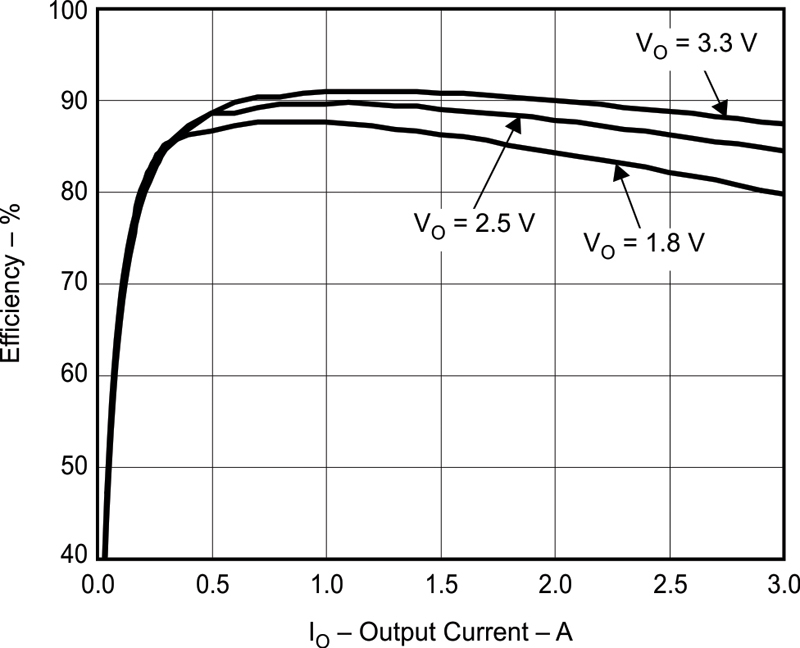
    Figure 1: Step-down converter efficiency used to power the main processor in a set top box
    The intricacies of power design are not conversation pieces for electronic-product consumers. Nor should they be. Consumers care about visible signs of power design in the product, including the
    . . . Learn More
    Date:
    07/24/2012
    Improving battery-fuel-gauge accuracy

    Click image to enlarge

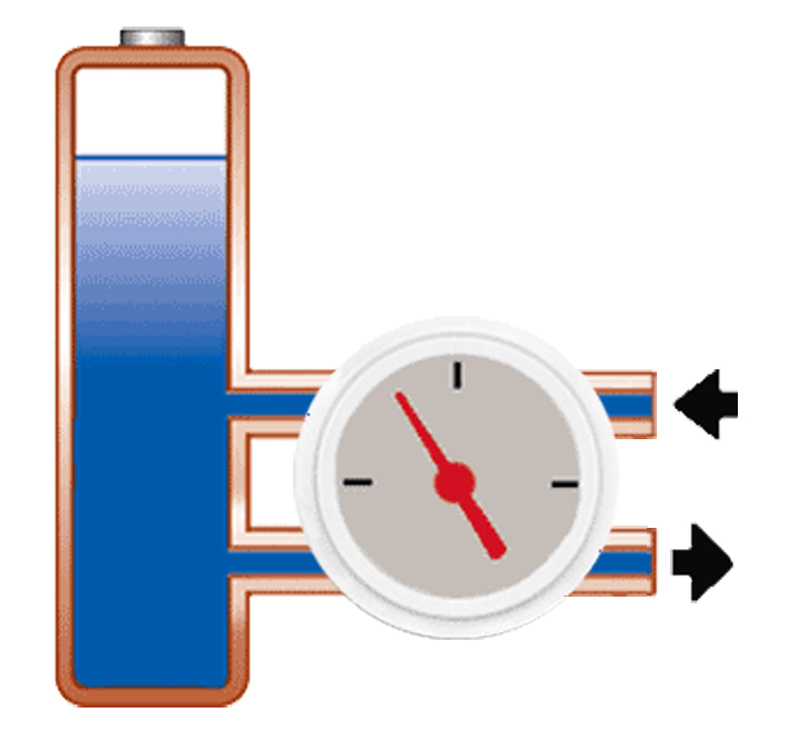
    Figure 1: The principle of fuel gauging based on coulomb counting: The stored energy represents state of charge. A circuit measures the in- and out-flowing current.
    For simplicity, you can imagine the battery as an energy storage device analogous to a fuel tank. However, measuring stored energy from an electrochemical device is far more complex than that comparison
    . . . Learn More
    Date:
    07/20/2012
    Input-line-current synthesis in PFC control

    Click image to enlarge

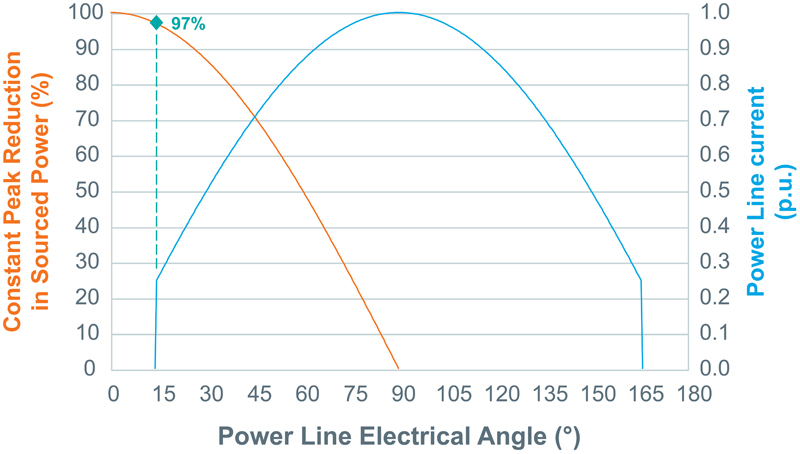
    Figure 1: Converter input power vs. line current with a symmetric conduction angle, constant current peak and resistive load.
    Traditionally, PFC (power-factor-correction) controls present a purely resistive behavior with respect to the power line. By means of multiplier or equivalent blocks, front-end converters draw
    . . . Learn More
    Date:
    07/13/2012
    Smart Activation circuit protection in li-ion battery applications

    Click image to enlarge

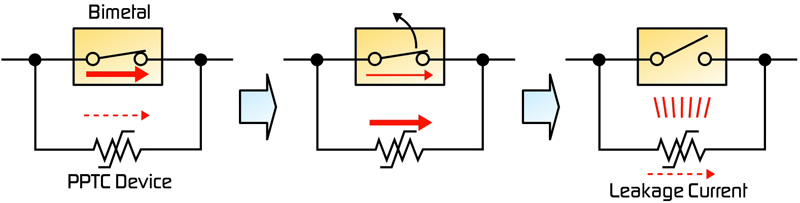
    Figure 1: The activation steps of the MHP device
    Li-ion technology with smaller, lighter-weight, and higher-power batteries is now replacing nickel-cadmium or lead-acid batteries in high-discharge-rate battery applications. Meanwhile,
    . . . Learn More
    Date:
    07/09/2012
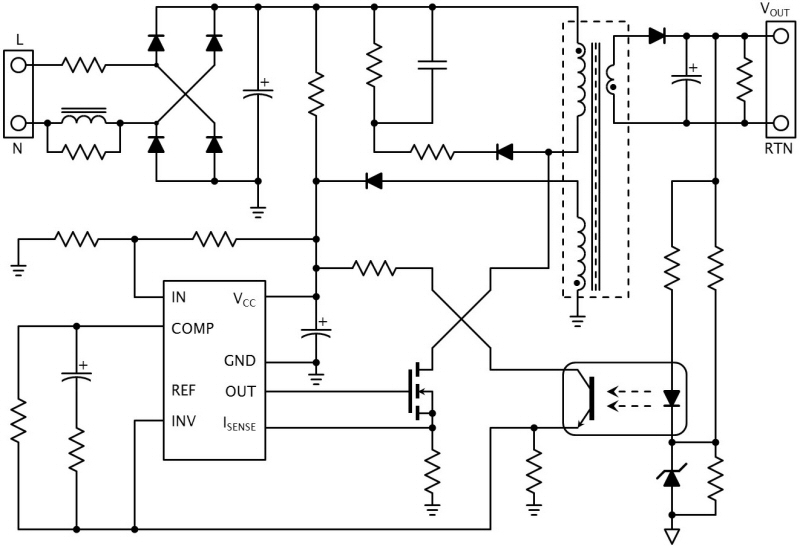
    Reduce stand-by power loss in ACDC supplies
    Over the past decade, controller-IC manufacturers have worked to reduce so-called vampire or stand-by power consumption. Organizations such as Energy Star in the US, Blue Angel in Germany, and CNIS
    . . . Learn More
    Date:
    07/01/2012
    Archive

    Transformer Design Comparisons for Mitigating EMI in Gate Driver Circuits

    Mar 29,2026
    Matthew Russell, Master’s student at University College Cork, and a student engineer at Bourns Electronics Ireland

    1250 V/1700 V GaN HEMTs for NVIDIA 800 VDC Architecture

    Jan 31,2026
    Kamal Varadarajan & Chris Lee, Power Integrations

    Future-Proof Automotive High-Voltage-to-SELV Conversion

    Dec 30,2025
    Greg Green, Director of Automotive Marketing, Vicor

    Power Systems Design

    146 Charles Street
    Annapolis, Maryland 21401 USA

    Power Systems Design

    Power Systems Design is a leading global media platform serving the power electronics design engineering community. It delivers in-depth technical content, industry news, and product insights to engineers and decision-makers developing advanced power systems and technologies.

    Published 12× per year across North America and Europe, Power Systems Design is distributed through online and fully digital editions, complemented by eNewsletters, webinars, and multimedia content. The platform covers key areas including power conversion, semiconductors, renewable energy, automotive electrification, AI power systems, and industrial applications—supporting innovation across the global electronics industry.