Technical Features

    August 2025
    Transformer Design Comparisons for Mitigating EMI in Gate Driver Circuits

    Click image to enlarge

    Figure 1: Gate driver circuit diagram with a Bourns transformer

    While gate driver-based converters deliver improved efficiency, speed and signal integrity, their high frequency switching features can produce elevated levels of conducted electromagnetic interference (EMI), posing challenges to electromagnetic compatibility (EMC) and overall system reliability. To solve this
    Date:
    03/29/2026
    The Future of Powering AI: Redefining Power Flow from Grid-to-Core in Data Centers

    Click image to enlarge

    Figure 1: Ever-increasing server rack power consumption
    ­A recent tweet[1] by Sam Altman, the CEO of OpenAI, suggested that being polite in your chats to ChatGPT costs the company tens of millions of dollars due to the additional computational load to process unnecessary words such as “please” and “thank you”. While this set off a range of opinions on the
    . . . Learn More
    Date:
    08/30/2025
    Outdated Battery Measurements Can Impact Vehicle Performance

    Click image to enlarge

    Figure 1: An advanced battery measurement solution with software that creates a dynamic discharge current data collection
    ­In recent years, low-power e-mobility vehicles have become extremely popular as sustainable and efficient modes of transportation. Electric bicycles and scooters offer numerous benefits, including reduced carbon emissions and lower operating costs. However, to fully maximize their potential, it is crucial to
    . . . Learn More
    Date:
    08/01/2025
    The Challenges of On-Board Charging

    Click image to enlarge

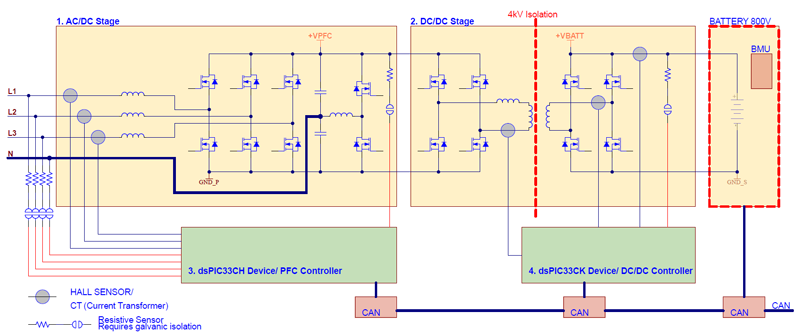
    Figure 1: OBC Block Diagram

    ­With its exceptional efficiency and capacity for bi-directional power transfer, the Totem-Pole topology offers a solution for integrating Power Factor Correction (PFC) and inverter functionality effectively. DC-DC topologies like the Dual Active Bridge (DAB) are well suited for battery chargers because of th
    . . . Learn More
    Date:
    08/01/2025
    The Daily Use of  EV Chargers: Human Interface Technology

    Click image to enlarge

    Figure 1: EV parked outside residential home

    ­Automotive manufacturers are increasingly offering a wider selection of EVs to their fleet, which requires a larger quantity of easy-to-use chargers for customers. There are several types of chargers that are currently in use including Level 1, Level 2 and DC fast chargers depending upon their size and capacit
    . . . Learn More
    Date:
    08/01/2025
    Enhancing Fleet Performance: The Critical Role of Tire Monitoring in Next-Gen Heavy Trucks

    Click image to enlarge

    ­Automotive trucks and heavy goods vehicles (HGVs) are key to nearly all critical markets and supply chains, facilitating the worldwide distribution of everything from food and medicine to fuels and electronic components. Given that 77% of inland freight in the European Union is transported by trucks, maximizing th
    . . . Learn More
    Date:
    08/01/2025
    Smart Battery Backup for Uninterrupted Energy

    Click image to enlarge

    Figure 1: BBU shelf configuration in an OCP ORV3 architecture

    ­Backup battery shelves play a key role by serving as the foundation of these systems, acting as the basis hub for the efficient storage of battery backup units (BBU) and creating a link that increases the readiness of critical power reserves. Their primary goal is to accommodate and manage up to six BBU mo
    . . . Learn More
    Date:
    08/01/2025
    Why Accurate Cell Data Matters  in Battery SoC and SoH Determination

    Click image to enlarge

    Figure 1: The test procedure undertaken by the white paper

    ­As SoC and SoH cannot be directly measured, various methods of computational complexity are used to determine their values. The accuracy of quantifiable metrics—temperature, voltage, and current—and the synchronization of data captured for all cells are critical inputs for the algorithms used to determine ov
    . . . Learn More
    Date:
    08/01/2025
    The Role of Chip Pivoting in Ensuring Supply Chain Resilience

    Click image to enlarge

    Figure 1: Modular firmware design including a Hardware Abstraction Layer (HAL)

    ­Events like chip shortages, climate-based disruptions, geopolitical shifts, and supply bottlenecks have revealed a harsh truth: Traditional, rigid models of supply chain management can no longer keep up. To stay competitive, companies must adapt to these challenges quickly. This has brought concepts like modular de
    . . . Learn More
    Date:
    08/01/2025
    8 EV Challenges of Converting High Voltage to SELV

    Click image to enlarge

    Figure 1: Sine Amplitude Converter (SAC) power modules, like the BCM6135, can be used in place of regulated DC-DC converters to reduce size and for higher efficiency. BCM6135 bench measurement efficiency at 25°C shows a peak efficiency around 97.5% at half load


    The shift to 800V electric vehicle (EV) battery architectures is inspired by the need to increase charging rates, reduce resistive losses (I2R), and improve drivetrain efficiency. In parallel, zonal electrical architectures are emerging, using 48V local buses to reduce harness weight. Converting 800V high-voltage (H
    . . . Learn More
    Date:
    08/01/2025
    Archive

    Transformer Design Comparisons for Mitigating EMI in Gate Driver Circuits

    Mar 29,2026
    Matthew Russell, Master’s student at University College Cork, and a student engineer at Bourns Electronics Ireland

    1250 V/1700 V GaN HEMTs for NVIDIA 800 VDC Architecture

    Jan 31,2026
    Kamal Varadarajan & Chris Lee, Power Integrations

    Future-Proof Automotive High-Voltage-to-SELV Conversion

    Dec 30,2025
    Greg Green, Director of Automotive Marketing, Vicor

    Power Systems Design

    146 Charles Street
    Annapolis, Maryland 21401 USA

    Power Systems Design

    Power Systems Design is a leading global media platform serving the power electronics design engineering community. It delivers in-depth technical content, industry news, and product insights to engineers and decision-makers developing advanced power systems and technologies.

    Published 12× per year across North America and Europe, Power Systems Design is distributed through online and fully digital editions, complemented by eNewsletters, webinars, and multimedia content. The platform covers key areas including power conversion, semiconductors, renewable energy, automotive electrification, AI power systems, and industrial applications—supporting innovation across the global electronics industry.