Technical Features

    March 2026
    Transformer Design Comparisons for Mitigating EMI in Gate Driver Circuits

    Click image to enlarge

    Figure 1: Gate driver circuit diagram with a Bourns transformer

    While gate driver-based converters deliver improved efficiency, speed and signal integrity, their high frequency switching features can produce elevated levels of conducted electromagnetic interference (EMI), posing challenges to electromagnetic compatibility (EMC) and overall system reliability. To solve this
    Date:
    03/29/2026
    Using Output Discharge to Address Power Supply Systematic Failures

    Click image to enlarge

    Figure 1: Example autonomous mobile robot (AMR) subsystems
    ­Power supply blocks provide one of the most critical functionalities in electronics systems, as their behavior affects how the system will behave during the different modes of operation—power-up, power-down, steady-state operation, and in the event of failures—which is critical in achieving the safe state in
    . . . Learn More
    Date:
    03/01/2026
    Solving High-Voltage Power Challenges

    Click image to enlarge

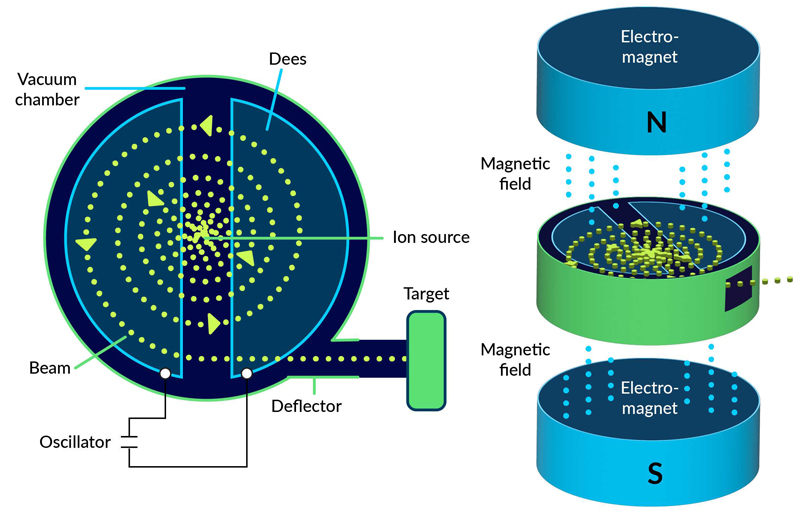
    Figure 1: A cyclotron application block diagram
    ­When integrating a high voltage power supply into equipment that requires very high voltage and high power, accuracy and reliability are critical. This applies whether the equipment is a medical cyclotron or an advanced manufacturing tool such as an e-beam welder. High voltage design presents its own set of ch
    . . . Learn More
    Date:
    03/01/2026
    Parallelized Bidirectional Switches Drive Efficiency Higher

    Click image to enlarge

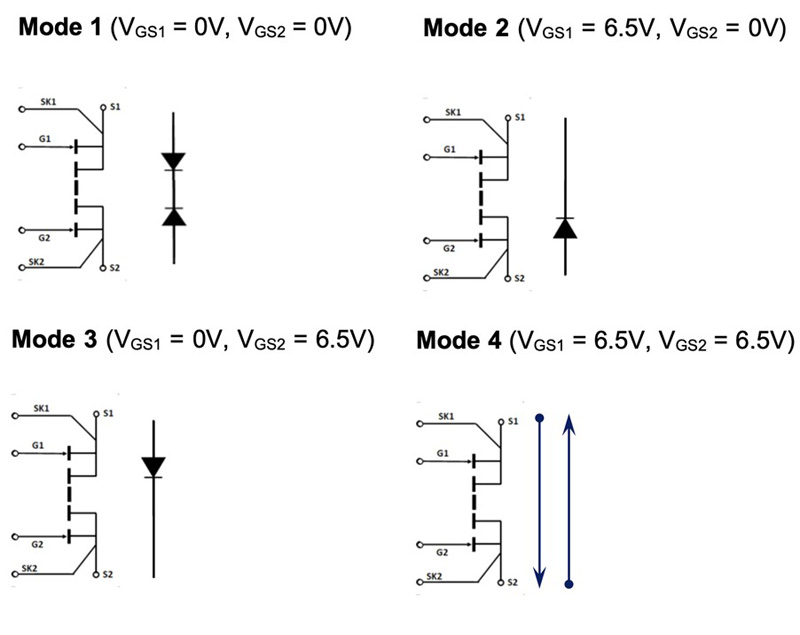
    Figure 1: BDS modes

    ­The push for efficiency in power conversion is unrelenting, especially in systems that need to deliver high power levels on a continuous basis. Though novel power-switching topologies have improved conversion efficiencies, high-power systems can benefit vastly from improvements in semiconductor technology. Topology Considerations
    . . . Learn More
    Date:
    03/01/2026
    Silicon Reinvented: Architectural Innovations Beyond SuperJunction Power MOSFETs

    Click image to enlarge

    Figure 1: The evolution of semiconductor architectures from HEXFET (left) to SuperJunction (middle) and the latest SuperQ technology (right), with dielectric charge-balancing structure shown in red

    ­In the 1970s, the 1D power MOSFET, aka HEXFET™, was introduced. The 1980s saw the launch of the IGBT, and in the 1990s, reduced surface field (RESURF) devices – aka SuperJunction™ devices were introduced. Over the last two decades, improvements in silicon power devices have been largely evolutionary rather th
    . . . Learn More
    Date:
    03/01/2026
    Industrial PoE Switches: Powering the Edge Computing Revolution

    Click image to enlarge

    Figure 1: The IEEE has evolved PoE standards from 15.4W (802.3af) to 30W (802.3at) and up to 90-100W (802.3bt) to meet rising demand for power-hungry devices

    ­The global edge computing market has reached a transformative inflection point. With valuations ranging from USD 21.4 billion to USD 554.39 billion in 2025 depending on market segmentation, and projected growth rates approaching 28-33.5% CAGR through 2035, the infrastructure demands of distributed computing ar
    . . . Learn More
    Date:
    03/01/2026
    Gate Driver Power Supply Challenges for SiC and GaN Devices

    Click image to enlarge

    Figure 1: A few of the many RECOM DC/DC modules optimized for WBG gate driver applications

    ­Silicon Carbide (SiC) and Gallium Nitride (GaN) are wide‑bandgap (WBG) semiconductor materials offering advantages over traditional silicon (Si) in power electronics because they switch faster with lower losses. They are gaining significant market share in applications where high efficiency and power density ar
    . . . Learn More
    Date:
    03/01/2026
    Powering Global Energy Resilience with Backup Solutions

    Click image to enlarge

    ­In an era where energy is essential even with increasingly extreme weather, backup power is no longer optional for critical operations. Power interruptions cost American businesses an estimated $150 billion each year. Add in recent regional outages, such as the 2021 Texas winter freeze that caused up to $130 bi
    . . . Learn More
    Date:
    03/01/2026
    The Shift in Power and the OEM Collaboration Opportunity

    Click image to enlarge

    Figure 1: ENNOVi-SealTech – ENNOVI’s shrinking method for sealing 3-phase busbars at a lower cost and faster processing time compared to conventional methods

    ­The automotive industry is undergoing significant change as hybrid and electric vehicles rapidly evolve. Instead of relying on Tier 1 supply partners for the manufacture and supply of systems and modules, OEMs are increasingly bringing development and manufacture in-house. This is particularly true for high-value sy
    . . . Learn More
    Date:
    03/01/2026
    Power Density vs. Reliability in Industrial Motion Systems

    Click image to enlarge

    Figure 1: High Power Density vs. High Reliability. An isometric view showing how compact designs increase thermal stress, while spaced layouts enhance cooling and reliability

    ­Manufacturers want smaller cabinets, lighter machines, and higher throughput, but they also expect equipment to operate for years in harsh environments, including heat, dust, vibration, and electrical noise. As automation spreads and switching frequencies rise, margins shrink. A few degrees of temperature or
    . . . Learn More
    Date:
    03/01/2026
    Revolutionizing Power Electronics: Silver Adhesive Pastes for Next-Gen Semiconductor Reliability and Thermal Performance

    Click image to enlarge

    Figure 1: Silver adhesive paste for die-bonding

    ­As power electronics evolve with the rise of wide-bandgap semiconductors like silicon carbide (SiC) and gallium nitride (GaN), the demand for advanced die bonding solutions becomes increasingly critical. Die bonding solutions enable power systems that operate at significantly higher switching frequencies, de
    . . . Learn More
    Date:
    03/01/2026
    Archives

    Power Systems Design

    146 Charles Street
    Annapolis, Maryland 21401 USA

    Power Systems Design

    Published by Power Systems (PSD) serves all aspects of the Power Electronics market including but not limited to Power Conversion, Power Management, Intelligent and Embedded Motion, Automotive, Renewable Energy, Energy Efficiency and Lighting. PSD is published 10x per year in English with separate print editions for Europe and North America and is published 6x per year in China. PSD Apps are available for Android & iOS. Additionally qualified power engineering professionals may subscribe and receive PSD daily PowerSurge newsletters.
